
Steve Skollar, Inside the Circle and the Living Tradition of Jam Culture
For artist and musician Steve Skollar, music is not about fame, perfection, or performance. It is about participation. It is about showing up with an instrument, sitting in a circle with strangers and friends, listening carefully, and becoming part of something larger than yourself. Over the last two decades, Skollar has immersed himself in what he calls “jam culture,” a loose but deeply meaningful tradition built around communal music-making. What began for him as a late-life fascination with the mandolin eventually evolved into a philosophy about creativity, community, aging, and human connection.
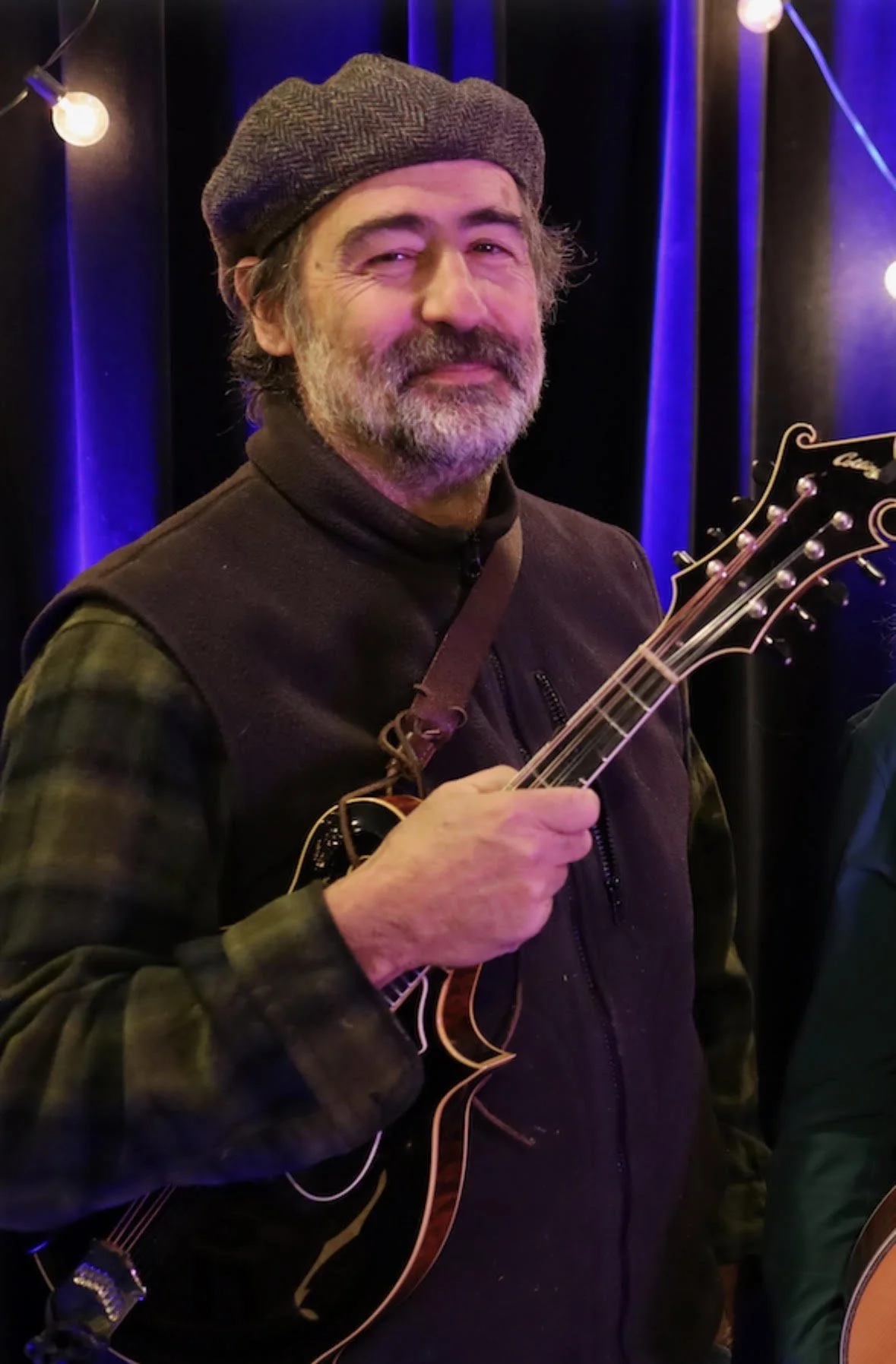
Jam culture exists quietly beneath the surface of American music. It thrives in bars after midnight, in back rooms, living rooms, barns, festivals, coffee shops, and old theaters. It is not commercial. It is not polished. There are no auditions, no ticket sales, and usually no stage. Instead, there is a circle of musicians sharing songs, following one another’s leads, improvising harmonies, and building trust through sound. For Skollar, that world became transformative.
Ironically, Skollar did not grow up around music. His family was deeply artistic, but visually so. “Nobody in my family played any music ever,” he explained. “Everybody was visual artists.” Painting and drawing were familiar territory, but instruments remained mysterious objects sitting outside the family tradition. Even though he always loved music, he struggled to find a way into it. He experimented with guitar and banjo over the years, but nothing truly connected.
Everything changed when he discovered an old Martin mandolin at a garage sale sometime in his mid-forties. The instrument was broken, but something about it immediately clicked. “I always wanted to play music,” he said. “Found this mandolin and boom, took it really seriously.” The small neck suited his hands, and for the first time he felt fully engaged with an instrument.
What followed was an obsession. Skollar practiced constantly, teaching himself chords, melodies, and rhythms. Yet learning the instrument alone was only the beginning. The real education came when he ventured into New York City’s jam scene searching for people to play with. At the time, he was living in Brooklyn and exploring Craigslist listings for local gatherings and bluegrass circles. That search led him to one of the most influential places in his musical life: Sunny’s Bar in Red Hook, Brooklyn.
Sunny’s Bar was an old waterfront establishment overlooking the Statue of Liberty, once a rough longshoreman’s bar owned by generations of Italian-American families. By the time Skollar arrived there, it had become home to a legendary Saturday night bluegrass jam organized by a woman named Tone, whom he described affectionately as “a Norwegian punk.”
The atmosphere inside Sunny’s embodied everything Skollar would come to love about jam culture. Experienced players occupied the center of the circle because they understood the structure of the songs and could guide the music forward. Beginners stayed around the outer edges, listening carefully and contributing where they could. Nobody was humiliated for being inexperienced. Instead, newcomers were welcomed gently into the flow.
Skollar remembered his own nervousness vividly. Walking into Sunny’s for the first time, he feared embarrassment. Then an elderly musician named Irv smiled at him and said simply, “Sit down.” That small invitation opened a door that changed his life.
“That was the best education for playing music I ever had,” Skollar explained. Unlike formal lessons, the jam demanded total engagement. Songs came one after another for hours. There was no stopping to explain chord structures or rehearse arrangements. You learned by listening, adapting, and staying present. “We’d play literally till four in the morning, five in the morning,” he recalled.
The distinction between a jam session and an open mic became central to his thinking. Open mics, he argued, often revolve around individual performers presenting original material while everyone else passively watches. Jam culture operates differently. In a jam, the emphasis is collective rather than individual. People share a common musical vocabulary built from traditional songs and familiar structures. The goal is not self-promotion but collaboration.
Skollar laughed while describing moments when original-song performers would unexpectedly throw complicated stops or changes into an open mic set, leaving everyone scrambling to follow along. “Nobody knows where you’re going,” he said. In a jam session, however, musicians communicate instinctively. They anticipate shifts, support solos, and leave room for one another. The music becomes a conversation rather than a monologue.
That sense of communication fascinates Skollar deeply. He believes the best jams rely on sensitivity rather than technical virtuosity. Good musicians are not necessarily the loudest or flashiest players. Instead, they are people capable of listening carefully and responding in real time. “If you can’t hear the other person,” he said, “you’re playing too loud.”
The nonverbal communication within a jam circle mirrors other forms of artistic collaboration. Musicians exchange subtle signals through eye contact, posture, timing, and dynamics. A glance might indicate the final chorus. A lifted instrument might suggest another solo. The structure remains fluid because everyone is paying attention. “If you’re playing well,” Skollar explained, “you’re gonna look at me and let me know that this is the last time.”
Jam culture also collapses traditional social barriers. Age differences disappear. Professionals play beside beginners. Elderly musicians sit next to college students. Skollar remembered one young woman who wandered into Sunny’s shyly after arriving in Brooklyn for college. Years later, she had become a touring musician performing across the country. Jam sessions allowed her to grow organically within a supportive environment.
“The whole thing is really inclusive,” Skollar said repeatedly. That inclusiveness remains one of the culture’s defining features. Unlike competitive music scenes driven by commercial ambition, jam circles often prioritize generosity. Skilled musicians help less experienced players improve simply by bringing them into the music.
As Skollar spent more time in these circles, he began organizing jams himself. After moving full-time to upstate New York following the COVID-19 pandemic, he noticed that rural musical culture differed from Brooklyn’s dense late-night scene. There were fewer ongoing jams and less of a nightlife infrastructure, but there was still a hunger for connection.
So Skollar started hosting gatherings in bars, homes, and local venues around Hamilton and Earlville. Sometimes only four or five musicians would attend. Other nights twenty people would show up carrying fiddles, guitars, banjos, mandolins, and upright basses. The sessions remained informal and open-ended. Musicians drifted in and out of the circle naturally.
These gatherings often led to unexpected collaborations. Someone might discover a talented bass player during a jam and later invite them into a band. Another player might emerge as a strong harmony singer or fiddle accompanist. Jam culture has become both a social network and an incubator for future musical projects.
One musician particularly affected by this environment was Henry Howard, Director of Arts at the Palace in Hamilton. Howard, a songwriter Skollar frequently referenced during the conversation. Before discovering jam sessions, Henry primarily wrote and played alone. Jam culture gave him something different: interaction. It pulled him back into music by replacing isolation with community.
Skollar believes this communal aspect matters profoundly today, especially in an era dominated by digital communication and social fragmentation. Jam sessions create real-time human interaction without screens, algorithms, or performance metrics. People gather physically in the same space and focus entirely on listening to one another.
The culture even survived disasters. Skollar recalled how Sunny’s Bar suffered severe flooding during Hurricane Sandy. The building temporarily closed, but the jam continued unofficially in the back room through side entrances. Musicians still showed up because the gathering itself mattered more than the business operation around it. “It was like a speakeasy,” he remembered.
COVID-19 disrupted that world again years later, forcing many musicians apart. Yet the pandemic also pushed Skollar into a different phase of life. He relocated permanently upstate and began reassessing how he wanted to spend his remaining years. Approaching seventy, he now views music less as ambition and more as nourishment.
“There are times now where I’ll say I’ve got three hours and I want to do that,” he explained. The urgency of youth has softened into something more intentional. He no longer worries much about legacy or recognition. What matters now is enjoyment, connection, and meaningful use of time.
Jam culture fits naturally into that philosophy because it values presence over permanence. A jam session exists only in the moment. No recording fully captures it. No audience necessarily witnesses it. The reward comes from participation itself, the feeling of falling into rhythm with others and contributing to a shared sound.
For Skollar, the mandolin became the perfect instrument for this role. Unlike front-facing singer-songwriters, he prefers being a sideman, adding texture and harmony rather than dominating attention. “Just tinkle around where they’re not,” he joked, describing the subtle art of accompaniment.
In many ways, that statement captures the spirit of jam culture itself. The goal is not to overpower the circle but to support it. To listen more than speak. To know when to step forward and when to step back. To understand that music, at its best, is a communal act rather than an individual achievement.
As the conversation drew to a close, Skollar reflected on aging, creativity, and mortality with surprising calmness. Friends have died. Relationships have ended. Time feels more visible now than it once did. Yet instead of becoming bitter or nostalgic, he seems increasingly focused on enjoyment and gratitude. “As long as we’re having fun doing it,” he said, “that’s enough.”
Inside the jam circle, that philosophy becomes audible. There are no stars there, only players listening for the next chord change together.
For the Record: My Interview and Documentation Process
I’ve been asked if I arrive at an interview with a prepared list of questions. The answer is no.
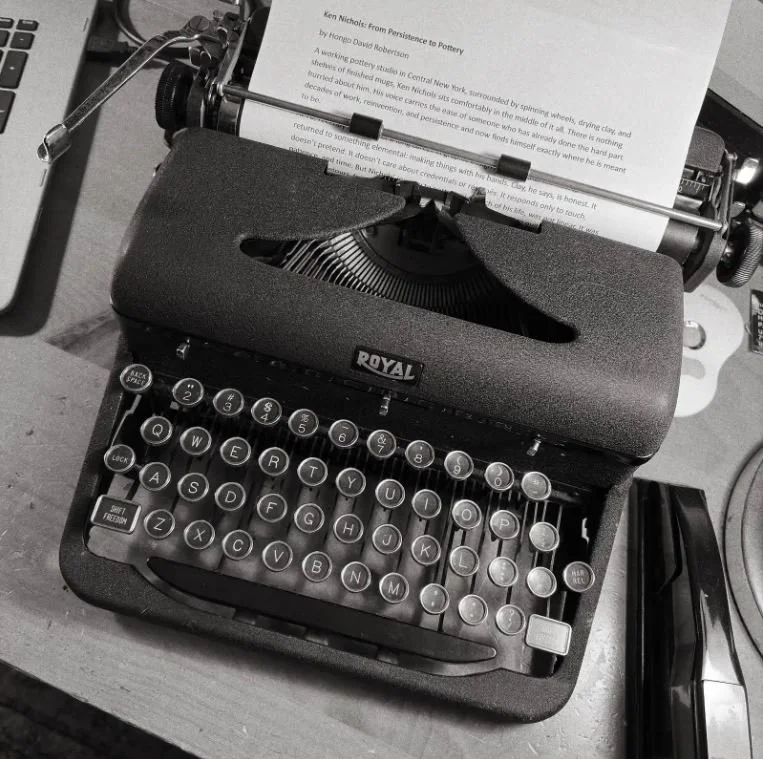
Photo Credit: HonGo David Robertson
Every interview for HonGoArt – On the Road Journal begins as a conversation, not an interrogation. I want the person sitting across from me to feel comfortable enough to talk naturally and allow their story to unfold. I may have researched the artist beforehand and have a general understanding of what I want to learn, but I don’t follow a rigid questionnaire.
Some of the best stories happen when neither of us is expecting them. A conversation might begin with art and move toward childhood, family, work, failure, success, or something completely unexpected. I follow where the conversation leads.
I record every interview. The recorder preserves the artist’s actual voice—their words, pauses, laughter, stories, and reflections. Afterward, I have the recording transcribed so I have an accurate written record to work from.
But the recording is only part of the process.
During every interview, I also keep handwritten field notes. I pay attention to the environment and the details an audio recording cannot capture: the light coming through a studio window, the smell of paint or sawdust, hands covered in clay or grease, a dog sleeping under a table, the way someone reacts when discussing a particular piece of work, or the pause before answering a difficult question.
Those observations become part of the story.
When I sit down to write, I bring everything together—the transcription, my handwritten notes, documentary photographs, research, and my own memory of being there. From those materials, I write a narrative rather than simply publishing a question-and-answer interview.
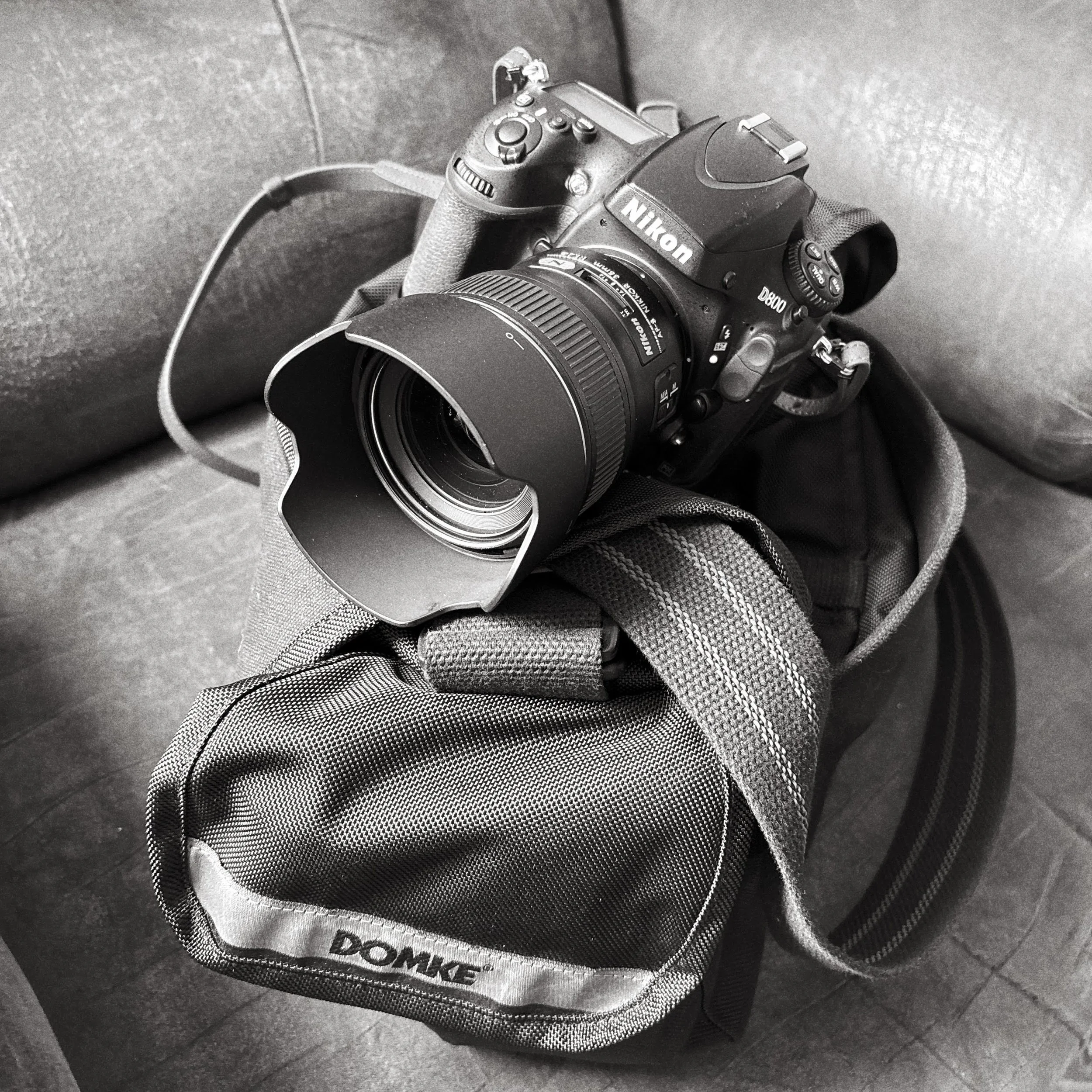
Photo Credit: HonGo David Robertson
My goal is to document more than what an artist says. I want to show something about how they live, work, think, create, struggle, and find meaning in what they do. I want the reader to feel as though they were sitting in the room with us.
I’ve now conducted more than 56 interviews and, during much of the year, have averaged two or three interviews per week. I’ve recently taken about a week and a half to slow down and relax, but with fall approaching, I expect that schedule to increase again.
That brings me to another subject I believe I should be transparent about: my use of artificial intelligence.
I use AI as an editing and production assistant. I use it to help with grammar and clarity, organize research, summarize my own longer pieces, identify themes, and help structure an article from my own notes and transcription.
What AI does not do is think for me.
It does not conduct my interviews. It does not take my photographs. It does not experience the places I visit or the people I meet. It does not replace my observations, opinions, ideas, memories, or creative decisions.
The material begins with me.
I provide the experience, the photographs, the recordings, the notes, the research, and the ideas. I then review, rewrite, edit, remove, add, and make the final decisions.
I think of AI much like a good editor. It can help make what I am trying to say clearer, but it cannot replace the person who experienced the story.
I have enormous respect for every artist who welcomes me into their home, studio, workshop, or creative space. Being invited into someone's world is a privilege.
Henry Howard: Arts at the Palace in Hamilton and the New Arts Ecosystem
Sep 03, 2026
A few months ago, I interviewed Henry Howard, singer-songwriter, musician, and Executive Director of Arts at the Palace in Hamilton, New York. I wrote this piece after our conversation but never released it. I feel now is the right time to put it into the public hands because of the great work Henry continues to do at Arts at the Palace. Henry is working to create more than a performance venue. His vision is to build a creative ecosystem where artists can gather, collaborate, develop their work, and connect with their community. His commitment to artists and creativity deserves to be recognized.
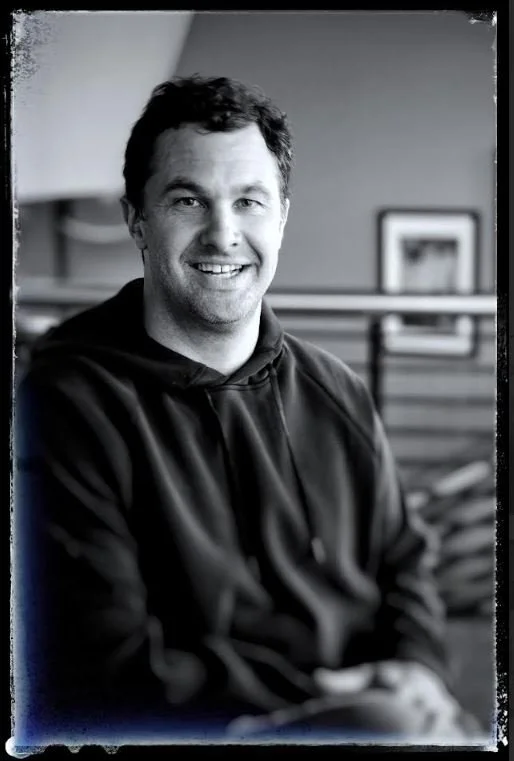
Photo Credit: HonGo David Robertson
There are people who manage arts organizations, and then there are people who live art so deeply that the line between administration and creation disappears entirely. Henry Howard belongs to the second category. Musician, singer-songwriter, nonprofit director, collaborator, organizer, and visionary, Howard has become one of the driving creative forces behind “Arts at the Palace” in Hamilton, New York. But describing him simply as an executive director misses the larger point. Howard is attempting to create something much more ambitious than a performance venue. He is trying to build an ecosystem where artists can gather, collaborate, create, and sustain one another.
Photo Credit: HonGo David Robertson
When speaking with Howard, one quickly realizes that his ideas come rapidly and passionately, often overlapping one another in a continuous stream of thought. His conversation moves from songwriting to community development, from jazz clubs to nonprofit fundraising, from childhood creativity to the future of rural arts culture. Underneath all of it is one central belief: communities become healthier when artists are given places to belong and create.
Howard’s own background did not begin in traditional arts administration. He originally studied finance in college, but by his third year he realized he could not imagine spending his life “watching markets.” Instead, his path shifted toward nonprofit work through an unusual route connected to documentary filmmaking and humanitarian development. His wife had worked with a documentary team following the band “Dispatch”, whose members became involved with humanitarian work in Uganda after filming there. What began as a film project evolved into a full-scale nonprofit organization supporting orphaned and vulnerable children. Howard and his wife eventually helped grow that organization, developing schools, vocational training programs, medical support systems, and immersion learning experiences for students traveling abroad.
That experience shaped Howard’s understanding of community building long before he arrived in Hamilton. Yet music remained a constant thread throughout his life. While living in Steamboat Springs, Colorado, Howard found an unused Episcopal church and struck a bargain. If the church allowed him to place his recording studio in the building, he would run an after-school music program for local youth. The result became “JamSesh,” a collaborative songwriting and recording project where Howard worked with children to write songs and produce albums. Some of those children later pursued careers in professional music, playing major venues such as Red Rocks and moving into the Los Angeles music scene.
For Howard, those experiences reinforced the idea that creativity flourishes when artists are given space and encouragement rather than rigid institutional structures. He remains deeply committed to songwriting himself, though his relationship with the commercial music industry became complicated during a brief period living in Nashville. Howard moved there hoping to immerse himself in a professional songwriting culture, but quickly realized that the business side of music left him unsatisfied. He loved writing songs, but not the transactional machinery surrounding commercial music production.
Then came COVID. Howard and his family left Nashville and eventually landed in Hamilton almost by accident. Looking at maps online, he saw a small village with a theater, a recreation center, an arts organization, and enough signs of cultural life to imagine building a future there. What drew him even more strongly was witnessing the online support network surrounding beloved local musician Ed Vollmer during his illness. Musicians throughout the region gathered virtually, performing songs and raising money to support one of their own. Howard recognized something deeply important in that moment: an authentic artistic community already existed in Central New York.
“That’s a community I want to be a part of,” he recalled thinking.
When Howard first arrived at the Palace, the organization functioned primarily as a traditional presenting venue. Like many small arts organizations, it purchased touring productions, promoted them, and hoped enough people would buy tickets to sustain operations. Howard quickly recognized the limitations of that model, especially in rural communities where audiences are smaller and increasingly fragmented. He describes the old approach bluntly: one person decides what audiences should want, spends money bringing in outside entertainment, and often ends up selling only a handful of tickets.
Instead, Howard proposed a reversal of priorities. Rather than focusing first on audiences, he wanted to focus on artists. If artists gathered and created meaningful work, audiences would naturally follow because people support people they know personally. “The artists have the audience,” Howard explained. “Our role is to provide space for those artists to make stuff.”
That philosophy has become the foundation of Arts at the Palace today. Howard repeatedly describes the organization not as a venue but as a creative support system. He is less interested in selling tickets for outside productions than in helping local and regional artists develop new work. Instead of operating through formal “calls for artists,” Howard prefers invitations. He believes many artists, particularly those outside major urban centers, feel disconnected and overlooked. An invitation acknowledges both their value and their humanity.
Howard sees this as especially important for his generation and younger creatives who came of age during the internet era. Social media created endless opportunities for self-promotion, but it also encouraged isolation. Artists became individual brands competing for attention rather than collaborators building communities together. Howard argues that creativity fundamentally depends upon connection. “The best work that’s getting created is collaborative and pollinating,” he said.
The Palace now reflects that collaborative spirit. Jazz performances in intimate basement spaces evolved into larger multidisciplinary events featuring musicians, visual artists, poets, filmmakers, and performers sharing the same environment. Howard recalled one particular evening when poetry readings, live music, and visual art merged into what felt less like a formal event and more like an authentic scene. “It felt like a vibe,” he said.
This distinction matters deeply to Howard. He does not want Arts at the Palace to become simply another institution selling entertainment. Instead, he wants it to function as a catalyst for creative life. The building itself, he insists, is secondary. “Facilities facilitate,” he explained. “The building is here to serve the artists.”
That philosophy extends beyond music into broader questions of community health and social well-being. Howard believes the arts provide more than cultural enrichment. They create social cohesion. They combat isolation. They offer people purpose and belonging. During the interview, Howard spoke passionately about how communities have lost many of their traditional gathering spaces and habits. Art organizations, he argues, can help rebuild those missing social structures.
He also sees artists themselves as undervalued civic resources. Howard compares artists to farmers, arguing that communities should invest in cultivating local creative talent the same way they invest in local agriculture. Instead of continually importing outside entertainment, he believes communities should support the artists already living among them. “We’re growing our own vegetables,” he said metaphorically. “We’re growing our own production studios. We’re growing our own albums.”
Howard’s ideas remain deeply personal as well. At thirty-nine, almost forty years old, he says he only recently fully accepted his own identity as an artist. For much of his life, he struggled with the same self-doubt many creatives experience, questioning whether his songs mattered or whether he deserved to call himself a songwriter at all. Working within the arts community helped him recognize that artists often share different values and ways of seeing the world. “Those are my people,” he said simply.
That sense of recognition now fuels his determination to create supportive environments for others experiencing similar uncertainty. Howard understands how easily creative people become isolated, particularly in smaller communities where opportunities may feel limited. His role, as he sees it, is often simply providing the invitation that reminds artists their work matters.
Despite his optimism, Howard remains realistic about the challenges. Funding arts organizations is difficult. Rural communities have limited populations. Ticket sales fluctuate. Every year brings financial uncertainty. Howard jokes that he regularly wonders whether it is finally time to “get a real job.” Yet he continues because he believes the work has tangible value, even when results are difficult to measure immediately.
Perhaps most importantly, Howard is trying to redefine what success looks like for arts organizations altogether. Success is not simply filling seats or balancing budgets. It is creating conditions where people form friendships, collaborate creatively, and feel invested in their communities. It is helping artists produce meaningful work and making cultural life feel accessible rather than exclusive.
By the end of the conversation, Howard’s vision became remarkably clear. Arts at the Palace is not simply about concerts, galleries, or performances. It is about rebuilding creative culture from the ground up through relationships, invitations, collaboration, and trust. Howard calls it a “new arts ecosystem,” though in many ways it resembles something older and more human: people gathering together to make things because creation itself gives life meaning.
For Henry Howard, that mission is no longer theoretical. It is the work of his daily life.
The Discarded Pencil
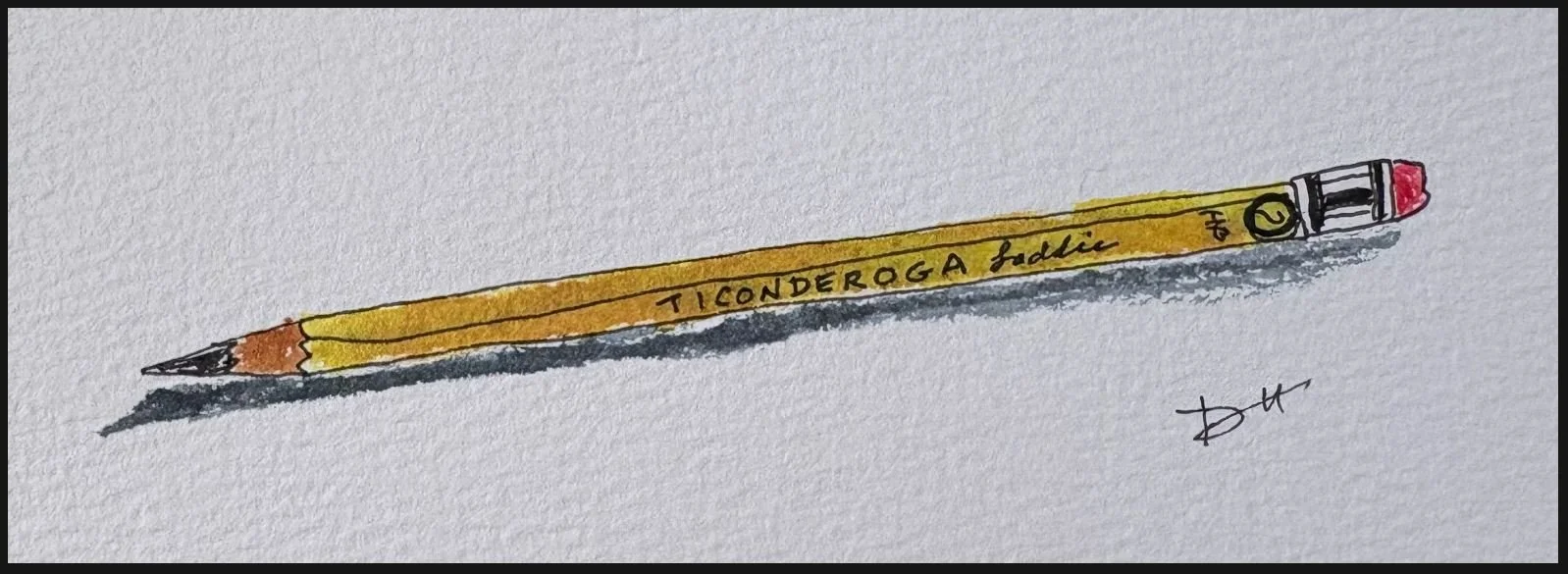
JAMESVILLE, New York — On occasion, while taking a walk to the middle school, I notice a pencil lying on the sidewalk or in the grass. Sometimes it is nearly new, its eraser still untouched. Other times it has been worn down from use, weathered by rain and sun, waiting for no one. Most people walk past without giving it a second thought. I rarely do.
Sketch by HonGo David Robertson
Every discarded pencil makes me wonder about wasted potential.
A pencil is one of the simplest tools ever created. It contains no batteries, no software, no moving parts. Yet within that small cylinder of wood and graphite lies the ability to solve a mathematical equation, sketch the first plans for a bridge, compose a poem, write a love letter, or record an idea that changes someone's life. Every great novel, scientific breakthrough, architectural drawing, or classroom lesson began somewhere with a simple mark made by a pencil.
When I see one abandoned on the ground, I don't just see litter. I see unfinished possibilities.
Perhaps it belonged to a student rushing home after school. Maybe it slipped unnoticed from a backpack or jacket pocket. The owner may have been relieved to discover another pencil waiting in a desk or borrowed from a classmate. After all, pencils are inexpensive and easily replaced.
But the pencil itself reminds me of something larger.
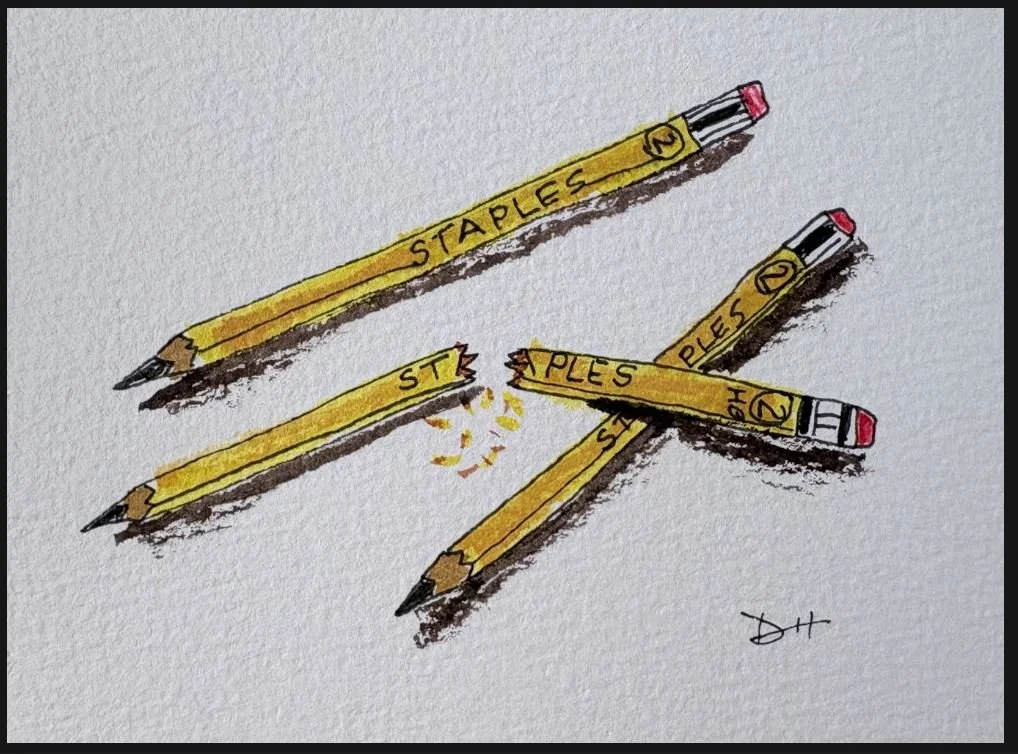
Potential is often discarded just as casually. We set aside talents because they require work. We abandon ideas because they seem too difficult. We leave projects unfinished when excitement gives way to discipline. Like the forgotten pencil on the sidewalk, our abilities sometimes remain unused—not because they lack value, but because we fail to recognize what they could become.
Sketch by HonGo David Robertson
The pencil has no choice in its fate. It cannot pick itself up. It cannot return to the classroom where it once belonged. It simply waits until someone notices it, or until weather slowly reduces it to nothing.
People, fortunately, are different.
We always have the opportunity to pick up the figurative pencil again. It may have been years since we painted, wrote, played an instrument, built something with our hands, or pursued the curiosity that once defined us. The opportunity remains. The potential has not disappeared simply because it has been neglected.
Perhaps that is why I never look at a discarded pencil without feeling a quiet sense of sadness. It represents more than a lost school supply. It represents all the unwritten stories, unsolved problems, unrealized inventions, and unseen works of art that never came to be because someone stopped before they began, or gave up before they finished.
The next time I pass a pencil lying on the sidewalk, I will probably pause once again. Most people will see a broken writing instrument worth only a few cents. I will see a reminder that the greatest waste is never the pencil itself. The greatest waste is the potential it symbolizes—the ideas that were never written, the dreams left unexplored, and the gifts each of us carries if only we choose to pick them up and begin.
Donevan's Hardware: A Living Piece of Canadian History
GANANOQUE, Ontario — Sometimes the best stories begin with a conversation on the sidewalk.
While standing on King Street taking in the downtown, a man pulled up on his bicycle, leaned it against a parking meter and asked, "Do you know what you're standing in front of?"
When told no, he smiled.
"That's the oldest continuously operating hardware store in all of Canada."
The building behind him was Donevan's Hardware, a family-owned business that has served the Gananoque community since 1872. More than 150 years later, the store remains much as generations of customers have remembered it, with worn wooden floors, shelves stacked high with hardware and the unmistakable feel of a traditional neighborhood hardware store.
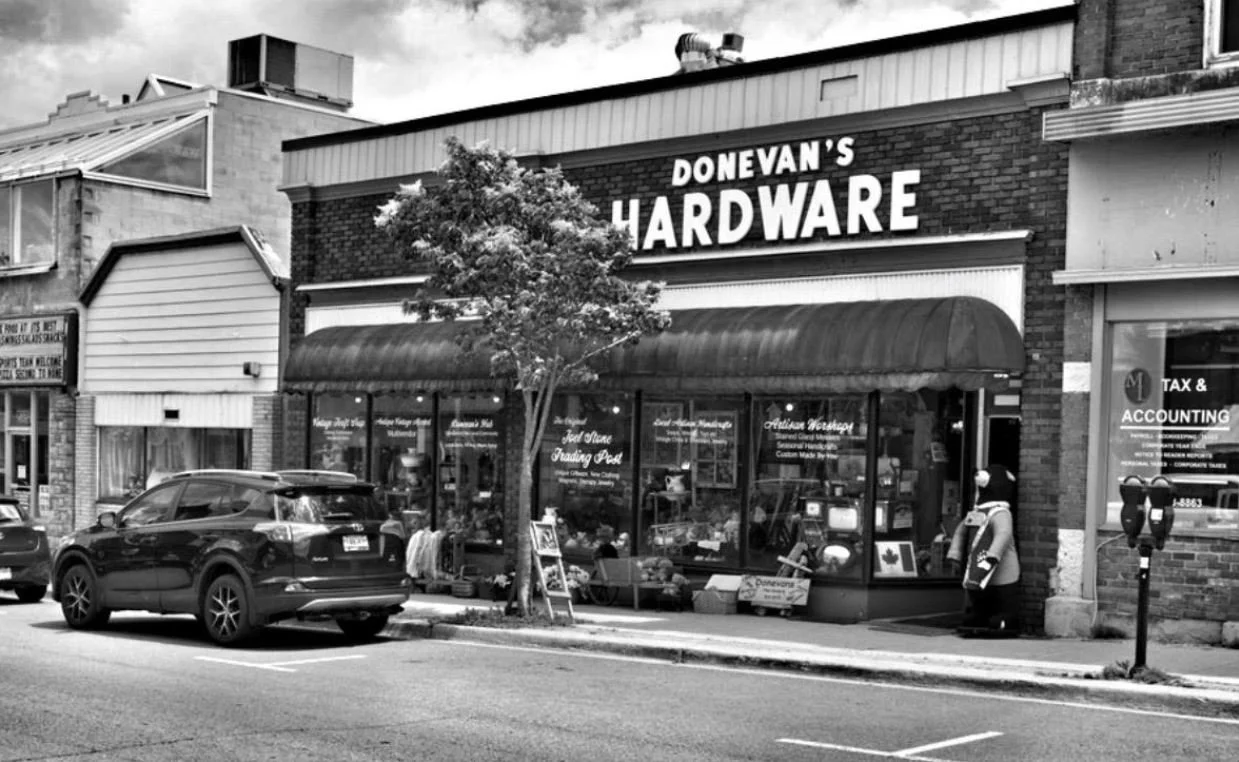
Photo Credit: HonGo David Robertson
Inside, visitors are greeted by Mary Donevan, the great-granddaughter of James Donevan, who purchased the business in 1872. While helping operate the family store, Mary has also established herself as an artist.
Throughout the store, her mosaics hang among the tools, antiques and hardware. Each piece is created from broken teacups and china collected over the years or donated by friends and customers. Rather than discarding damaged porcelain, she transforms it into colorful artwork, giving each fragment a second life.
The artwork blends naturally into the character of the store, reinforcing the idea that craftsmanship takes many forms.
Sitting behind the counter was Gordon McFarlane. At first glance, it would be easy to assume he owns the business. He greets customers with the familiarity of someone who has spent years there and speaks easily about the store's history.
McFarlane explained how the Donevan family has guided the business through six generations while adapting to changing times without losing the qualities that have made it a fixture in downtown Gananoque.
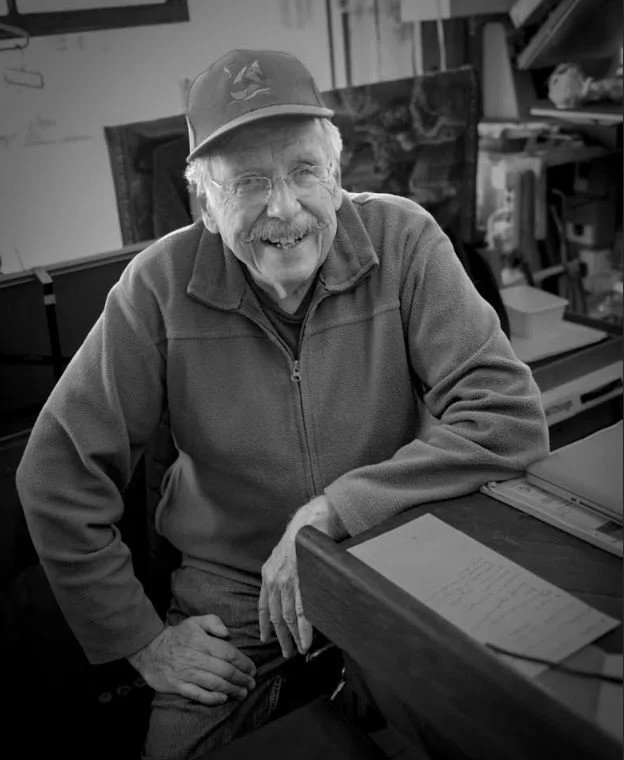
Photo Credit: HonGo David Robertson
Never getting past the counter area, one could not but feel that tools, plumbing supplies and bins of fasteners peppered the store along with antiques, locally made gifts, handcrafted items and Mary's mosaics. The result is part hardware store, part gallery and part museum, reflecting both the history of the business and the community it has served for more than a century.
Donevan's Hardware is also closely associated with Charlie Donevan, who spent more than 70 years working in the family business and became one of Gananoque's most recognizable residents before his death in 2024 at age 99. His legacy remains evident throughout the store, where longtime customers still share stories of stopping in simply to visit with him.
Independent hardware stores like Donevan's have become increasingly rare. Large retail chains have replaced many neighborhood businesses that once served as gathering places as much as retail stores.
Donevan's continues to offer something that cannot be duplicated by a big-box retailer: personal knowledge, family history and a sense of community built over generations.
Sometimes it takes nothing more than a stranger on a bicycle to point visitors toward a place where history is still being made one customer at a time.