
Henry Howard: Arts at the Palace in Hamilton and the New Arts Ecosystem
Sep 03, 2026
A few months ago, I interviewed Henry Howard, singer-songwriter, musician, and Executive Director of Arts at the Palace in Hamilton, New York. I wrote this piece after our conversation but never released it. I feel now is the right time to put it into the public hands because of the great work Henry continues to do at Arts at the Palace. Henry is working to create more than a performance venue. His vision is to build a creative ecosystem where artists can gather, collaborate, develop their work, and connect with their community. His commitment to artists and creativity deserves to be recognized.
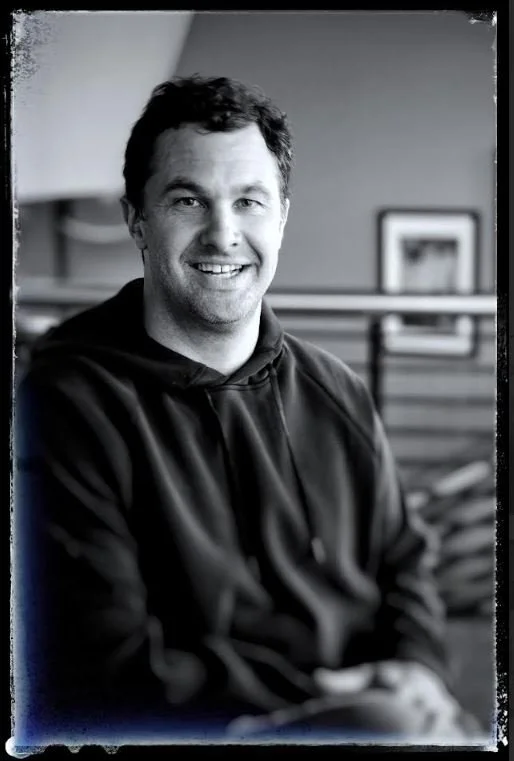
Photo Credit: HonGo David Robertson
There are people who manage arts organizations, and then there are people who live art so deeply that the line between administration and creation disappears entirely. Henry Howard belongs to the second category. Musician, singer-songwriter, nonprofit director, collaborator, organizer, and visionary, Howard has become one of the driving creative forces behind “Arts at the Palace” in Hamilton, New York. But describing him simply as an executive director misses the larger point. Howard is attempting to create something much more ambitious than a performance venue. He is trying to build an ecosystem where artists can gather, collaborate, create, and sustain one another.
Photo Credit: HonGo David Robertson
When speaking with Howard, one quickly realizes that his ideas come rapidly and passionately, often overlapping one another in a continuous stream of thought. His conversation moves from songwriting to community development, from jazz clubs to nonprofit fundraising, from childhood creativity to the future of rural arts culture. Underneath all of it is one central belief: communities become healthier when artists are given places to belong and create.
Howard’s own background did not begin in traditional arts administration. He originally studied finance in college, but by his third year he realized he could not imagine spending his life “watching markets.” Instead, his path shifted toward nonprofit work through an unusual route connected to documentary filmmaking and humanitarian development. His wife had worked with a documentary team following the band “Dispatch”, whose members became involved with humanitarian work in Uganda after filming there. What began as a film project evolved into a full-scale nonprofit organization supporting orphaned and vulnerable children. Howard and his wife eventually helped grow that organization, developing schools, vocational training programs, medical support systems, and immersion learning experiences for students traveling abroad.
That experience shaped Howard’s understanding of community building long before he arrived in Hamilton. Yet music remained a constant thread throughout his life. While living in Steamboat Springs, Colorado, Howard found an unused Episcopal church and struck a bargain. If the church allowed him to place his recording studio in the building, he would run an after-school music program for local youth. The result became “JamSesh,” a collaborative songwriting and recording project where Howard worked with children to write songs and produce albums. Some of those children later pursued careers in professional music, playing major venues such as Red Rocks and moving into the Los Angeles music scene.
For Howard, those experiences reinforced the idea that creativity flourishes when artists are given space and encouragement rather than rigid institutional structures. He remains deeply committed to songwriting himself, though his relationship with the commercial music industry became complicated during a brief period living in Nashville. Howard moved there hoping to immerse himself in a professional songwriting culture, but quickly realized that the business side of music left him unsatisfied. He loved writing songs, but not the transactional machinery surrounding commercial music production.
Then came COVID. Howard and his family left Nashville and eventually landed in Hamilton almost by accident. Looking at maps online, he saw a small village with a theater, a recreation center, an arts organization, and enough signs of cultural life to imagine building a future there. What drew him even more strongly was witnessing the online support network surrounding beloved local musician Ed Vollmer during his illness. Musicians throughout the region gathered virtually, performing songs and raising money to support one of their own. Howard recognized something deeply important in that moment: an authentic artistic community already existed in Central New York.
“That’s a community I want to be a part of,” he recalled thinking.
When Howard first arrived at the Palace, the organization functioned primarily as a traditional presenting venue. Like many small arts organizations, it purchased touring productions, promoted them, and hoped enough people would buy tickets to sustain operations. Howard quickly recognized the limitations of that model, especially in rural communities where audiences are smaller and increasingly fragmented. He describes the old approach bluntly: one person decides what audiences should want, spends money bringing in outside entertainment, and often ends up selling only a handful of tickets.
Instead, Howard proposed a reversal of priorities. Rather than focusing first on audiences, he wanted to focus on artists. If artists gathered and created meaningful work, audiences would naturally follow because people support people they know personally. “The artists have the audience,” Howard explained. “Our role is to provide space for those artists to make stuff.”
That philosophy has become the foundation of Arts at the Palace today. Howard repeatedly describes the organization not as a venue but as a creative support system. He is less interested in selling tickets for outside productions than in helping local and regional artists develop new work. Instead of operating through formal “calls for artists,” Howard prefers invitations. He believes many artists, particularly those outside major urban centers, feel disconnected and overlooked. An invitation acknowledges both their value and their humanity.
Howard sees this as especially important for his generation and younger creatives who came of age during the internet era. Social media created endless opportunities for self-promotion, but it also encouraged isolation. Artists became individual brands competing for attention rather than collaborators building communities together. Howard argues that creativity fundamentally depends upon connection. “The best work that’s getting created is collaborative and pollinating,” he said.
The Palace now reflects that collaborative spirit. Jazz performances in intimate basement spaces evolved into larger multidisciplinary events featuring musicians, visual artists, poets, filmmakers, and performers sharing the same environment. Howard recalled one particular evening when poetry readings, live music, and visual art merged into what felt less like a formal event and more like an authentic scene. “It felt like a vibe,” he said.
This distinction matters deeply to Howard. He does not want Arts at the Palace to become simply another institution selling entertainment. Instead, he wants it to function as a catalyst for creative life. The building itself, he insists, is secondary. “Facilities facilitate,” he explained. “The building is here to serve the artists.”
That philosophy extends beyond music into broader questions of community health and social well-being. Howard believes the arts provide more than cultural enrichment. They create social cohesion. They combat isolation. They offer people purpose and belonging. During the interview, Howard spoke passionately about how communities have lost many of their traditional gathering spaces and habits. Art organizations, he argues, can help rebuild those missing social structures.
He also sees artists themselves as undervalued civic resources. Howard compares artists to farmers, arguing that communities should invest in cultivating local creative talent the same way they invest in local agriculture. Instead of continually importing outside entertainment, he believes communities should support the artists already living among them. “We’re growing our own vegetables,” he said metaphorically. “We’re growing our own production studios. We’re growing our own albums.”
Howard’s ideas remain deeply personal as well. At thirty-nine, almost forty years old, he says he only recently fully accepted his own identity as an artist. For much of his life, he struggled with the same self-doubt many creatives experience, questioning whether his songs mattered or whether he deserved to call himself a songwriter at all. Working within the arts community helped him recognize that artists often share different values and ways of seeing the world. “Those are my people,” he said simply.
That sense of recognition now fuels his determination to create supportive environments for others experiencing similar uncertainty. Howard understands how easily creative people become isolated, particularly in smaller communities where opportunities may feel limited. His role, as he sees it, is often simply providing the invitation that reminds artists their work matters.
Despite his optimism, Howard remains realistic about the challenges. Funding arts organizations is difficult. Rural communities have limited populations. Ticket sales fluctuate. Every year brings financial uncertainty. Howard jokes that he regularly wonders whether it is finally time to “get a real job.” Yet he continues because he believes the work has tangible value, even when results are difficult to measure immediately.
Perhaps most importantly, Howard is trying to redefine what success looks like for arts organizations altogether. Success is not simply filling seats or balancing budgets. It is creating conditions where people form friendships, collaborate creatively, and feel invested in their communities. It is helping artists produce meaningful work and making cultural life feel accessible rather than exclusive.
By the end of the conversation, Howard’s vision became remarkably clear. Arts at the Palace is not simply about concerts, galleries, or performances. It is about rebuilding creative culture from the ground up through relationships, invitations, collaboration, and trust. Howard calls it a “new arts ecosystem,” though in many ways it resembles something older and more human: people gathering together to make things because creation itself gives life meaning.
For Henry Howard, that mission is no longer theoretical. It is the work of his daily life.