
The Discarded Pencil
JAMESVILLE, New York — On occasion, while taking a walk to the middle school, I notice a pencil lying on the sidewalk or in the grass. Sometimes it is nearly new, its eraser still untouched. Other times it has been worn down from use, weathered by rain and sun, waiting for no one. Most people walk past without giving it a second thought. I rarely do.
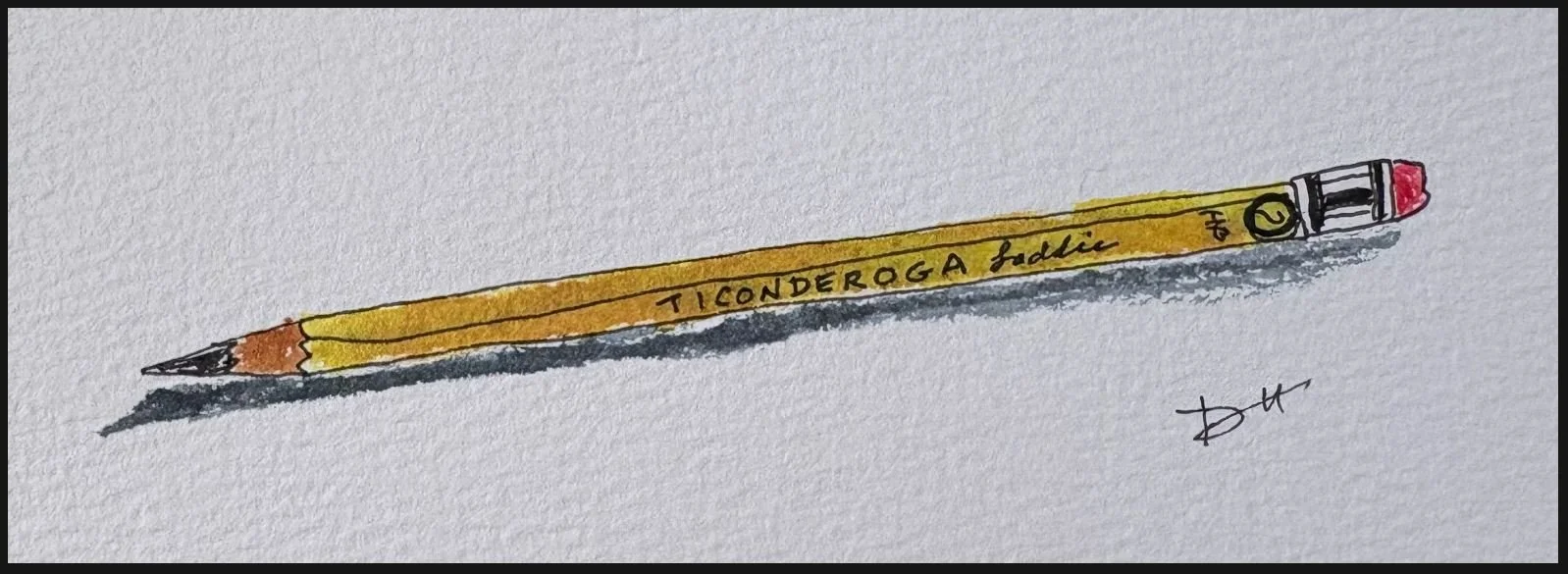
Sketch by HonGo David Robertson
Every discarded pencil makes me wonder about wasted potential.
A pencil is one of the simplest tools ever created. It contains no batteries, no software, no moving parts. Yet within that small cylinder of wood and graphite lies the ability to solve a mathematical equation, sketch the first plans for a bridge, compose a poem, write a love letter, or record an idea that changes someone's life. Every great novel, scientific breakthrough, architectural drawing, or classroom lesson began somewhere with a simple mark made by a pencil.
When I see one abandoned on the ground, I don't just see litter. I see unfinished possibilities.
Perhaps it belonged to a student rushing home after school. Maybe it slipped unnoticed from a backpack or jacket pocket. The owner may have been relieved to discover another pencil waiting in a desk or borrowed from a classmate. After all, pencils are inexpensive and easily replaced.
But the pencil itself reminds me of something larger.
Potential is often discarded just as casually. We set aside talents because they require work. We abandon ideas because they seem too difficult. We leave projects unfinished when excitement gives way to discipline. Like the forgotten pencil on the sidewalk, our abilities sometimes remain unused—not because they lack value, but because we fail to recognize what they could become.
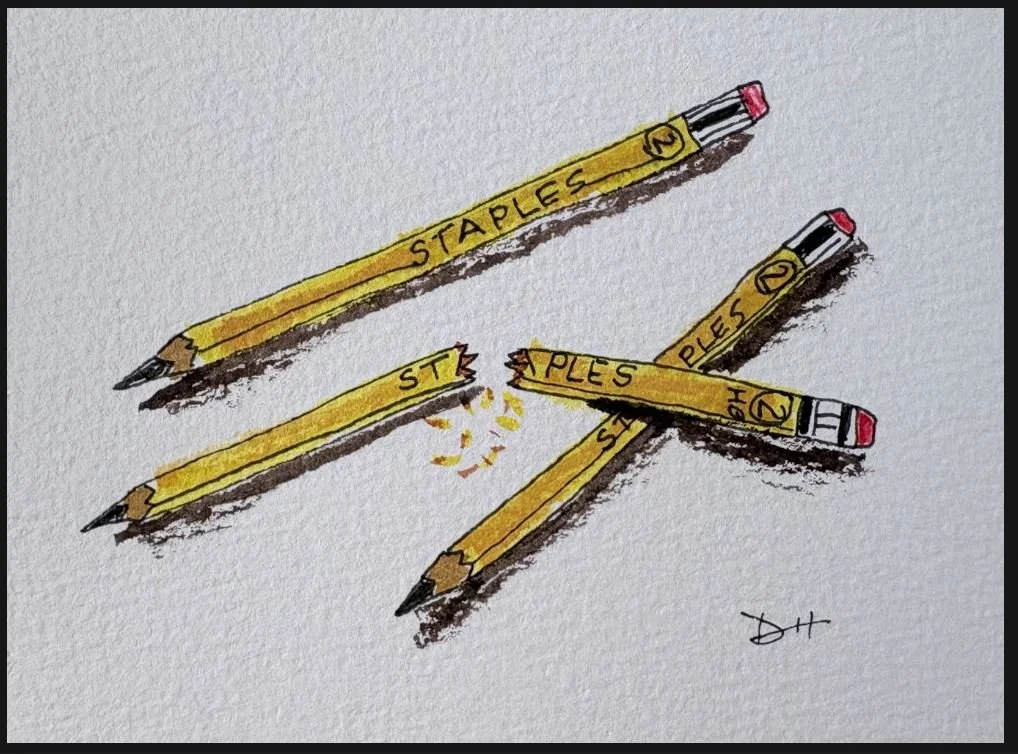
Sketch by HonGo David Robertson
The pencil has no choice in its fate. It cannot pick itself up. It cannot return to the classroom where it once belonged. It simply waits until someone notices it, or until weather slowly reduces it to nothing.
People, fortunately, are different.
We always have the opportunity to pick up the figurative pencil again. It may have been years since we painted, wrote, played an instrument, built something with our hands, or pursued the curiosity that once defined us. The opportunity remains. The potential has not disappeared simply because it has been neglected.
Perhaps that is why I never look at a discarded pencil without feeling a quiet sense of sadness. It represents more than a lost school supply. It represents all the unwritten stories, unsolved problems, unrealized inventions, and unseen works of art that never came to be because someone stopped before they began, or gave up before they finished.
The next time I pass a pencil lying on the sidewalk, I will probably pause once again. Most people will see a broken writing instrument worth only a few cents. I will see a reminder that the greatest waste is never the pencil itself. The greatest waste is the potential it symbolizes—the ideas that were never written, the dreams left unexplored, and the gifts each of us carries if only we choose to pick them up and begin.