
Scott Bennett: Embracing the Unknown Through a Synesthetic Lens
On a sunny Tuesday morning, June 16, 2026, I met painter Scott Bennett in his studio at the Delavan Center in Syracuse. During the next hour and a half, we talked about painting, creativity, education, and the experiences that shaped one of Central New York's most thoughtful abstract painters. Before we began, Bennett apologized for the condition of his studio.
"I thought it was going to be a phone interview," he laughed. "Normally, if people come over to officially look at paintings, everything gets cleaned up."
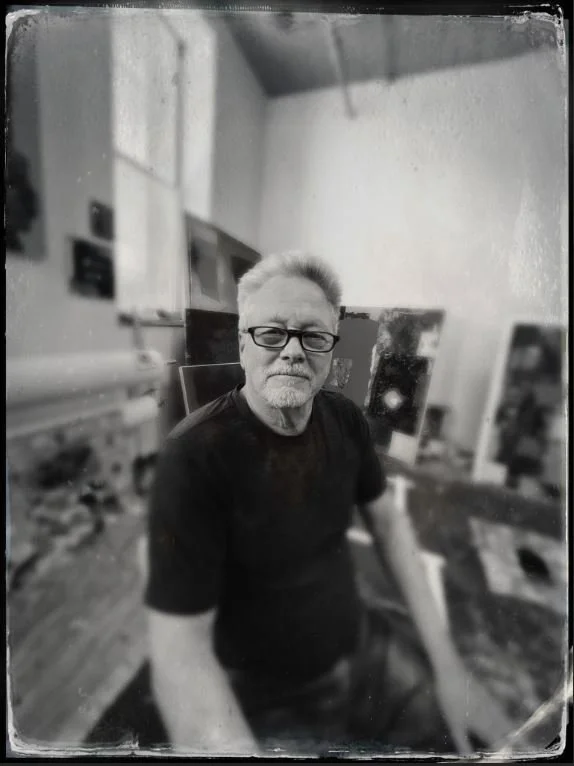
Photo Credit: HonGo David Robertson
The apology wasn't necessary. The studio represented a working painter in the midst of creation rather than a room prepared for visitors. Paintings rested against the walls awaiting their next stage, while collage materials and tools occupied nearby tables. Bennett explained that when he is immersed in painting, the studio naturally evolves into a workspace meant only for himself. Before collectors, gallery owners, or fellow artists come to view the work, however, the room is carefully arranged and organized, creating an environment where the paintings become the sole focus.
That distinction—between making art and simply talking about it—became one of the central themes of our conversation. When I noticed shelves filled with Golden acrylic paints, I asked whether he had ever visited the Golden Artist Colors factory in New Berlin. "I worked for them for thirty-two years."
His relationship with Golden began before the paint was available in retail stores. In the early 1980s, Bennett was among the artists who drove directly to the small operation on Bell Road to buy paint. He still remembers making those trips in an aging Volkswagen van during cold autumn mornings. Back then, Golden was little more than a converted barn where Sam and Adele Golden welcomed artists personally. Bennett recalls Adele occasionally making him lunch while he waited for paint.
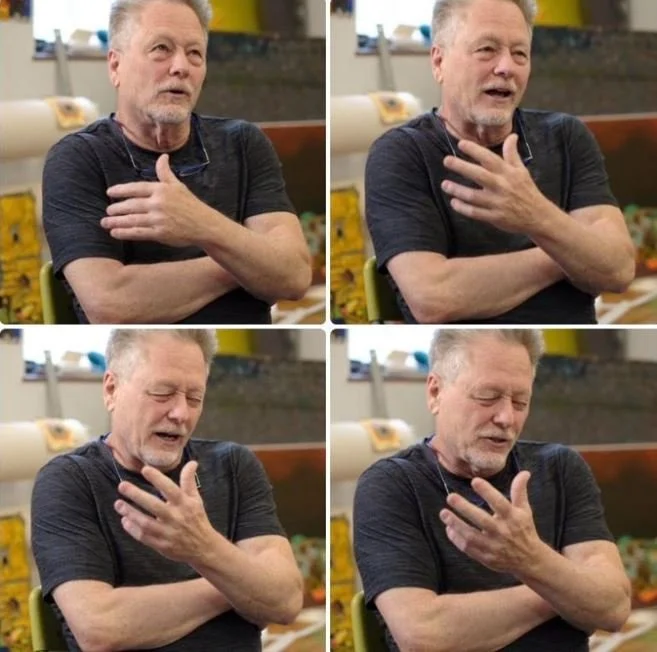
Photo Credit: HonGo David Robertson
"It sounds mythical," he admitted. "But that's exactly how it was." He watched the company grow from a family-run operation into one of the world's most respected paint manufacturers. Eventually Mark Golden asked him to join the company. Rather than becoming a salesman, Bennett became an educator. He traveled throughout the United States presenting workshops for artists and art supply retailers, demonstrating the possibilities of acrylic paint. Those workshops eventually took him overseas, including Japan, where he introduced Golden products to new audiences.
"I got very good at it," he said. "And I enjoyed it." As the company expanded, Bennett's responsibilities changed. His work shifted toward technical support, product testing, and answering artists' questions. His official title became Material Specialist, combining his experience as both painter and educator. Looking back, he credits Golden with giving him something many artists struggle to find: a dependable career that complemented rather than competed with his own studio practice. "It was a really wonderful thing," he said. "I had my painting sales, and I had my paycheck."
Retirement several years ago simply meant more time devoted to painting. Although Bennett has spent decades in the studio, he admitted he didn't immediately know painting would become his life's work.
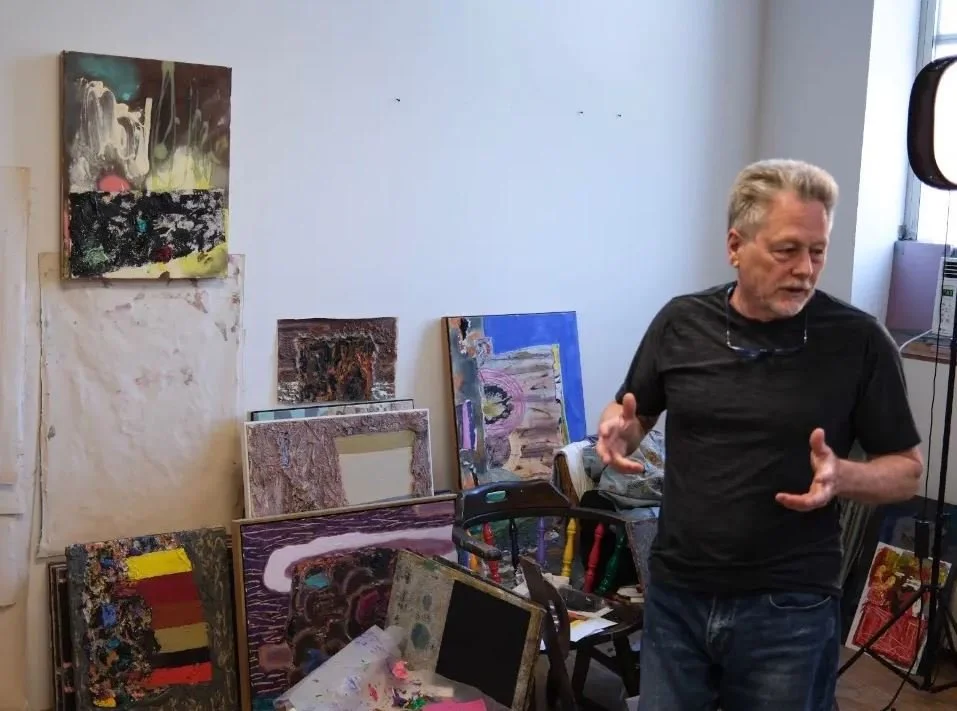
Photo Credit: HonGo David Robertson
Growing up in New Jersey, he was known as "the kid who could draw." His parents encouraged his interests, providing paper, pencils, and art supplies while never questioning his desire to pursue art professionally. "My parents never pushed back."
His father, a radio announcer and disc jockey, had once dreamed of becoming an artist himself before choosing a more practical career. He continued writing poetry throughout his life. His mother taught ballet, jazz, and tap dancing from their home. Artistic expression was simply part of family life.
As a teenager Bennett pursued one creative fascination after another. He taught himself stage magic, became deeply interested in special-effects makeup, and even corresponded with legendary Hollywood makeup artist Dick Smith. Looking back, he laughs that he could just as easily have become a botanist or paleontologist. That broad curiosity followed him to Syracuse University.
Instead of majoring in painting, Bennett enrolled in what was then called the Department of Synesthetic Education. The program rejected the idea that creativity needed to be taught. Instead, it proposed that children naturally possess creative abilities and that education should nurture rather than suppress them.
The word synesthetic refers to the blending of the senses. The department encouraged students to think of sight, sound, touch, and other sensory experiences as interconnected rather than separate, exploring creativity through the relationship between perception and imagination. "It was really the study of the nature of creativity," Bennett said.
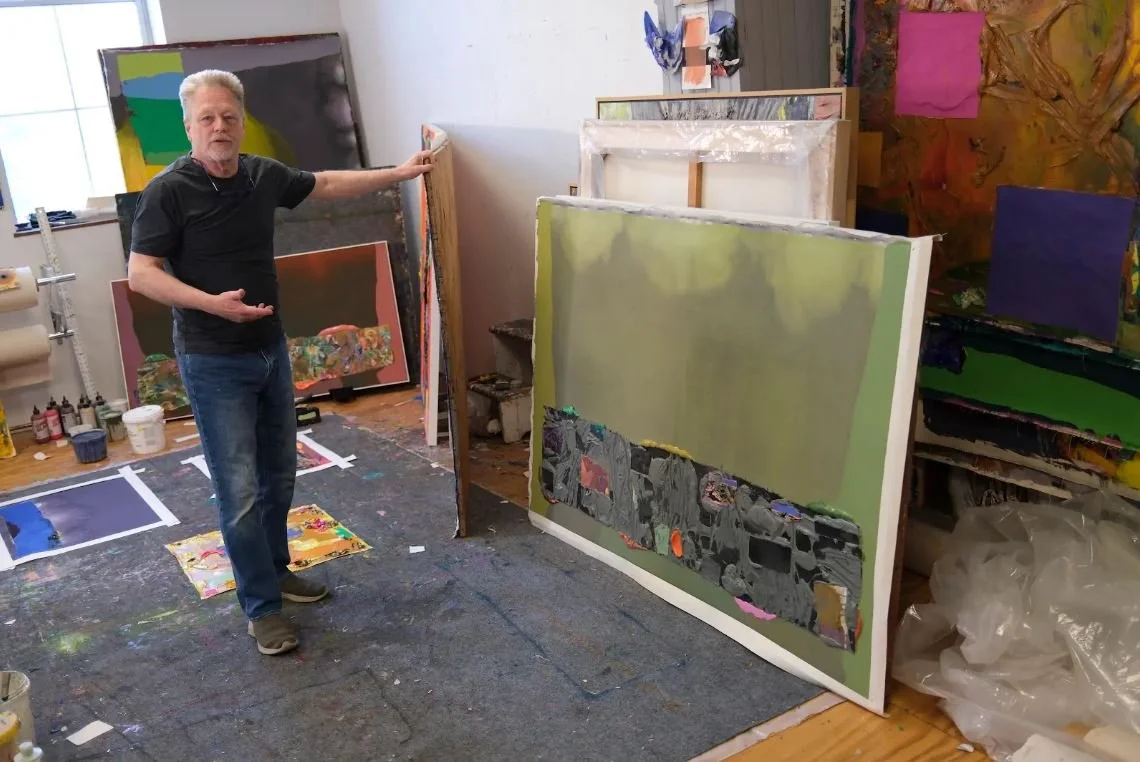
Photo Credit: HonGo David Robertson
The philosophy remained with him long after graduation. Although viewers often describe him as a highly textural painter, Bennett resists defining himself that way.
"I'm a painter," he said.
The distinction matters. He isn't interested in being defined by the thickness of his surfaces or the physical qualities of his materials. Rather, he embraces paint in all of its possibilities, from thin washes to heavy impasto, from pouring and scraping to collage. Texture is one part of his vocabulary, not its definition.
The thick surfaces, collage, and sculptural qualities of his work, he explained, are simply extensions of painting's long history. Acrylic paint expanded those possibilities by allowing layers, pours, scraping, and collage in ways traditional oil paint could not.
His years at Golden gave him an extraordinary understanding of the material itself, but for Bennett the paint has never been the point. Materials are only tools. The real challenge lies in the state of mind required to use them.
As we walked through his studio looking at finished paintings and works in progress, I asked whether he preferred the process of painting or completing a finished work. He paused. "I really like completion," he said. "When you know it's finished—at least at the time."
Yet he quickly admitted that what continually draws him back into the studio is not the finished painting but the process itself. Making strong paintings, he believes, requires learning to stop thinking.
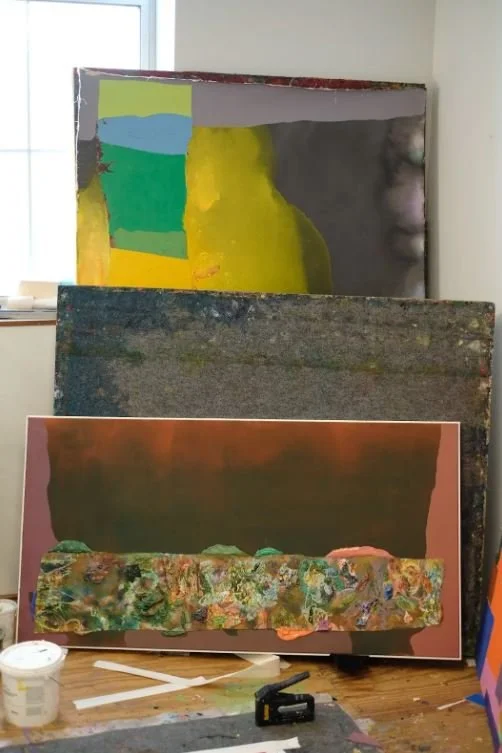
Photo Credit: HonGo David Robertson
That sounds contradictory coming from someone who speaks so thoughtfully about art, but Bennett distinguishes practical thinking from creative awareness. Building a stretcher requires thought. Painting requires something much broader. "The thinking process is narrower," he explained. "The stuff you have to access to make really good art is something else."
Over decades of painting he has learned to find ways of entering that wider state of awareness where intuition guides decisions. He compared the experience to modern theoretical physics, where every new discovery reveals even greater mysteries. "The wonder of the unknown is the best part of making art."
That willingness to embrace uncertainty has become central to his philosophy. Safe decisions rarely produce memorable paintings. Each canvas asks him to move into territory where the outcome remains unknown. Watching Bennett describe his work, it became clear that every finished painting represents hundreds of intuitive decisions rather than carefully calculated plans.
His paintings continue evolving as well. Several recent canvases leaned against the studio walls waiting to be stretched. Large fields of luminous color occupied much of the surface before textured collage elements interrupted the quiet spaces below. Bennett explained that the series began with a simple observation. "I looked at the canvas and thought, 'That looks so good just like that.' But it wasn't a painting yet."
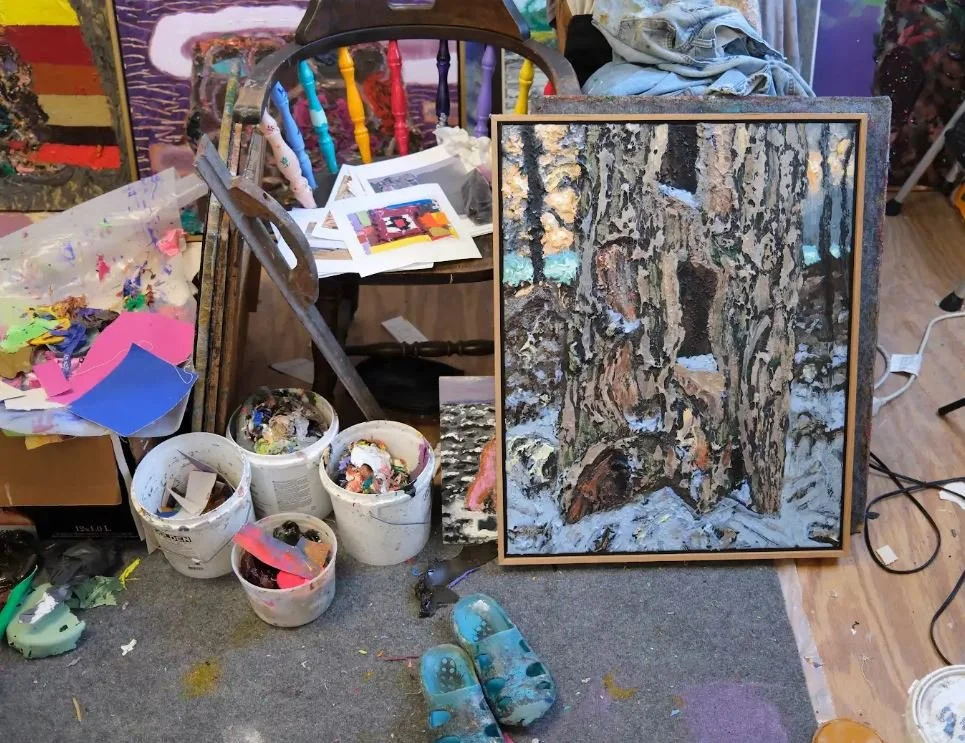
Photo Credit: HonGo David Robertson
The challenge became preserving those broad fields of color while creating a complete composition. One successful painting led naturally to another until he eventually realized he had become too comfortable. "I got to the point where I knew what I was doing," he said. "And that starts not working."
So, he deliberately disrupted his own process. New shapes appeared. Earlier influences resurfaced. Familiar compositions gave way to unexpected combinations. He describes the evolution as continually folding the past into the present. "It's this slow folding in and refolding in of the past with what you're doing now."
Some recent paintings incorporate collage cut from earlier works. Others grew out of childhood memories of Colorforms, the simple vinyl toy that allowed children to rearrange brightly colored shapes into endless compositions.
"I wanted to make paintings like Colorforms," Bennett said, not to imitate the toy itself, but to recover the sense of play, freedom, and simplicity he remembered from those early experiences of arranging shapes without worrying about rules or expectations.
Nearby hung examples from another long-running series he calls Tree Portraits. Although rooted in observation, they are not painted directly from nature. Bennett photographs trees, makes quick sketches, and then returns to the studio.
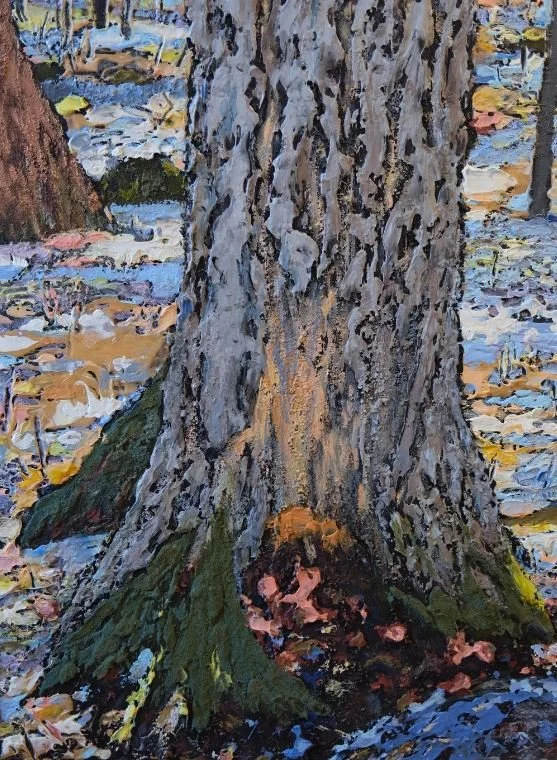
Photo Credit: HonGo David Robertson - Painting title: Spring Thaw, 2023, acrylic on canvas, 45.25 x 34"
Working directly from photographs, he explained, often kills the painting because looking at a photograph is fundamentally different from experiencing nature itself. "I want the experience of being in nature," he said, "but I want all my materials around me." Those sketches free him from copying. Once back in the studio, memory, observation, and paint begin interacting until the image becomes something entirely its own.
Throughout our conversation Bennett returned repeatedly to the importance of trusted criticism. Every artist benefits from other eyes, he believes, but not every opinion carries the same weight.
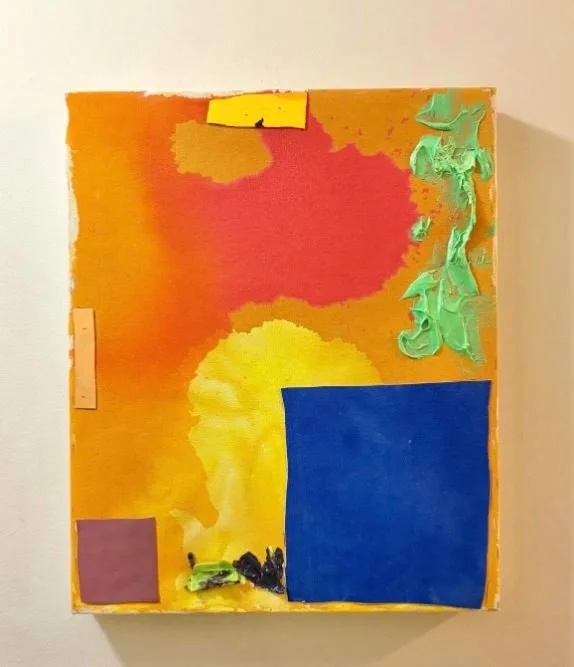
Photo Provided by Scott Bennett: Sunny Day, 2026, 23 ½ x 19 1/4, acrylic and collage on canvas
He embraces influence, whether it comes from the history of painting or from conversations with fellow artists whose judgment he respects. Looking closely at the work of others has always been part of his own development. Likewise, thoughtful criticism can reveal possibilities an artist may have overlooked. The key is knowing whose eyes to trust.
"If you're that easily influenced," he said, "that's the artist's problem."
He wasn't suggesting artists should ignore criticism. Quite the opposite. Bennett believes artists should remain as open as possible to ideas that strengthen the work. The danger lies in either lacking the confidence to separate meaningful criticism from unhelpful opinion or allowing ego to reject useful observations outright.
Over the years Bennett has developed a circle of artists whose judgment he values. They challenge one another honestly, not to reshape another person's vision but to help each painting become the strongest version of itself. Ultimately, every artist must make the final decision, but remaining open to thoughtful criticism is, in Bennett's view, an essential part of artistic growth.
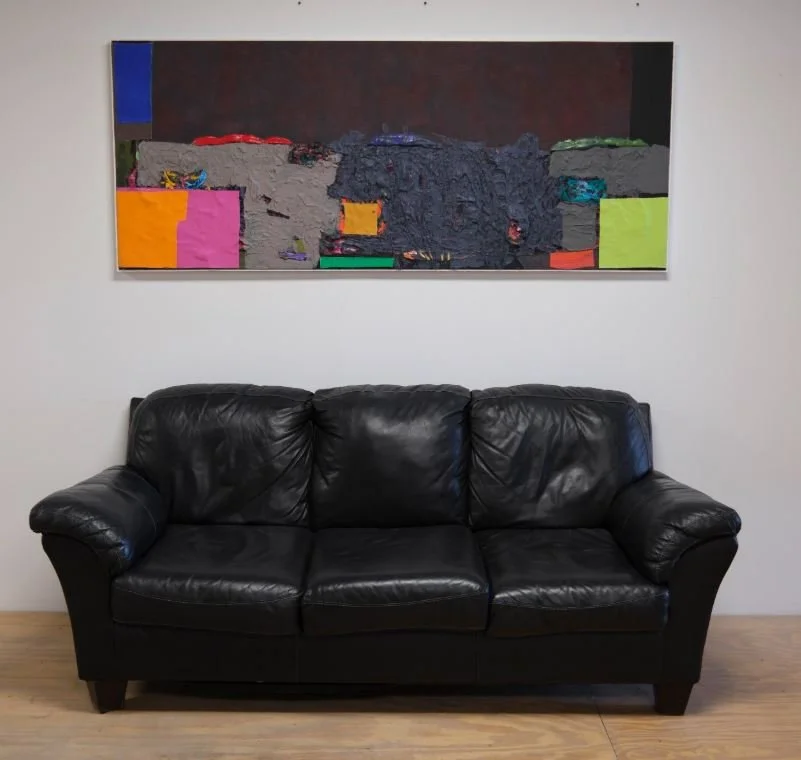
Photo Credit: HonGo David Robertson - Painting title: Dalkeith, 2026, acrylic and collage on canvas, 30 x 74"
Behind the humor lies a practical truth. He no longer feels compelled to spend endless energy pursuing galleries or dealers. If he must choose where to invest his time, the answer is immediate. Painting comes first.
Before leaving, I photographed Bennett among the paintings surrounding him. Our conversation drifted naturally into photography, darkrooms, and black-and-white film before returning once again to painting. It seemed appropriate.
Scott Bennett has spent a lifetime resisting simple definitions. Painter, educator, technician, student of creativity, teacher, and observer—each role has informed the others without replacing them. Even after decades in the studio, he continues searching rather than settling.
Perhaps that is why his paintings remain so engaging. They are not demonstrations of certainty. They are records of an artist willing to trust intuition, embrace uncertainty, and follow each painting wherever it may lead. For Scott Bennett, the destination has never been certainty. It has always been the privilege of stepping into the unknown.
For more information about Scott and his art:
Email: scottbennettstudio@gmail.com
Website: scottbennettart.com