
Russell Bellair: Hearing the Music Beyond Sight
Route 20, East, the drive to Waterville, NY winds through the rolling hills of Central New York, where old farmhouses and weathered barns still define the landscape. Russell Bellair's home sits comfortably among them, an 1870s house whose exposed hand-hewn beams remind me of a formerly beloved home I once owned.
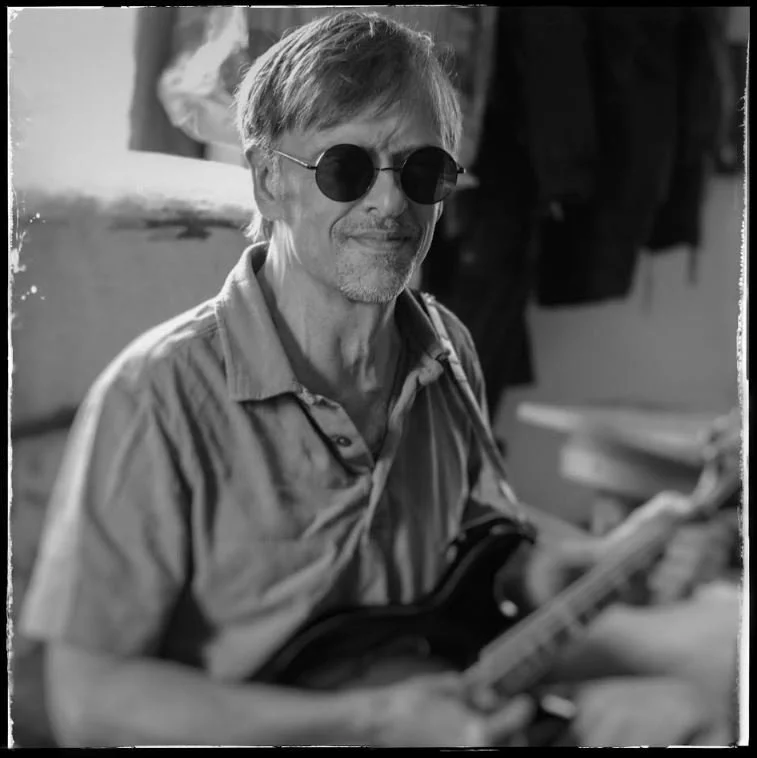
Photo Credit: HonGo David Robertson
Inside, guitars hang from the walls, a well-played mandolin rests within easy reach, and two cats, Frank and Bean wander through the rooms while a persistent unwelcomed chipmunk hides, we believe under the refrigerator. At any rate, it keeps the cats entertained. It is a place built around music rather than decoration, where instruments are not displayed as trophies but kept ready to be played.
Bellair greets visitors with a smile and an outstretched hand. It is only after a few moments that he explains he is legally blind. Years of adapting have made his movements appear almost instinctive, and in his own home he navigates with confidence, born from repetition rather than sight.
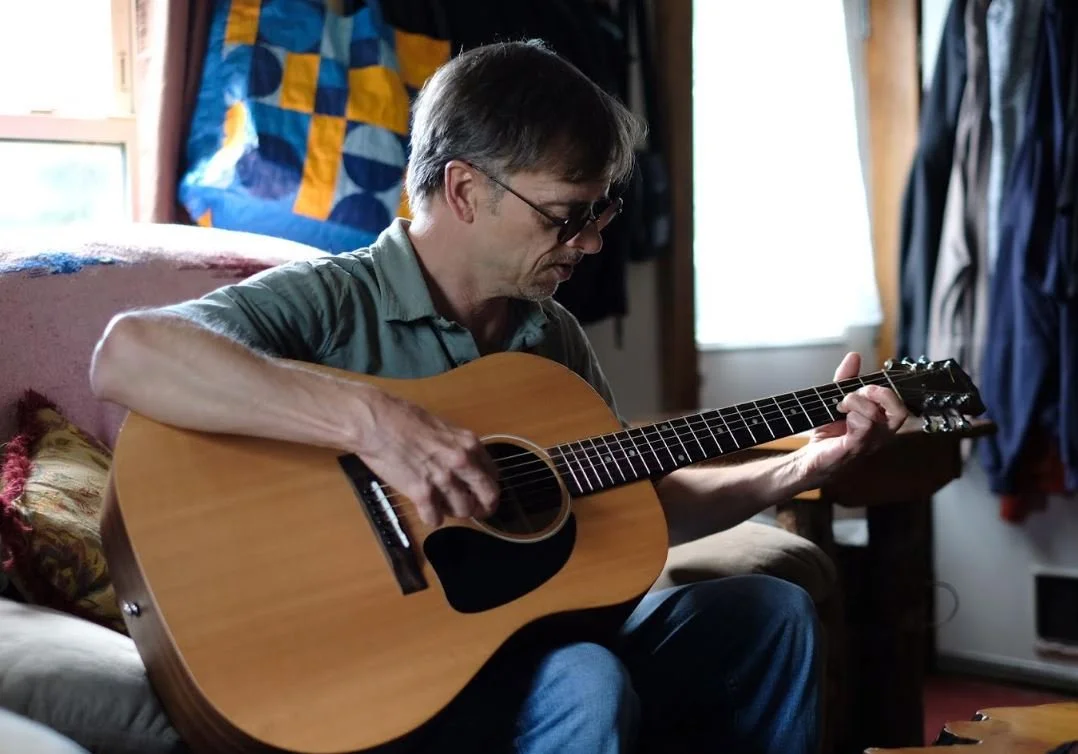
Photo Credit: HonGo David Robertson
Music fills nearly every corner of his life. Between more than one hundred performances each year, songwriting, recording, woodworking, and a growing collection of humorous home repair videos, Bellair has little interest in dwelling on limitations. Blindness is part of his story, but it is not the story itself.
His relationship with music began almost as early as he can remember. "I started singing in church when I was five," he recalls. "My mother would show me the hymnal and try to teach me how the notes went up and down." His father played guitar and sang country songs around the house, creating an environment where music felt natural rather than exceptional. By elementary school he was handed a trombone, although it quickly became apparent the instrument was almost larger than he was. "I couldn't reach sixth position," he laughs. "I told them, 'Do you have something smaller?'"
After his parents divorced, the family moved several times before settling in Bainbridge-Guilford, a school district whose music program would permanently shape his future. What Bellair encountered there surprised him. He walked into his first music class expecting another orderly band rehearsal. Instead, students were scattered throughout the room, each immersed in different instruments and styles. The teacher simply asked what he wanted to play. "I said, 'How about guitar? My dad plays guitar.'" The teacher pointed toward a group already learning acoustic guitars and spent ten minutes showing Bellair his first chords. Those few minutes changed everything.
By ninth grade he had become consumed with the instrument. A year later he was studying classical guitar, drawn to its technical demands and expressive possibilities.
"I fell in love with it." His dedication eventually earned him an audition at the Purchase College Conservatory of Music, where internationally respected classical guitarist David Starobin accepted him into the program.
"It was overwhelming," Bellair says. "I was surrounded by players who were ten times better than I was." Rather than become discouraged, he disappeared into practice rooms.
"I spent my first year just trying to catch up." Five years later he graduated with dual degrees in classical guitar performance and studio production after extending his studies to pursue recording engineering as well.
The additional year proved invaluable. Studio production opened another creative avenue beyond performing. Bellair immersed himself in recording technology while taking every opportunity to gain professional experience.
Before graduation he had already secured work with Twinbrook Records in New York City, commuting into Manhattan while completing college. When that company folded, he found work with Brunswick Records before eventually accepting a management position with Trader Joe's. For several years music shifted into the background while he pursued a stable career.

Image provided by: Russell Bellair
"I realized it wasn't what I wanted," he says simply. Leaving retail behind, he reunited with longtime friend Eric Lipper, and together they formed The Tweedlers in 2003. Their combination of guitar, bass, and Bellair's mandolin created a distinctive sound that stood apart from the typical acoustic duo. "I learned all the guitar parts on mandolin," he says. "That kind of became our thing."
The group quickly built a following in Greenwich Village, performing regularly at the Back Fence on Bleecker Street. Visitors from around the world discovered the band, purchasing CDs and returning whenever The Tweedlers appeared.
Bellair gradually took over booking performances, expanding beyond clubs into hospitals, nursing homes, county fairs, festivals, and community concerts throughout the Northeast. "We were playing a couple hundred shows a year." Music for Bellair had become both livelihood and purpose.
Throughout those years, however, another story was unfolding alongside his career, one that had begun at birth. Bellair entered the world with congenital glaucoma, a condition that immediately threatened his eyesight. Within two weeks of being born he was undergoing specialized surgery in Albany.
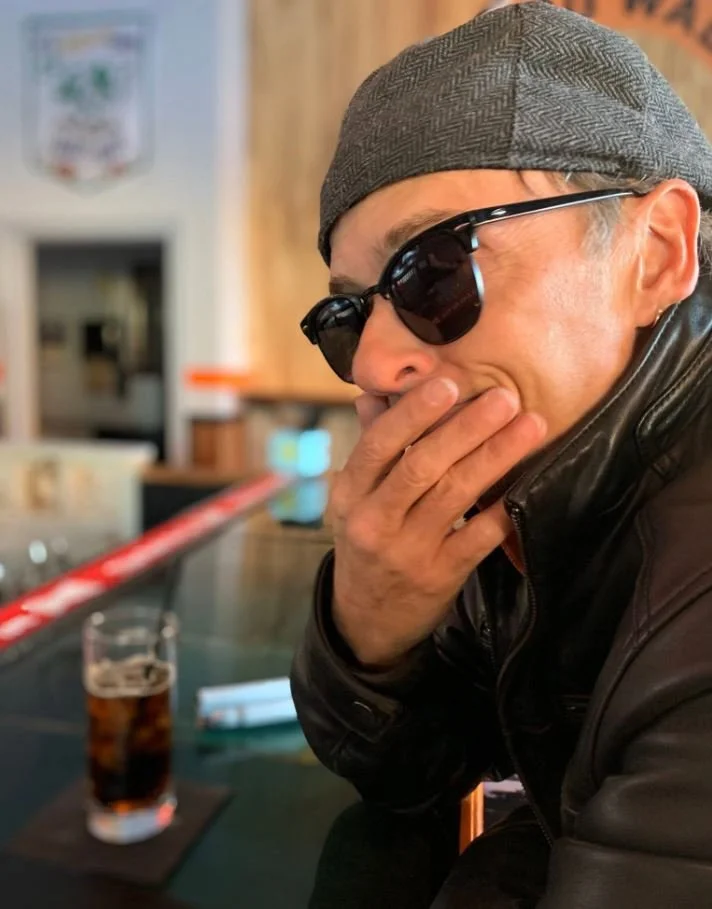
Photo provided by: Russell Bellair
"They were able to save one eye." The right eye never developed functional vision, but doctors stabilized his left eye. For decades that eye served him well. He attended school, earned college degrees, traveled, recorded music, and built a performing career believing his remaining vision would last indefinitely.
Then, at age thirty, everything changed. After performing one evening on Bleecker Street in Greenwich Village, Bellair was standing in a bar following the show when someone jokingly slapped him hard across the back of the head. The next morning, he woke unable to see. The blow had detached the retina in his only functioning eye.
Emergency surgery restored the retina, but complications followed. A drainage tube damaged his cornea, requiring a corneal transplant. After years of surgeries, recovery, and rehabilitation, doctors finally restored much of his vision. For a brief time, life returned almost to normal.
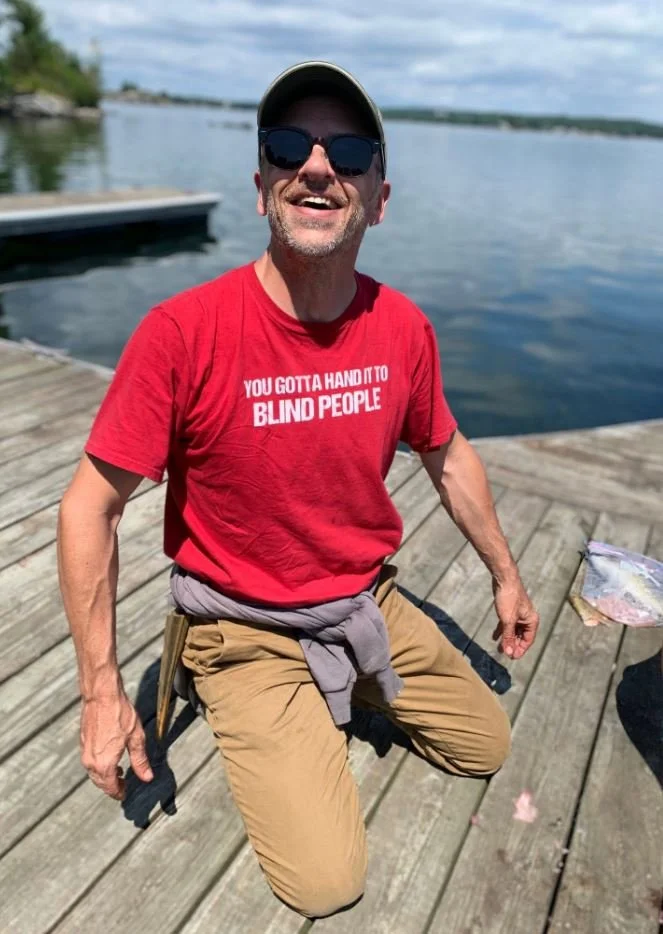
Photo provided by: Russell Bellair
Then the problems returned. The corneal transplant began to fail. The retina detached again for reasons doctors could never fully explain. More surgeries followed. More recoveries. More hope.
In 2015, while living in Texas and pursuing songwriting opportunities in Austin, another accident changed everything once again. Opening a door for someone carrying a birthday cake, Bellair was struck directly in his remaining eye. The impact caused another catastrophic retinal injury. Doctors attempted one final repair. This time they could not save it. By 2017, after nearly fifty eye surgeries over the course of his life, Bellair made the difficult decision to stop. "I threw in the towel," he says. "They were only making things worse."
The loss of his vision brought profound changes. He had to relearn cooking, home maintenance, daily routines, and even the mechanics of moving confidently through unfamiliar spaces. Yet one thing never entered his mind. Quitting music was never an option.
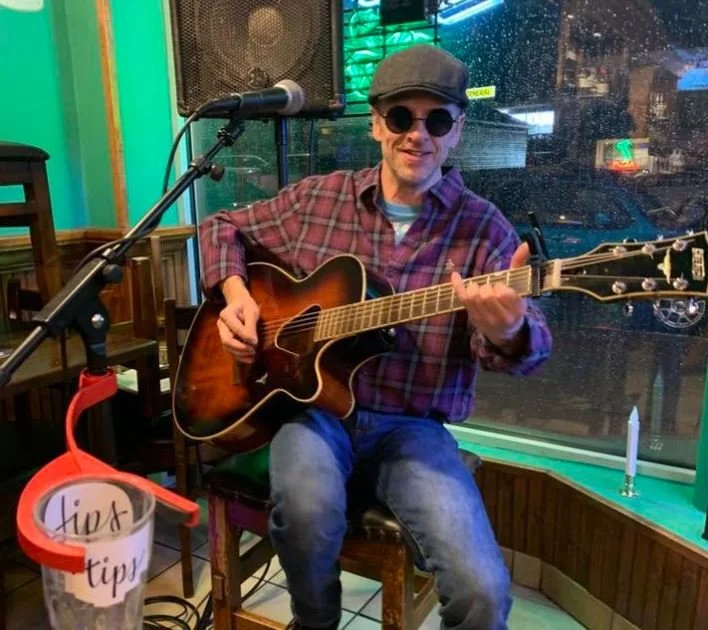
Photo provided by: Russell Bellair
For Bellair, songwriting eventually became more personal than performance alone. During the early years of The Tweedlers, much of the original material came from his musical partner, Eric Lipper, while Bellair focused on arrangements, mandolin work, and booking performances. As the years passed and the group evolved, he found himself drawn toward writing songs that reflected his own experiences. "I only had one original song," he recalls of his early songwriting efforts. "People kept asking if I had another one, and I didn't."
The songs arrived gradually, often sparked by ordinary moments rather than grand inspiration. One of his earliest pieces, "Never Think Again," grew out of a misunderstanding with his mother. Frustrated after a brief exchange, he picked up his guitar and discovered a chorus almost immediately. Another song, "Moderation," came after watching acquaintances struggle with excess and addiction. Rather than lecture, he wrote about balance.
More recently, a noisy cricket outside his home inspired one of his favorite compositions. Trying unsuccessfully to carry on a telephone conversation while the insect chirped relentlessly beneath his favorite tree, Bellair hung up the phone, grabbed his guitar, and began writing. "I was annoyed," he laughs.
The resulting song, "Mr. Cricket," transformed irritation into humor. Its playful chorus and storytelling style have become audience favorites. Listening to Bellair describe the song, it becomes apparent that he enjoys finding melodies hidden inside everyday encounters. A persistent insect, an overheard conversation, an unwelcomed chipmunk, or a fleeting emotion can all become the foundation for a composition.
"There isn't one formula," he explains. "Sometimes I'll work on a song for over a year and nothing comes together. Then something happens in life, and suddenly I know exactly what I wanted to say." The hook usually comes first. Sometimes it is only a phrase, other times a chorus, but once that central idea appears the rest of the song gradually grows around it.
His years in Texas proved especially important in developing his songwriting voice. Drawn to Austin's thriving music community, Bellair immersed himself in open mics and songwriter circles, often joining musicians he had only recently met. Fellow performers encouraged him to keep writing, and the city's collaborative atmosphere gave him confidence to pursue original material more seriously.
Then the COVID-19 pandemic brought live performances to an abrupt halt. Confined to a small apartment he shared with a roommate, Bellair found the only quiet place available was a tiny utility closet on the balcony, just large enough for a stool and a guitar. While much of the world paused, he spent countless hours there writing songs. "I practically lived in that closet," he says.
The isolation became unexpectedly productive. He recorded his first collection of original music in Texas and emerged from the pandemic with a growing catalog of songs that reflected relationships, personal struggles, humor, and hope.
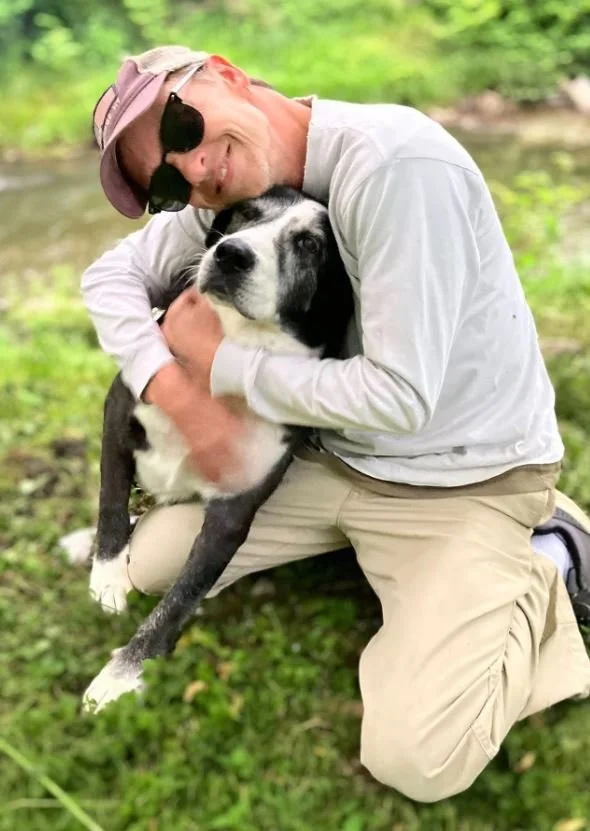
Photo provided by: Russell Bellair. Russell with his dog Bella
Today, Bellair estimates he has written roughly three dozen songs, releasing at least a dozen to the listening world, along with several albums recorded with The Tweedlers and a Christmas album that remains one of his favorites. His performance schedule remains remarkably active. Although he no longer performs two hundred plus shows a year, as he once did, he still averages close to one hundred performances annually. Nursing homes, rehabilitation centers, hospitals, community concerts, festivals, restaurants, and parks fill his calendar. He also hosts a monthly acoustic song circle where musicians gather to exchange songs, learn from one another, and simply enjoy making music together.
For Bellair, those performances carry a purpose beyond entertainment. Reflecting on years spent playing for hospital patients and nursing home residents, he recognizes the quiet importance those visits can have. A familiar song, an hour of conversation, or simply seeing someone arrive carrying a guitar can briefly interrupt loneliness or illness. "I've probably put a half-million smiles on people's faces over the years," he says with a grin.
Music is only one outlet for his creativity. In addition to writing songs, he finds satisfaction in working with wood despite his lack of vision. Like playing guitar, woodworking has become an exercise in memory, touch, patience, and problem-solving.
Perhaps the most unexpected project, however, is his growing collection of home repair videos. Bellair cheerfully refers to himself as "the blind Bob Vila." Whether replacing plumbing, repairing washing machines, trimming trees with a chainsaw, or tackling household projects that most people would hesitate to attempt without sight, he approaches each task with equal parts confidence and humor. The videos have attracted an enthusiastic following on social media, where viewers are often astonished to discover the man confidently repairing appliances is completely blind. He sees enormous potential in the idea. "I think people would watch it," he says. "There's humor in it, but there's also the reality that life doesn't stop."
Bellair speaks candidly about blindness without allowing it to define him. He acknowledges the frustrations. He misses being able to glance at his left hand while playing guitar. He misses recording engineering, where visual precision once mattered. He taught himself Braille through correspondence courses after losing his sight, not because he wanted another language, but because he wanted to remain independent.
He has also learned that adaptation is less about heightened senses than learning to trust the ones that remain. "I don't think my hearing got better," he says. "I just learned how to use it."
That philosophy seems to extend well beyond blindness. Rather than focusing on what has been lost, Bellair consistently returns to what remains possible. He continues writing songs, performing for audiences large and small, building furniture, repairing his home, and finding humor in life's unexpected moments.
Near the end of the visit, he picks up his mandolin, settling comfortably into a familiar posture. His fingers move confidently across the strings, guided by decades of experience rather than eyesight. The music fills the old farmhouse, echoing beneath beams that have stood for more than a century.
Russell Bellair's story is not one of overcoming blindness so much as refusing to surrender creativity to it. Music remains his language, craftsmanship his companion, and curiosity his greatest guide. The life he has built continues to resonate with warmth, laughter, and song, a reminder that vision is only one way of seeing the possibilities before us.
Note: Check out some of Russell’s home improvement projects on Facebook.