
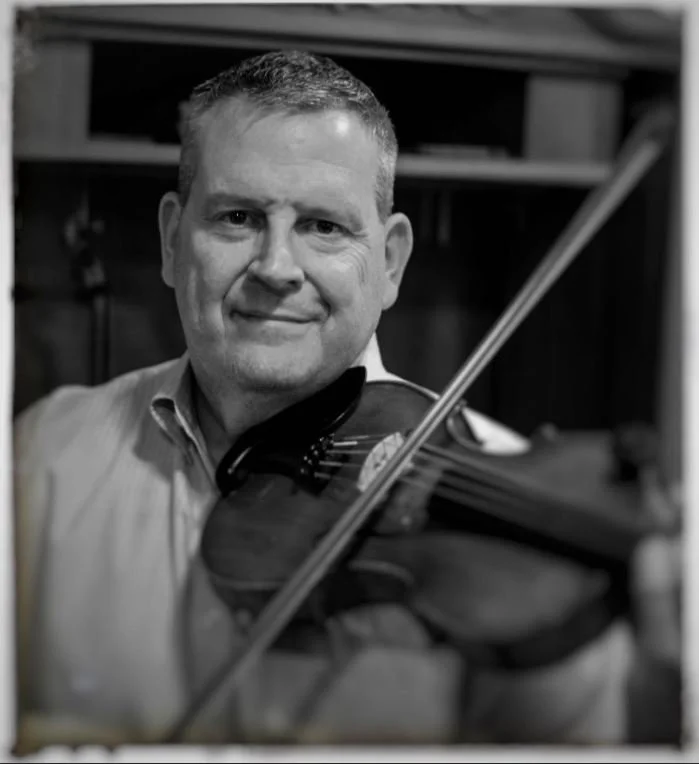
Photo Credit: HonGo David Robertson
Joe Davoli's front door is answered by Indy, an enthusiastic pit bull mix who greets visitors with the confidence of someone convinced they have come to see her. Davoli laughs as he explains the routine. "The trick with Indy," he says, "is to ignore her for a little while. If you keep petting her, she'll never settle down."
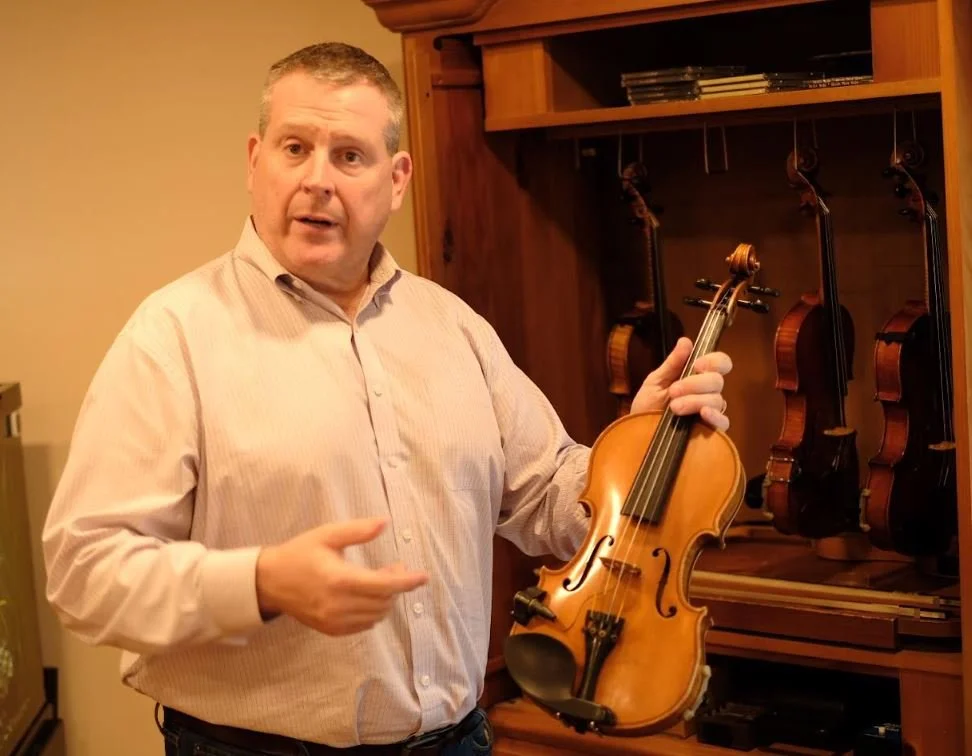
Photo Credit: HonGo David Robertson
Before violins are unpacked and stories of performances begin, Joe Davoli welcomes visitors the same way he greets many of his students—with coffee and the cheerful interruption of Indy, his affectionate pit bull mix. Indy quickly makes it clear that every visitor has come to see her, circling the room until Joe gently reminds her to settle down. She eventually curls up nearby, content to supervise the conversation.
The morning begins, appropriately enough, with coffee. We discover that we share the habits of early risers, those quiet hours before the rest of the world wakes when distractions are few and work comes easily. Joe describes how he gradually became a coffee enthusiast. As a boy he couldn't understand why anyone would willingly drink something so bitter. Years later, after long drives home from performances, coffee became less of a necessity than a ritual. His brother introduced him to the simple elegance of a stovetop moka pot, convincing him that expensive espresso machines weren't required to make exceptional coffee.
We compare brewing techniques, debate whether the grounds should be packed or left loose, and laugh about the endless opinions coffee lovers have about the "right" way to make a cup. The conversation reminds me of advice once given by a Trappist monk at the Abbey of the Genesee, who insisted that good coffee always begins with ice-cold water. Joe smiles knowingly. Like musicians discussing bows or strings, coffee enthusiasts are forever refining small details in pursuit of something better.
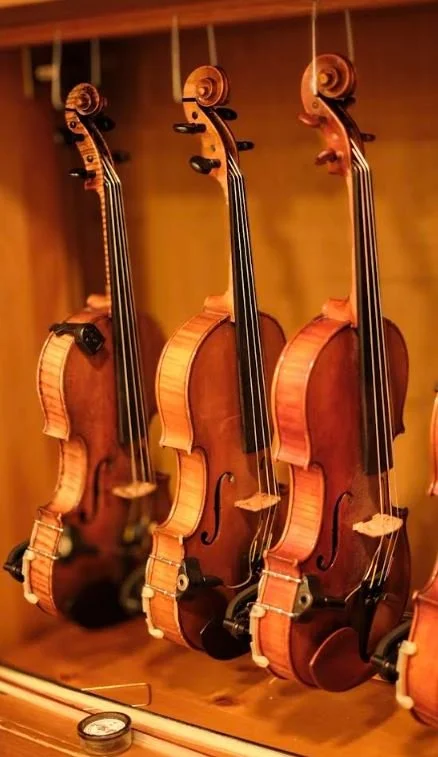
Photo Credit: HonGo David Robertson
That appreciation for craftsmanship carries naturally into the room where Joe teaches. Violins hang neatly on the walls, music stands waiting for the day's students, and Indy quietly observes from her favorite spot. It is a space that reflects the rhythm of Joe's life, a place where decades of experience are passed from one generation to the next.
Music entered Joe's life long before he was old enough to understand it. Born in Boston while his father attended law school at Boston College, he was adopted through Catholic Charities before returning to Central New York as an infant. His parents, both Syracuse natives, had deliberately chosen adoption as they began building their family. Later came three biological brothers and, eventually, an adopted sister, making Joe one of five children in a busy household on Onondaga Hill.
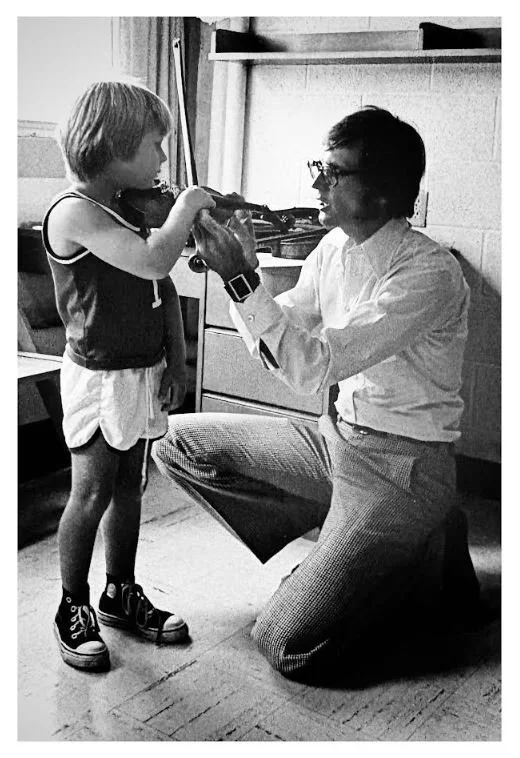
Photo Credit: HonGo David Robertson - - Joe with his instructor 1975
His parents were not professional musicians, but music filled their home. His mother had studied piano throughout high school, while his father sang in the choir at St. Michael's Church. Concerts were common family outings, and after performances they noticed something unusual. Young Joe would quietly hum melodies on the drive home, accurately recalling music he had heard only once. Recognizing that interest, his parents searched for lessons and found an advertisement for Suzuki violin instruction taught by a neighbor at the end of their street.
Joe began studying violin when he was just three years old. The Suzuki method, developed by Japanese educator Shinichi Suzuki, teaches music much like language. Before children learn to read notes, they learn by listening, repeating, and absorbing music through constant exposure. Looking back, Joe believes the approach shaped everything that followed in his musical life.
The violin quickly became part of the family culture. Every one of his siblings learned the instrument, and his mother's dedication to driving children to lessons, rehearsals, and summer programs eventually earned her recognition as Suzuki Mother of the Year at one of the Ithaca Suzuki institutes. As the younger brothers grew older, some migrated to band instruments, but music remained a constant in the Davoli household.
Joe never questioned whether he would continue. Summer music camps, county orchestras, and youth ensembles became regular experiences. He remembers the excitement of sitting inside an orchestra, surrounded by harmony, feeling certain passages raise the hair on the back of his neck. Those moments convinced him that music was more than an activity. It was something he simply loved being part of.
At Westhill High School, however, there was one problem. The school had no string program. Determined to participate in the music department, Joe walked into the band director's office expecting to choose something glamorous like trumpet or saxophone. Instead, the director explained that three tuba players had just graduated and suggested Joe fill the vacancy.
The recommendation surprised him, but it proved to be inspired. Playing tuba gave him an entirely different perspective on music. Accustomed to carrying melodies on violin, he suddenly found himself responsible for rhythm and harmony from the bottom of the ensemble. The experience broadened his understanding of arranging and ensemble playing while giving him four memorable years as part of the school's band program. At the same time another passion demanded equal attention.
Joe had become a highly competitive tennis player. His search for colleges revolved around finding a university that could satisfy both interests. DePaul University in Chicago offered a Division I tennis program and a respected music department, making it the perfect combination. Although he enrolled as a physical education major, he immersed himself in music whenever his schedule allowed. Orchestra, violin choir, music theory, ear training, chamber ensembles—every elective seemed to lead back to the music building.
Many students assumed he was a music major. He wasn't. The demands of Division I athletics left little room for anything else. Tennis scholarships were highly competitive, with only a handful of roster spots available each season. Remaining on the team required constant training and relentless repetition.
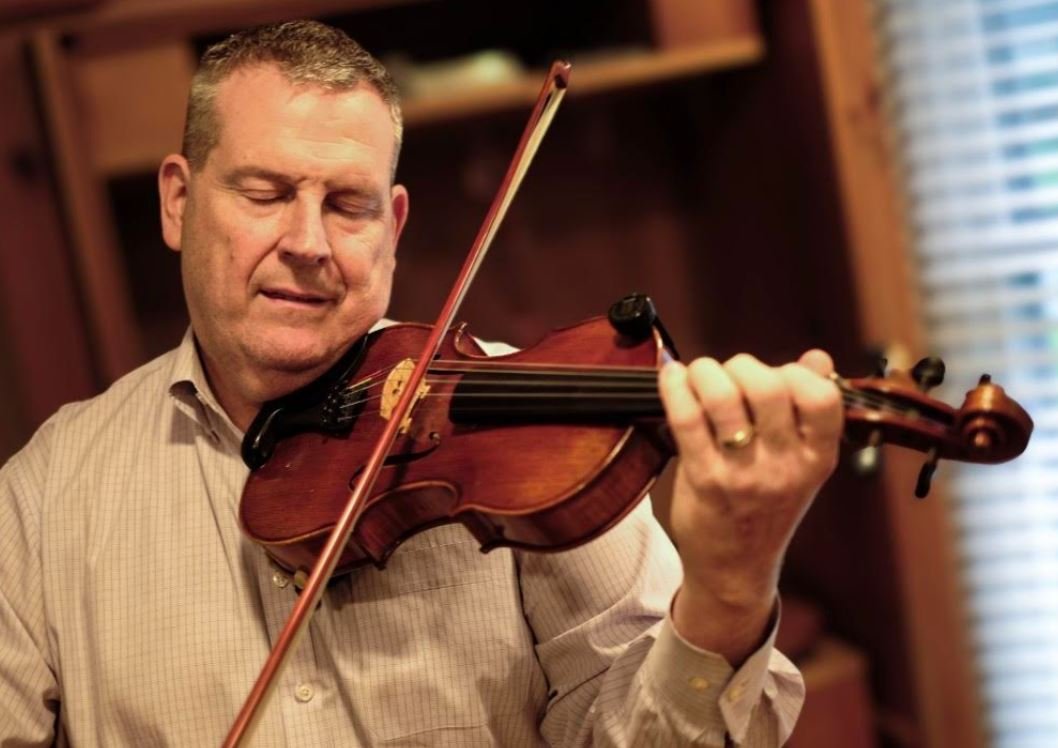
Photo Credit: HonGo David Robertson
Looking back, Joe sees remarkable similarities between athletics and music. Both demand discipline, patience, and thousands of carefully repeated movements until correct technique becomes instinctive. Whether learning a difficult passage on violin or perfecting a tennis stroke, success comes through repetition, not shortcuts. The lesson continues to shape the way he teaches today. Students don't simply need to practice—they need to practice correctly, because repeating bad habits only reinforces them.
After graduating from DePaul, Joe returned to Central New York, helping with his father's tennis programs while continuing to perform whenever opportunities arose. Around that time another musical world began capturing his imagination.
He discovered jazz violinist Stéphane Grappelli. Soon afterward came bluegrass, Irish traditional music, and American fiddle styles. The music possessed a spontaneity that fascinated him. Unlike classical performance, where every note is written on the page, fiddle traditions depended on listening, memory, and improvisation.
Eager to immerse himself in that world, Joe enrolled for a year at Berklee College of Music in Boston. There he studied with musicians he had previously known only through recordings and magazine articles. Berklee became a turning point, exposing him to jazz improvisation, contemporary string playing, and musicians from around the world. More importantly, it confirmed that the violin could speak many musical languages beyond the concert hall. The instrument he had first learned as a three-year-old was no longer simply a violin. It had become a fiddle, capable of telling entirely different stories.
Teaching eventually became the center of Joe Davoli's musical life, although it wasn't something he had planned. After returning from Berklee College of Music, he began giving lessons almost experimentally, uncertain whether he would enjoy teaching or possess the patience required for it. Decades later, that uncertainty has long disappeared. Today he teaches more than thirty students each week from his Camillus home, works one day a week directing a string program at Tyburn Academy in Auburn, travels to Tully to teach an extended family of young musicians, and continues to instruct students online from across the country.
For Davoli, teaching is never simply about learning notes on a page. Much of his work involves classically trained violinists who want to cross into bluegrass, Irish, Celtic, jazz, or American fiddle traditions. The transition can be surprisingly difficult. Classical musicians often develop extraordinary technical ability while relying almost entirely on written notation. Traditional musicians, on the other hand, must learn to trust their ears.
"The instrument becomes your voice," he explains. That philosophy traces directly back to his Suzuki education. Long before he learned to read music, he learned to listen. Today he encourages students to develop that same connection between hearing and playing, allowing their hands to respond naturally to melodies rather than depending exclusively on printed notes. He refers to it as developing "hand-ear coordination," an ability that transforms a violin from an instrument into another way of speaking.
The parallels with athletics continue to influence his teaching. Good technique, he says, must be learned correctly from the beginning because repetition strengthens habits whether they are right or wrong. Practice alone isn't enough. Thoughtful practice is what matters.
Watching Joe interact with students, it becomes clear that lessons are built on encouragement rather than intimidation. Even Indy has become part of the classroom routine, greeting new arrivals before quietly settling down to observe each lesson. Joe jokes that she believes students come to visit her rather than learn the fiddle.
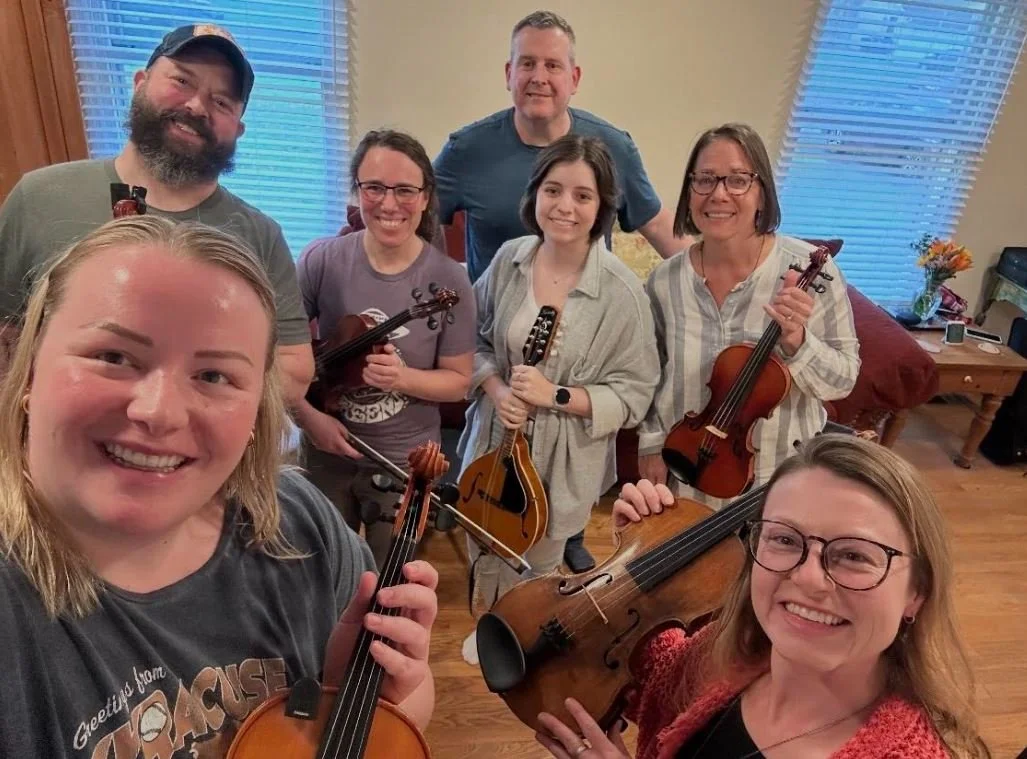
Photo Provided by Joe Davoli
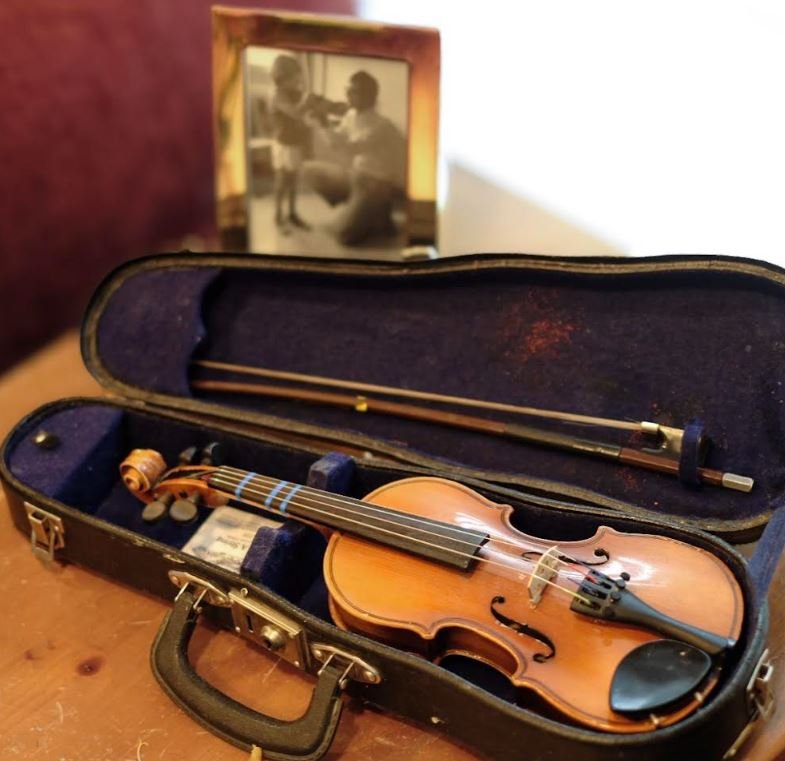
Photo Credit: HonGo David Robertson - - Joe’s first violin
Although teaching occupies much of his week, performing remains an essential part of his life. He moves comfortably between musical worlds. One evening may find him performing traditional Irish sessions at Kitty Hoynes in downtown Syracuse. Another might involve gypsy jazz with Hot Club of Syracuse, inspired by the legendary collaboration between guitarist Django Reinhardt and violinist Stéphane Grappelli. He also performs with the Celtic rock group Ceili Rain, led by acclaimed songwriter Bob Halligan Jr., while accepting studio recording sessions and theater productions whenever they arise.
One upcoming project particularly excites him. He will perform in Syracuse Stage's production of Come From Away, the acclaimed musical inspired by the small Newfoundland community that welcomed thousands of stranded airline passengers after the September 11 attacks. Preparing for a theatrical production requires weeks of study before the first rehearsal. Joe listens repeatedly to recordings, absorbing the music long before stepping into the rehearsal room. Although he reads music fluently, he still learns most naturally through listening.
His versatility extends beyond the violin. Mandolin, tenor banjo, guitar, and other stringed instruments all find their way into performances depending on the style of music being played. Yet the violin remains at the center of everything.
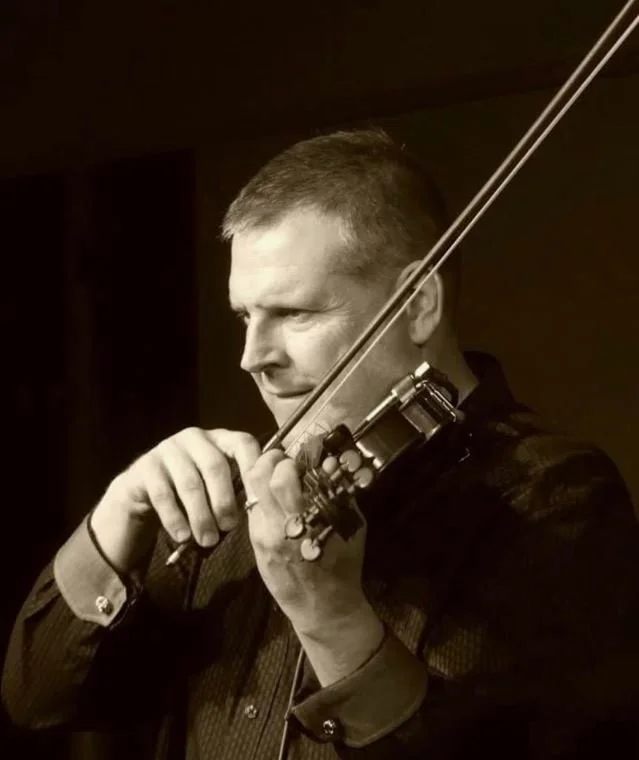
Photo Provided by Joe Davoli
Inside his studio, each instrument tells part of his story. One tiny violin is the first instrument he ever owned as a child. Another, his first full-sized violin, still accompanies him to performances where amplification is required. Nearby hangs a five-string violin that extends the instrument's lower range by adding a viola string, allowing him to explore richer harmonies. Another has been restrung as a baritone violin, producing tones an octave below a standard instrument.
Perhaps the most meaningful violin in the room, however, is one given to him by a former student who could no longer play because of illness. Rather than placing it permanently on the wall, Joe keeps it available for young musicians whose families cannot yet afford a quality instrument. It has quietly become what he calls his "scholarship violin," passing from one student to another whenever it is needed.
His prized instrument was built by Boston luthier Kevin Kelly while Joe was studying at Berklee. At the time, purchasing it required a considerable financial commitment, but years later the maker's growing reputation has transformed it into something far more valuable. Joe rarely speaks about its monetary worth. Instead, he simply smiles as he draws the bow across the strings. The instrument responds with a warmth and clarity that immediately explains why he chose it.
Despite decades of performing, Joe remains deeply connected to Central New York's music community. Throughout the conversation, names surface naturally, musicians helping one another, sharing stages, recommending students, or sitting in at informal sessions. He speaks of fellow performers not as competitors but as friends. The local scene, he believes, thrives because musicians genuinely enjoy making music together.
That generosity extends to his own students. Whenever possible, he invites them onto public stages, allowing them to experience the excitement of performing before an audience. Whether joining an Irish session for a few tunes or participating in a community performance, they learn lessons impossible to teach inside a studio alone.
As the afternoon winds down, violins are returned to their places on the wall, Indy once again requests attention, and another cup of coffee seems entirely appropriate. Joe reflects on the good fortune of spending his life doing work he genuinely enjoys.
Many people joke that musicians never work a day in their lives, he says with a smile. He knows that isn't entirely true. There are long drives, loading equipment, rehearsals, recording sessions, teaching schedules, and countless hours of solitary practice. But those are simply part of a life built around something he has loved since he first picked up a tiny Suzuki violin more than half a century ago.
Behind every performance, lesson, rehearsal, and recording session is a family that has shared the demands of a musician's life. Joe credits much of his success to the support and patience of his wife, Darbie, who has long understood the unpredictable rhythm of a career built around teaching, rehearsals, and late-night performances. Together they have raised three children, Nick and twins Joe III and Olivia, who grew up with music, woven into everyday life. Like many families of working musicians, they learned that weekends often meant concerts, evenings were reserved for students, and schedules revolved around performances as much as calendars. Joe speaks of them with gratitude, recognizing that a life devoted to music is rarely built alone. It depends upon the encouragement, flexibility, and understanding of the people waiting at home.
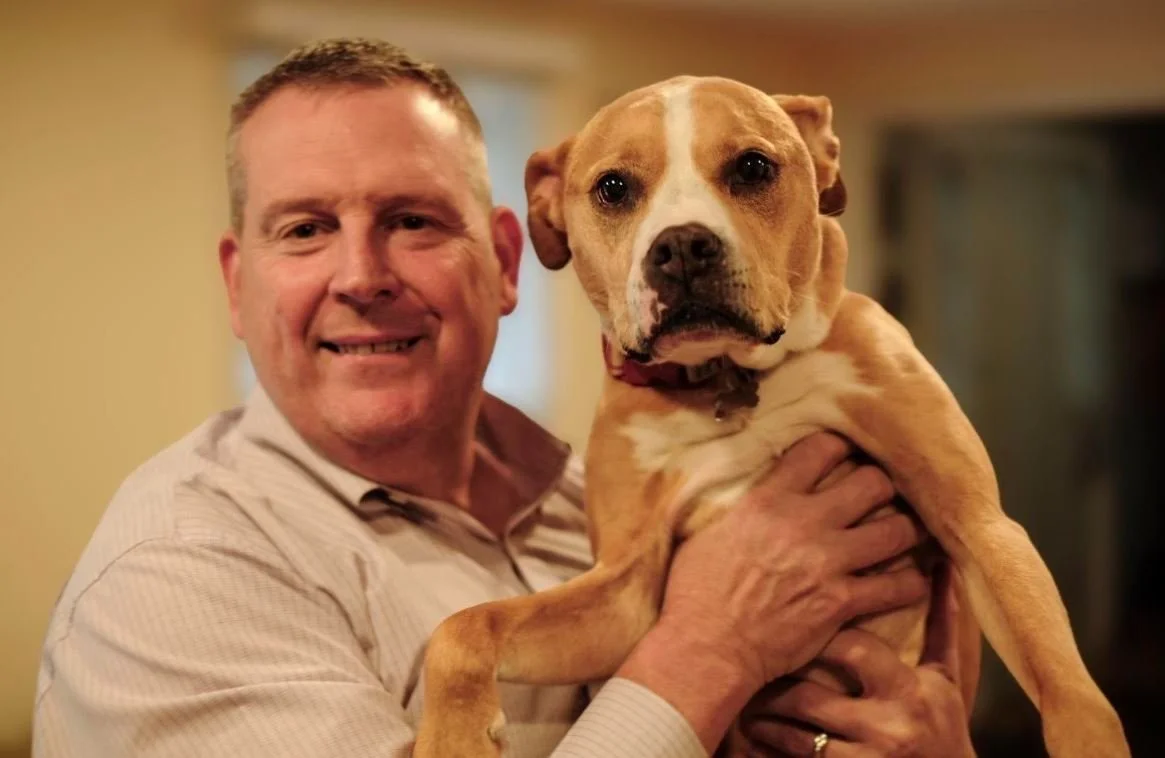
Photo Credit: HonGo David Robertson -- - Joe with his dog Indy
For Joe Davoli, music has never been just a profession. It is the thread connecting childhood to adulthood, teacher to student, performer to audience, and tradition to the next generation. Every lesson taught, every session played, and every young musician encouraged becomes another verse in a lifelong conversation carried forward.
Contact Joe:
Email: joedavoli@gmail.com
Website: www.joedavoli.com
Instagram: @joedavoli