
Nicole Windhausen: Listening to the Body
Inside her Central New York studio, Nicole Windhausen speaks about her life with a calm, grounded presence. Her work today blends body-based practice, and a deeply personal philosophy about how humans move through the world.
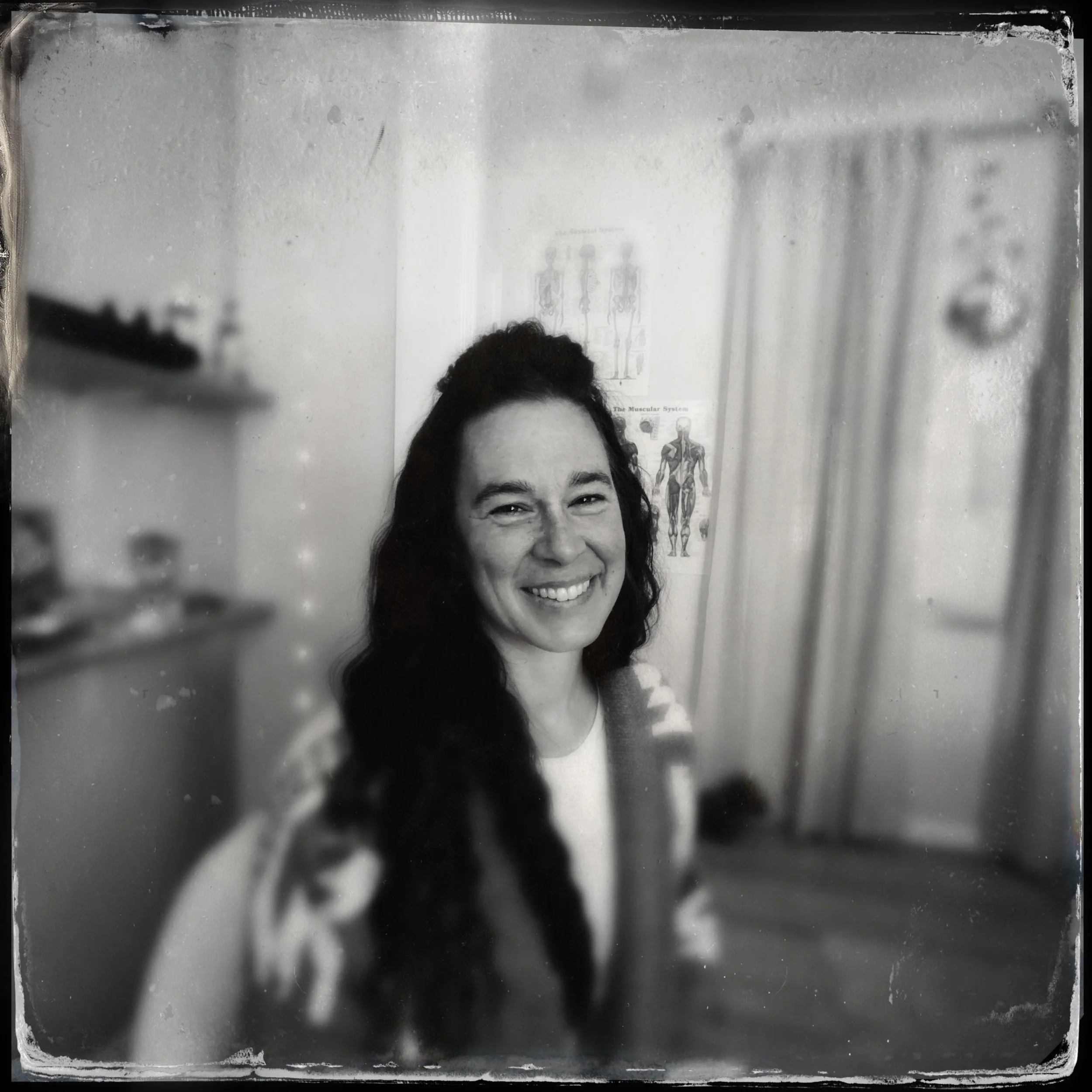
Nicole Windhausen, Photo Credit: Hongo David Robertson
Windhausen grew up in Central Square, New York, in what she describes not quite as a house, but as a “year-round camp” near Onedia Lake. It was a childhood shaped by the outdoors -- rope swings, trees climbed, long swims, and time shared with her sisters where nature and physical activity were constants. Her parents encouraged an active lifestyle, skiing, hiking, camping, and those early experiences left a lasting imprint. “We were outside all the time,” she recalls. “That was just how we lived.”
Alongside that physical freedom, another thread was quietly forming; writing. By middle school, Windhausen had begun composing poetry, and by high school, it had become a serious creative outlet. She remembers sitting late at night with a typewriter, the house asleep around her, the moon visible through an open porch door. It was in those quiet hours that she began shaping language into something meaningful. Her childhood bedroom still bears traces of that time, poems written directly onto walls, preserved like artifacts of her emerging voice.
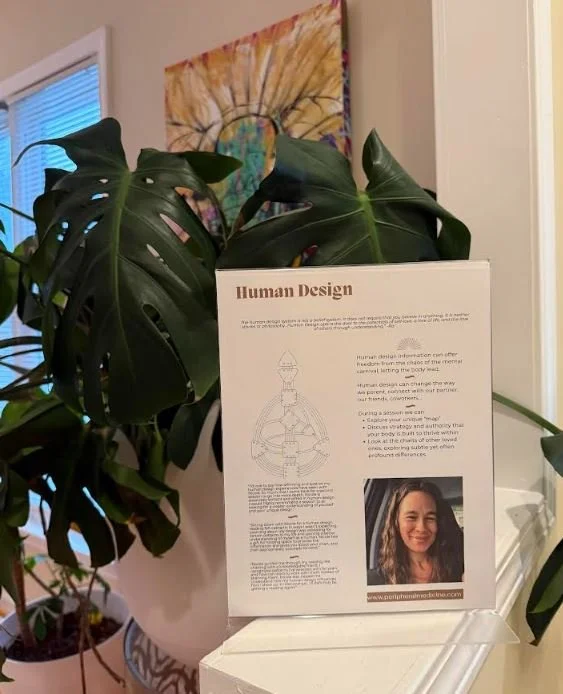
Photo Provided by Nicole Windhausen
Though she briefly considered more conventional paths, Windhausen resisted the idea of staying local or following a prescribed trajectory. After graduating from Central Square High School, she chose to leave the area, attending Green Mountain College in Vermont before transferring to the University of Southern Maine in Portland. There, she completed a degree in English with a minor in creative writing.
Even then, she resisted the expected next step. Teaching, often the path for writing graduates, didn’t appeal to her. “I’ve always preferred to be outside of the establishment,” she says. That independence, both philosophical and practical, has defined much of her adult life.
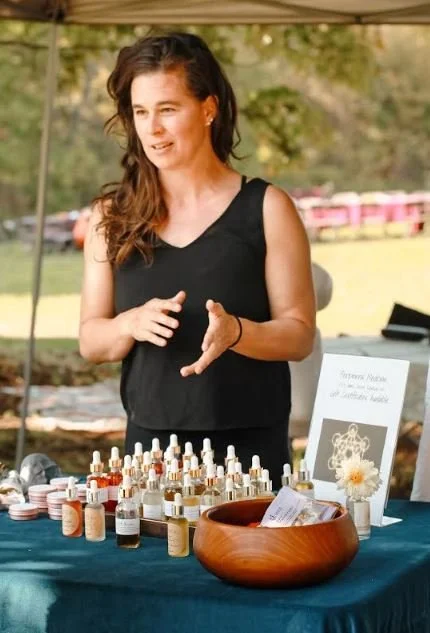
Photo Provided by Nicole Windhausen
Writing never disappeared, though it shifted in form and frequency. Windhausen describes her practice as intermittent, not bound by rigid discipline but responsive to life’s changing currents. In recent years, her work has taken on a more reflective tone, focusing on contemporary experiences and broader shifts she perceives in the world. A significant moment came during the pandemic era, when she submitted poetry to a contest associated with the late poet Robinson Jeffers. Receiving an honorary recognition felt like a full-circle moment, an acknowledgment from a literary lineage she deeply admired.
But writing is only one part of her evolving creative identity. Over the past several years, Windhausen has developed a practice rooted in what she calls “peripheral medicine,” a framework that blends bodywork with Human Design, a system that seeks to map individual energetic and psychological patterns.
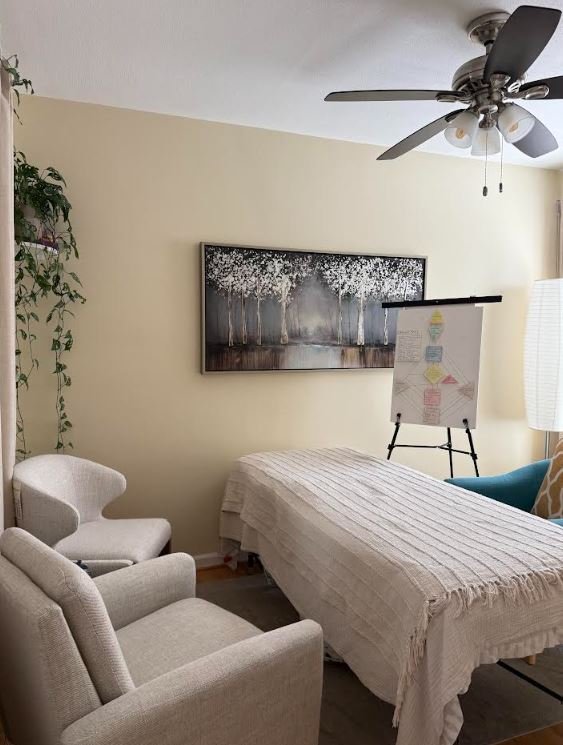
Photo Provided by Nicole Windhausen
At its core, her work is about helping people reconnect with their bodies. She describes a cultural shift away from purely mind-driven decision-making toward a more embodied awareness. In her view, modern life has long prioritized intellect and external systems, structures that dictate how people should behave, work, and relate. Now, she believes there is a growing movement toward individuality and internal agency. Human Design, as she practices it, offers a kind of personalized map. Each client’s “body graph” becomes a tool for conversation, a visual representation of tendencies, strengths, and patterns. “It’s like cartography,” she explains. “You’re reading a map of how someone is built to operate.”
Sessions are not prescriptive. Instead, they are exploratory. Windhausen walks clients through their charts, discussing how different “centers” function and how inconsistencies or strengths may show up in everyday life. For many, the experience is less about learning something new and more about recognizing something long felt but never articulated. There is often a sense of validation, of being seen in a way that aligns with their lived experience. Central to her approach is the idea of “deconditioning,” or loosening the grip of external expectations and mental over-analysis. She often describes the mind as a powerful but unreliable decision-maker, useful for processing information but not always for guiding action. In contrast, the body, she believes, carries deeper intelligence. This perspective has clear overlap with broader wellness trends, meditation, breathwork, trauma-informed practices, but Windhausen is careful not to frame her work as a belief system. “It’s not a religion or a dogma,” she says. “It’s a system of mechanics.”
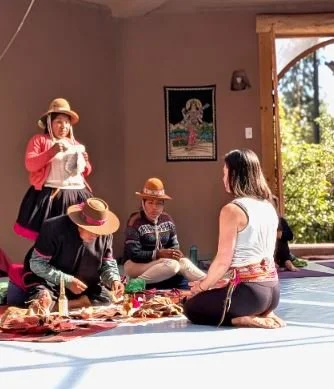
Photo Provided by Nicole Windhausen
Her background in bodywork complements this philosophy. Before fully integrating Human Design into her practice, she worked primarily with massage and physical therapies. That hands-on experience informs how she now approaches clients, bridging the tangible, physical body with more abstract patterns of behavior and perception. In many ways, her work is about connection. What happens in the studio is meant to extend outward into daily life. Clients return not just for new insights, but for ongoing conversation, a kind of companionship in the process of self-understanding.
Beyond her professional work, Windhausen’s personal life reflects the same themes of independence and connection. She shares a close relationship with her daughter, who, like her mother, moved out shortly after high school graduation. Through navigating her own path, the bond between them remains strong, rooted in mutual respect and openness.
Another enduring passion is her relationship with plants. What began as childhood curiosity, playing outside, instinctively interacting with the natural world, has evolved into a more intentional practice of herbalism. She describes it as both a continuation and a rediscovery.
“I remember using plants as bandages when I was a kid,” she says. “And later realizing those plants actually had those properties.”
This connection to plants serves as another bridge between past and present. It links her early outdoor experiences with her current interest in grounded, practical knowledge. Gardening, too, plays a role. After relocating from Fayetteville to Syracuse, she left behind a large garden with nearly twenty beds. Now, she is in the process of rebuilding, starting again with raised beds in a smaller courtyard space, bringing pieces of her previous garden with her in pots.
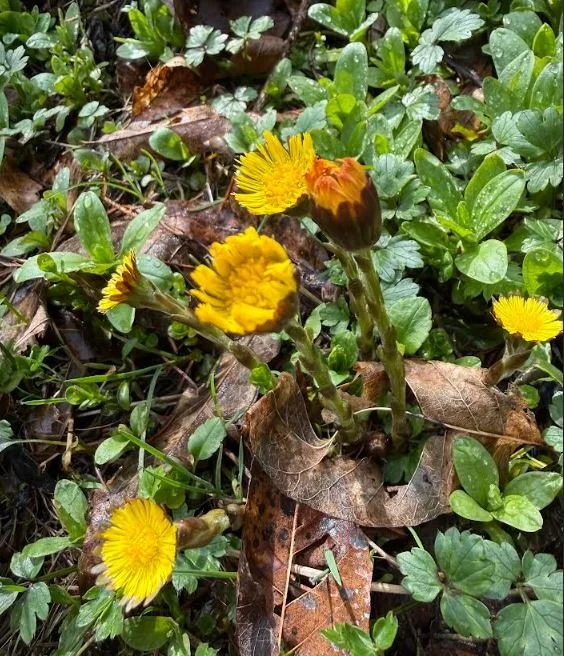
Photo Provided by Nicole Windhausen
Throughout her story, there is a consistent thread: a resistance to rigid structures and a preference for fluid, evolving systems. Whether through writing, bodywork, Human Design, or herbalism, Windhausen’s work centers on helping people reconnect, with themselves, with their bodies, and with the natural world around them.
Looking ahead, she does not outline a fixed plan. Instead, she speaks of mobility and adaptability. Her practice, she believes, is something she can carry with her, geographically and conceptually. It is less about building a static business and more about cultivating a way of engaging with others. That openness may be the defining feature of her work. In a world often driven by certainty and structure, Windhausen offers something quieter: space for reflection, conversation, and the possibility that understanding oneself is not a destination, but an ongoing process. And in that process, she suggests, the body might know more than we think.
For more information, check out Nicole’s website: www.peripheralmedicine.com