
James Skvarch: In the Studio; Etchings and Time
Walking into James Skvarch’s studio/home is like walking into one of his etchings.
Nothing about the exterior prepares you for what waits inside, a world layered with decades of observation, discipline, and imagination. Step through the door and you enter not just a workspace, but a life’s accumulation: etchings stacked in drawers, ship models in various stages of completion, shelves of clay forms, and the subtle hum of a practice that has never really stopped, even when it slowed. Skvarch is an artist shaped by time spent learning, traveling, experimenting, and returning, again and again, to the act of making.
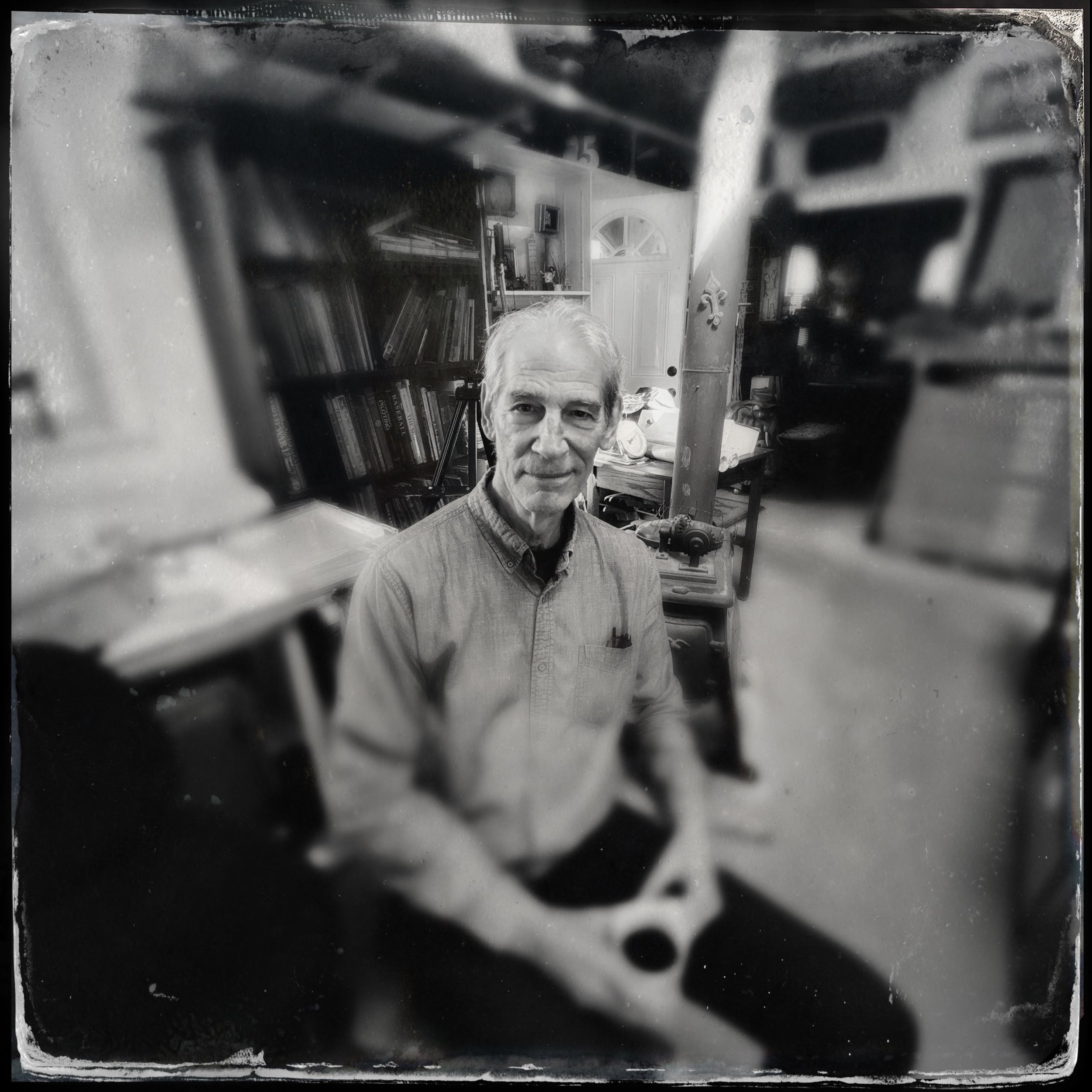
Photo Credit: Hongo David Robertson
At first glance, the ships command attention. Their forms are elegant and slightly weathered, built from unlikely materials, old barrel staves, bowed and cupped with age, repurposed into the hulls of imagined vessels. They are not exact replicas but interpretations, echoes of maritime history filtered through memory and intuition. “I started building them as subject matter,” Skvarch explains, referring to their role in his etchings. What began as a practical solution evolved into something more personal. Some ships have been with him for decades, started years earlier and only recently completed. One, begun over 30 years ago, stands as a testament to patience. “It’s hard to think I did it,” he says. “I don’t even know that person anymore.”
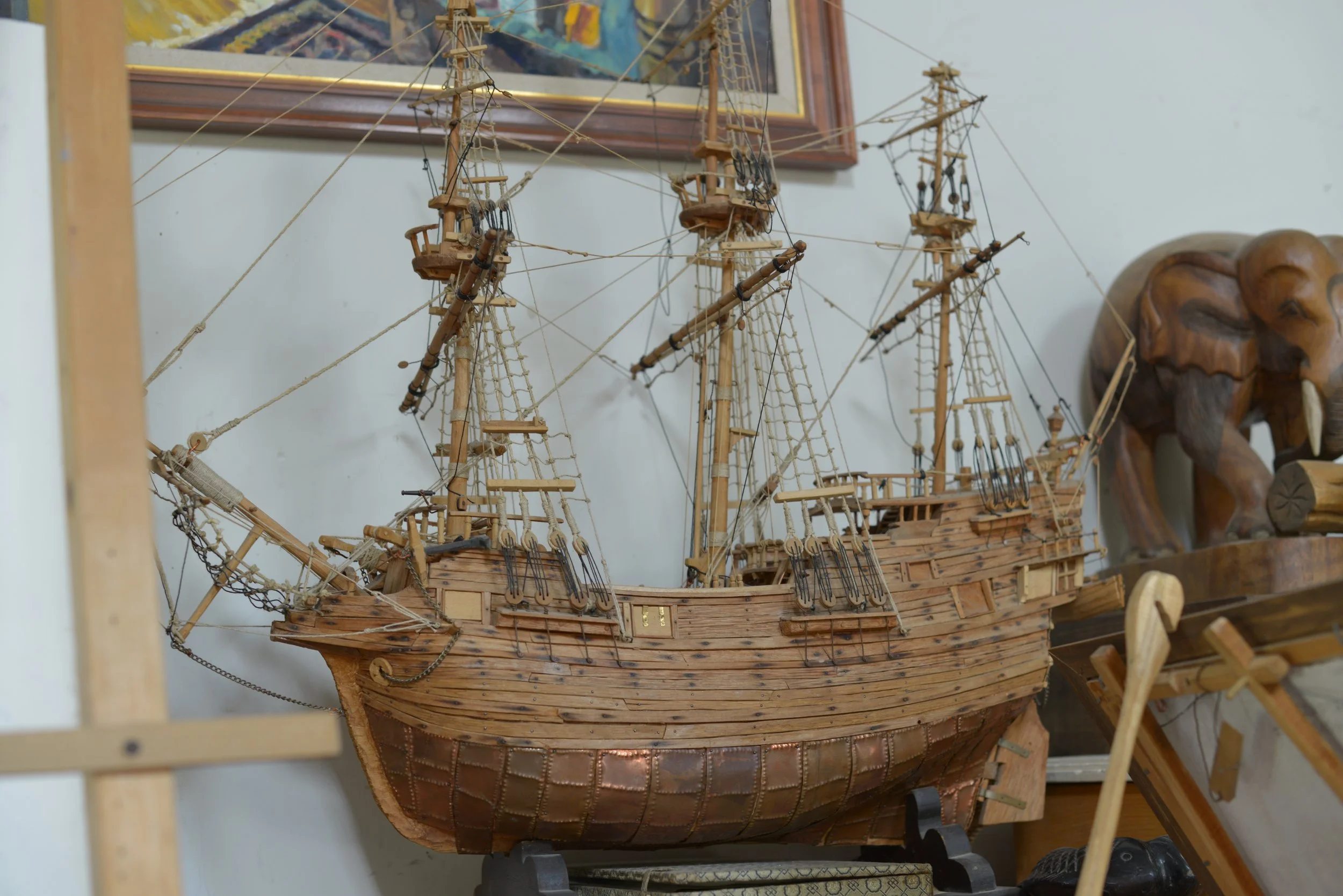
Photo Credit: Hongo David Robertson
Skvarch’s journey into art began early, shaped by the keen eye of a teacher. In sixth grade, while sketching, he caught the attention of George Benedict, an art instructor who would become a lasting influence. Benedict nurtured more than technical skill, he encouraged a way of seeing. Through extra time, mentorship, and an evident passion for art, he helped guide Skvarch toward a deeper understanding of beauty and form. “He had the ability to see the beauty and really point it out to a young kid who doesn’t know what they’re looking at,” Skvarch recalls. That early mentorship, combined with exposure to both traditional and abstract approaches, created a strong foundation for what followed.
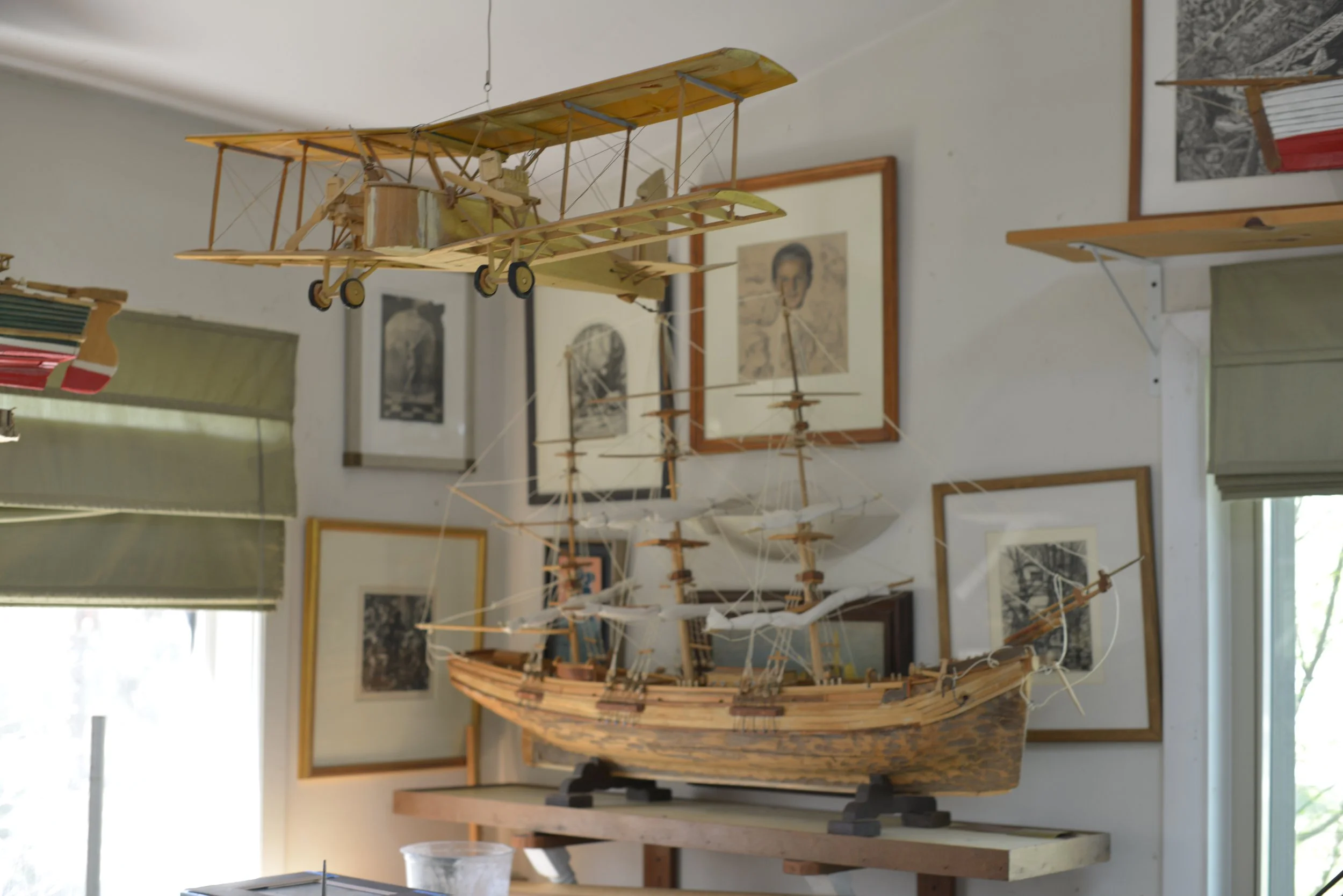
Photo Credit: Hongo David Robertson
After high school, Skvarch attended RIT, where he quickly recognized the advantage, his early training had given him. Yet the artistic climate there was shifting. Painting, he said, had lost its relevance, replaced by emerging forms and new technologies. There, he discovered printmaking and found a medium that would define much of his career. Still, the era brought its own challenges.
He later transferred to Maryland Institute College of Art, where he immersed himself in the study of painting and made a clear, personal commitment to pursuing life as a professional artist. Baltimore itself became part of his education. He developed a deep appreciation for the energy and contradictions of inner-city life. These surroundings began to shape not only what he saw, but how he saw, sharpening his attention to detail and atmosphere.
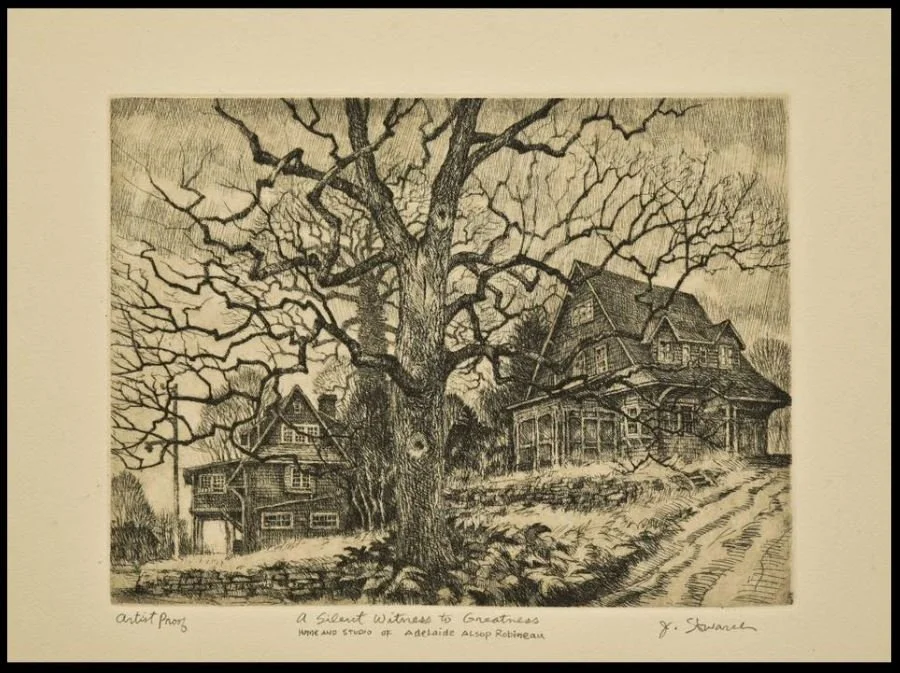
Recent etching of a house in James Syracuse neighborhood, where a world class ceramicist lived, Adelaide Alsop Robineau. Photo Credit: Hongo David Robertson
A few years later, a pivotal change arrived through his first wife, Debora Haylor, who introduced him to the medium of etching. What began as an experiment quickly became an obsession. The process, the bite of acid into metal, the patience required to build an image line by line, offered him a new language, one that matched both his temperament and his growing artistic vision. Etching did more than expand his technical skills; it redirected his path entirely. It led him onto the festival circuit, where he found both an audience and a way to sustain his work, and ultimately helped define the course of his career as an artist grounded in craft, discipline, and observation.
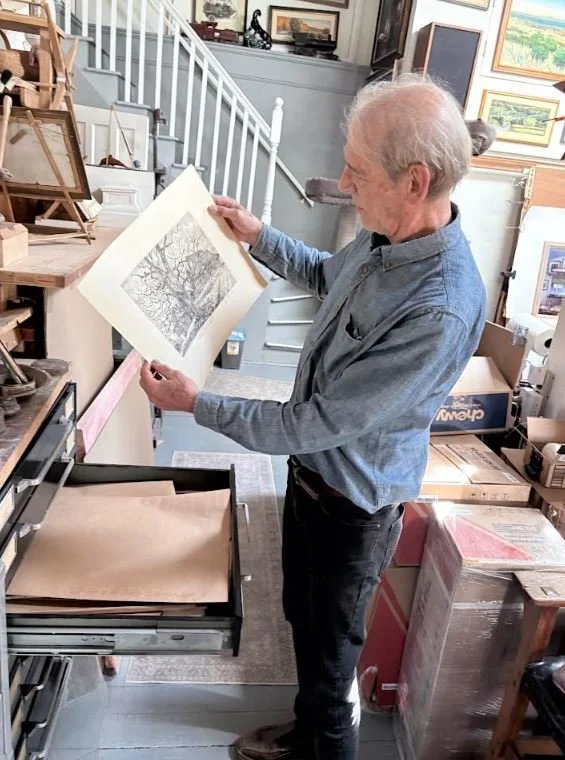
Photo Credit: Hongo David Robertson
Following graduation in 1972, Skvarch entered the working world with a practical realization: printmaking offered sustainability. Etchings could be reproduced in editions, making them more accessible than one-of-a-kind paintings. At the same time, he discovered the network of outdoor art festivals across the country. For nearly three decades, he traveled extensively, participating in hundreds of shows. From Maine to Miami, Denver to the Midwest, he built a life around the road. “It was hard work,” he says, recalling the long drives, packed vans, and constant setup and breakdown. Yet it allowed him to remain a full-time artist, sustained by both his craft and the audiences he encountered.
That rhythm shifted around 2008. The economic downturn reduced discretionary spending, and art sales declined. The cost of participating in shows began to outweigh the returns. “The expense was more than I could make,” he explains. Gradually, the once-reliable circuit faded, leaving behind a quieter, more uncertain landscape.
At the center of Skvarch’s work are his etchings, intricate, immersive compositions that invite viewers into imagined spaces. Libraries, interiors, and architectural scenes unfold with remarkable depth and detail. Influenced by artists ranging from Rembrandt to Andrew Wyeth, his work reflects a fascination with light, texture, and the quiet presence of aged environments. “The idea is to create as much space as possible on a flat surface,” he says. Each piece begins with large-scale charcoal drawings, sometimes spanning several feet, before being transferred onto copper plates. The process is meticulous, requiring both technical precision and creative vision.
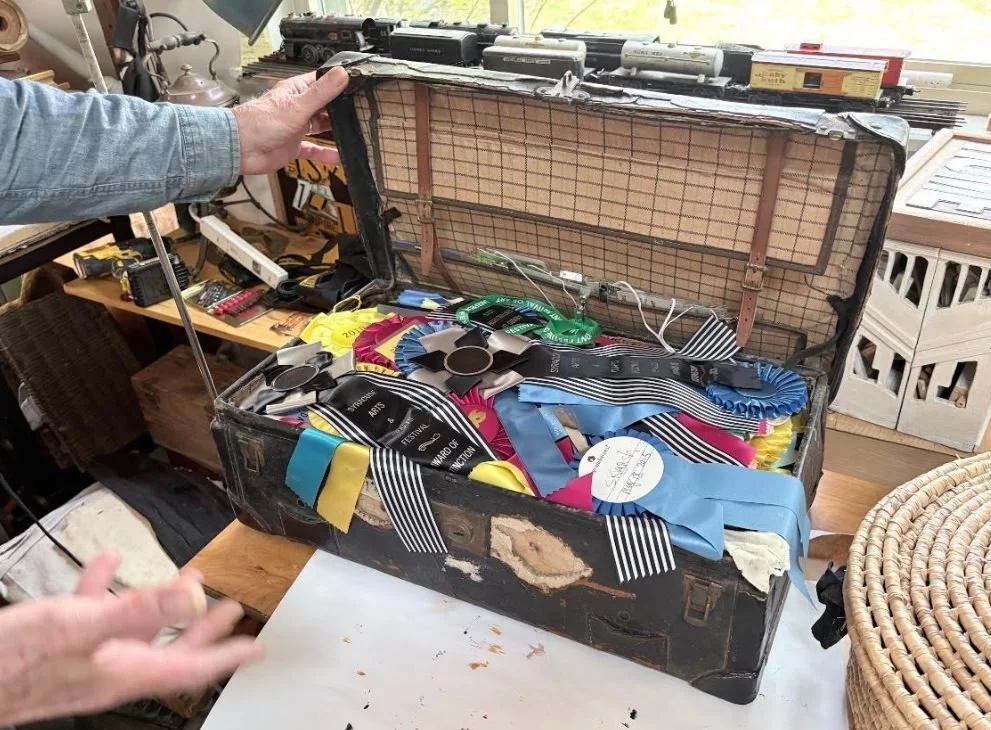
A lifetime of ribbons and awards. Photo Credit: Hongo David Robertson
Yet etching is only one facet of his practice. Throughout the studio, other explorations emerge, hand-built clay sculptures, reflective collages made from license plates, and countless experiments that have never been exhibited. “I’ve never shown those,” he admits, gesturing toward a shelf of ceramic pieces. These works exist outside the marketplace, created for the sake of curiosity and expression rather than recognition. They reveal an artist still engaged in discovery, even after decades of experience.
Like many artists of his generation, Skvarch faces the challenges of a changing art world. Traditional galleries have diminished, and success increasingly depends on digital presence and self-promotion. “I’m not very good at that,” he says candidly. “I’m an old-school guy.” The shift has created uncertainty, not in its ability to create, but in how and where the work finds its audience.
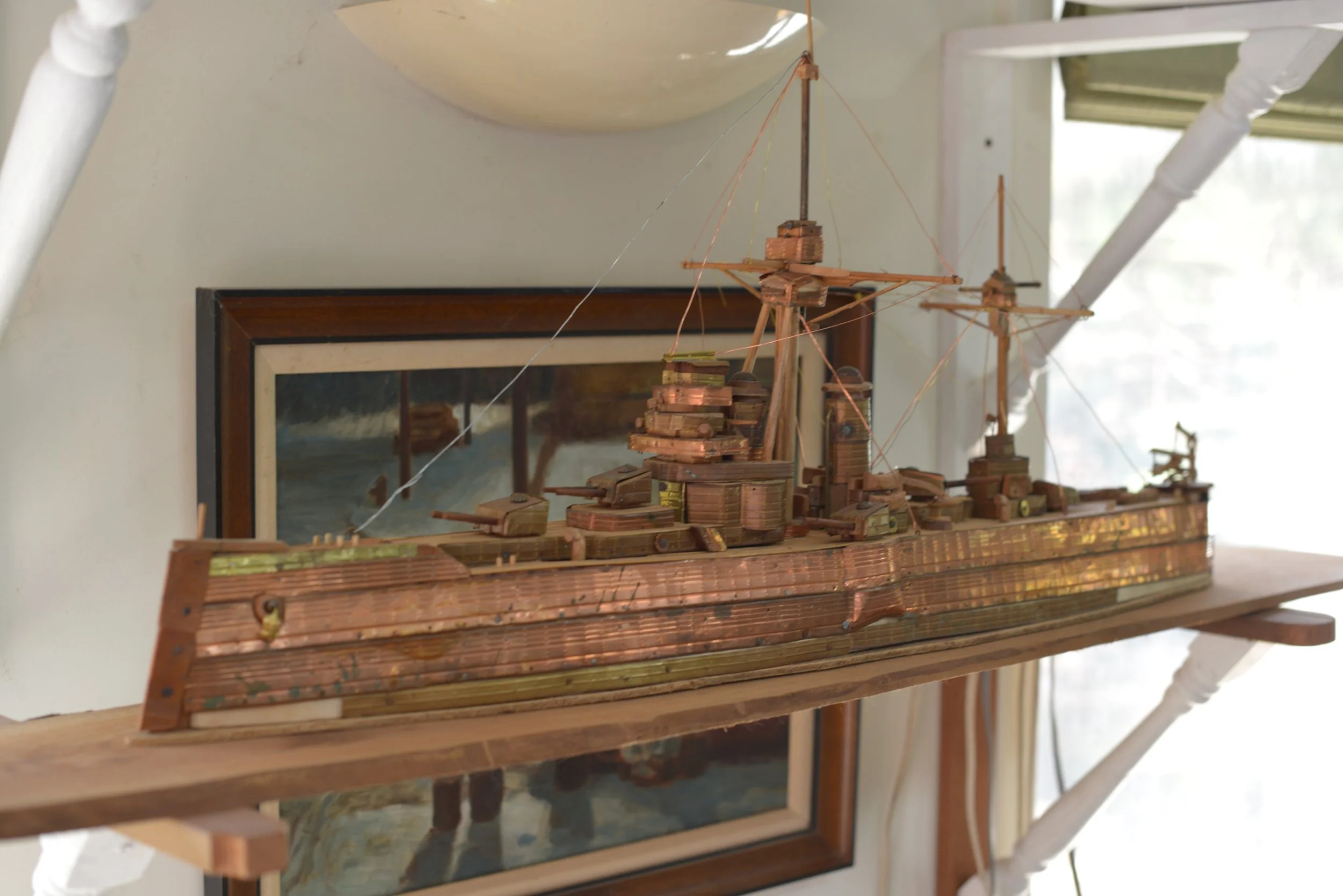
Photo Credit: Hongo David Robertson
Despite these challenges, Skvarch continues to return to the studio. After a period of slowing down, particularly during the COVID years, he recently resumed etching with renewed focus. “I realized I’ve got all the tools, all the know-how, why am I not doing it?” The result was a series of new works, including one inspired by a nearby historic home discovered during daily walks. It marks a subtle change in perspective, finding inspiration not in distant travels, but in the immediate surroundings of everyday life.
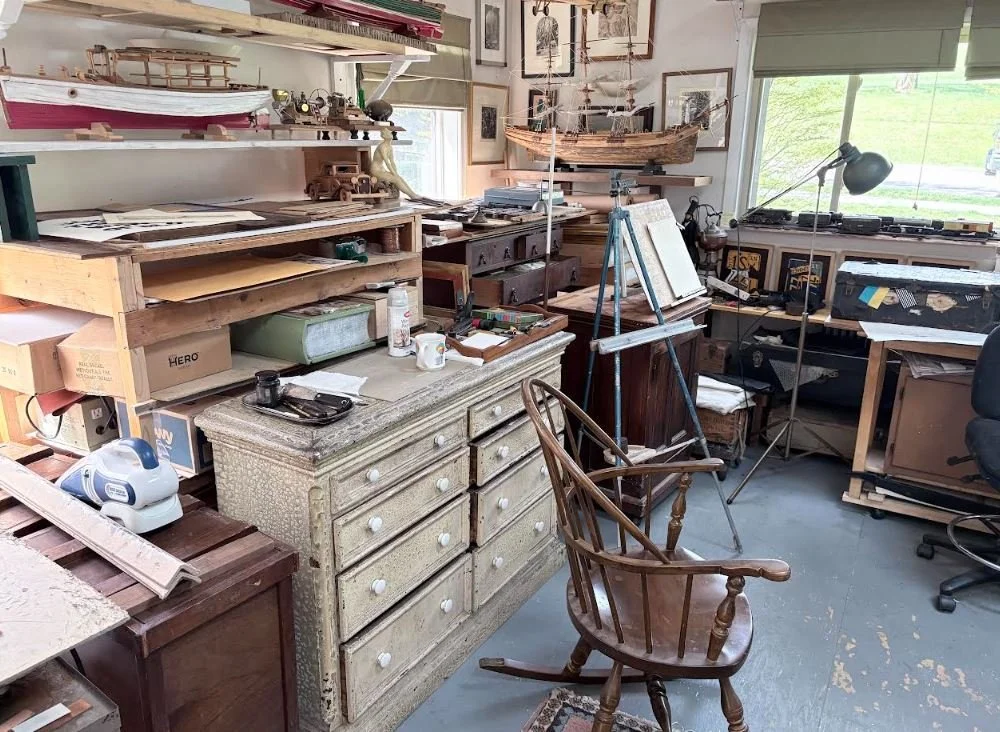
Photo Credit: Hongo David Robertson
What emerges from Skvarch’s story is not a narrative of sudden success or reinvention, but one of continuity. His work unfolds over time, shaped by patience and persistence rather than urgency. Projects may take years, sometimes decades, to complete, but they are never abandoned. They simply wait.
In a culture that often prioritizes speed and visibility, Skvarch’s practice stands apart. It is grounded in craft, sustained by curiosity, and guided by a belief that the act of making holds its own value. As you leave his studio, nothing demands attention, yet everything lingers, the ships, the etchings, the quiet evidence of a life devoted to creating.
For more information by James Skvarch and his work check out www.skvarch.com