
Geoffrey Navias: Puppets, Theater and Sacred Vessels
Driving into the parking lot, I remember the last time I was here, it must have been before COVID. Everything and everyone I talk to seems to be marked by the timeline of COVID.
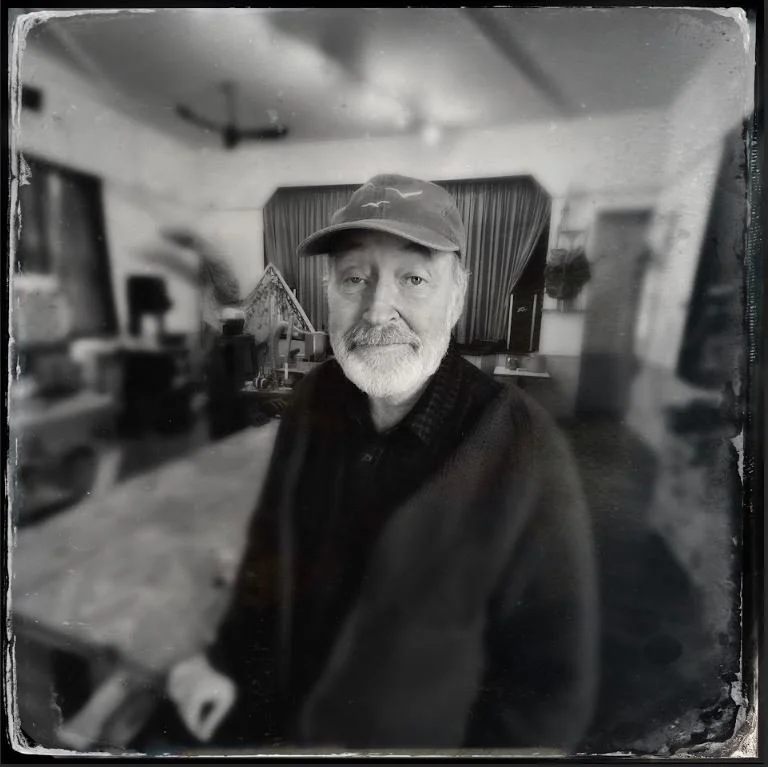
Geoffrey Navias. Photo Credit: Hongo David Robertson
Back then, the old Nelson Odeon was alive with the sound of singer-songwriters, music spilling through the building and out into the warm evening air. Now, on this bright Tuesday morning in May, sunlight pours across the exterior of the old theater, which has since been transformed into a working studio, gallery, and workshop.
Inside, a table saw, planer, band saw, wood chisels, and well-worn workbenches quietly reveal the story of a lifetime devoted to creating. Alongside the woodworking tools sit handcrafted boxes made of oak, white pine, and cherry, each carrying the warmth and character of the wood from which it was shaped. In the corner of the studio hang large, hand-crafted puppets that once danced across the world and now sit quietly in retirement, watching over the workshop like old performers resting after a long tour. The music has changed. Where guitars and voices once filled the room, table saws and band saws now sing out a different tune.
It is here that Geoffrey Navias, artist, theater-maker, teacher, and community builder, welcomes me into his world, a place where art and lived experience are inseparable.
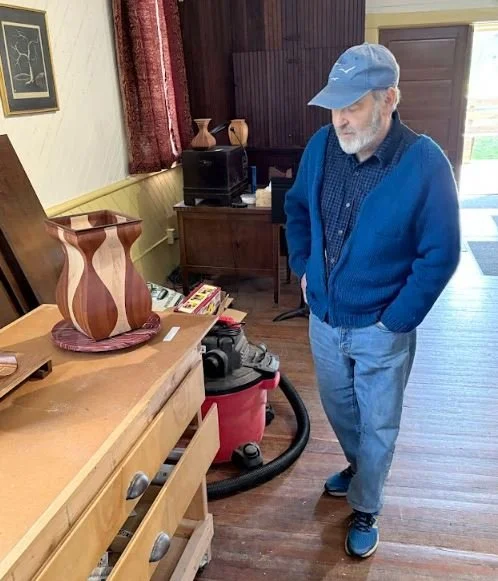
Photo Credit: Hongo David Robertson
Navias and I explore his space, he pauses beside pieces that began as fallen trees, timber brought down by heavy storms. He invites me to run my hand along a smooth sculptured wooden curve of oak. “These are sacred vessels,” he explains. The wood, often collected after years of drying, is shaped into forms and each vessel, he says, “carries a quiet purpose”, to ask what we hold sacred, and what we are willing to protect. It’s a question rooted not only in environmental concern but in a lifetime of observing how people respond to change, loss, and possibility.
Born in Leadville, Colorado, Navias spent his earliest years surrounded by the rugged landscape of mining country, where his father worked as a geologist. But his formative years unfolded in Cambridge, Massachusetts, after his family relocated so his father could work alongside students and faculty in the Geology Department at Harvard. The household he describes was unconventional for the 1950s, a family shaped by music, and spirituality. His mother taught piano and worked within the Unitarian church, while the children roamed freely, absorbing lessons from both structured learning and the unpredictable patterns of the Cambridge world around them.
“We were latchkey kids before that term existed,” he recalls. Independence wasn’t optional, it was embedded. Days were spent navigating neighborhoods, forming friendships, and learning responsibility through experience rather than instruction. The environment fostered both curiosity and resilience, qualities that would define his later work.
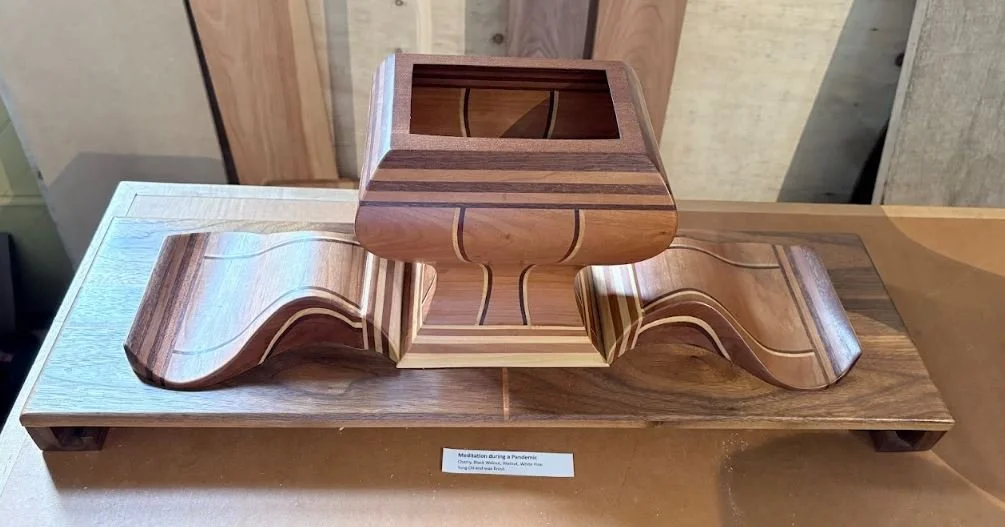
“Meditation During a Pandemic” Photo Credit: Hongo David Robertson
Art, in those early years, was a constant presence. Piano lessons echoed through the house, and the cultural atmosphere of Cambridge, alive with music, ideas, and experimentation, offered a steady undercurrent of creative energy. Yet Navias never experienced a singular moment of choosing art. Instead, it emerged gradually, shaped by the political and cultural upheaval of the 1950’s and 60’s.
As a teenager, he found himself immersed in a world charged with activism. The Vietnam War, civil rights movements, and anti-nuclear protests were not distant headlines, but constant realities. “There was a sense we were changing the world,” he says. And in many ways, “we were”. Art and politics intertwined, each informing the other. Creativity became both expression and resistance.
This intersection led Navias into a series of formative experiences that blurred the lines between art, community, and activism. After leaving high school early, having already taken courses in photography and figure drawing, he found work in Rochester, New York, at an organization called Vocation for Social Change. There, in an old firehouse filled with emerging ideas and grassroots initiatives, he helped establish a print shop using salvaged equipment. It became a hub for communication, activism, and experimentation.
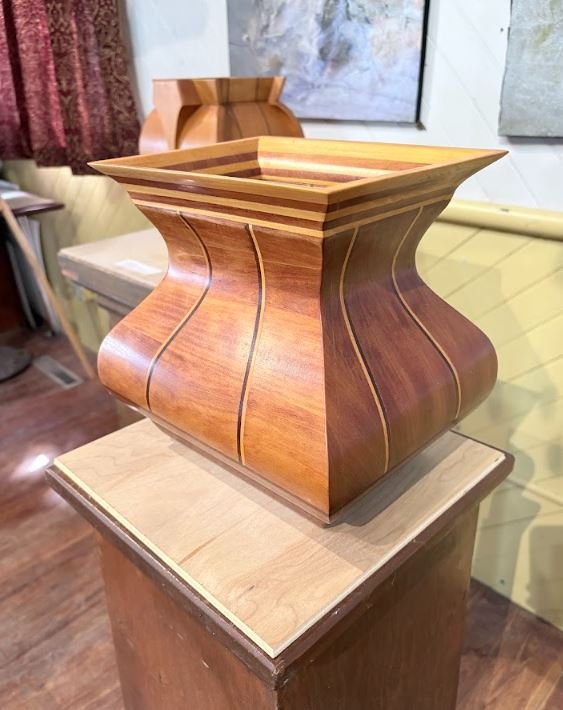
Photo Credit: Hongo David Robertson
That period was marked by a spirit of collective creation. Alternative businesses formed, community funding initiatives emerged, and neighborhoods began to transform. Navias speaks of it not just as a time of artistic growth, but of learning how communities can reshape themselves when people take ownership of their environment. It was a lesson that would echo throughout his life.
From printmaking, he moved into theater, initially through collaborations focused on social issues. Puppetry, in particular, became a powerful medium. “You could say things with puppetry that you couldn’t say otherwise,” he explains. What began as small-scale productions evolved into something much larger.
Navias would go on to found and lead Open Hand Theater in Syracuse, New York, a company that ran for 36 years. Under his direction, the theater became known for its imaginative use of puppetry, masks, and visual storytelling. Productions ranged from intimate performances to large-scale collaborations, including international exchanges with theater groups in Russia.
Those collaborations left a lasting impression. In Russia, he observed a cultural environment, where meaning often resided in what was left unsaid. “In America, you can say anything, and none of it’s important,” he recalls being told. “In Russia, you can’t say anything, but what you don’t say is everything.” The contrast deepened his understanding of storytelling, reinforcing the idea that art is as much about silence and implication as it is about expression.
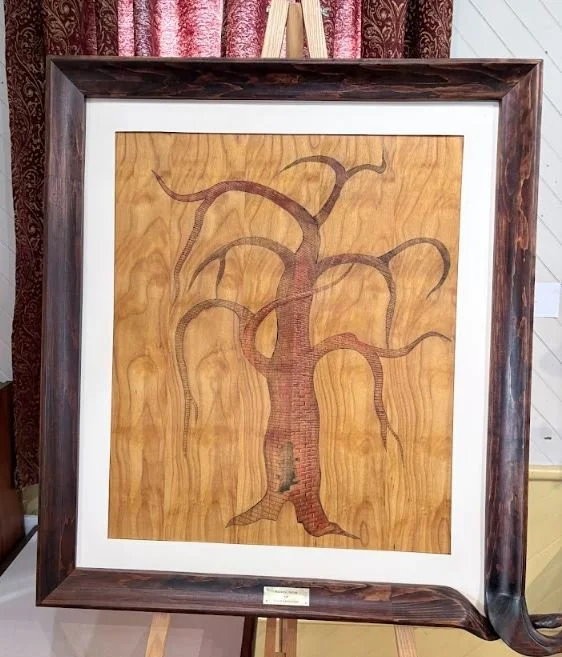
Photo Credit: Hongo David Robertson
Despite its success, Open Hand Theater eventually came to an end. The decision was not driven by lack of passion, but by exhaustion. Years of fundraising, administrative responsibility, and the weight of sustaining an organization took their toll. At the same time, broader changes, within education systems, communities, and the cultural landscape, added new pressures.
“When something becomes familiar, people forget what it takes to sustain it,” he reflects. Stepping away was both necessary and uncertain. For the first time in decades, he faced the question: what comes next?
The answer, it turns out, was wood.
After retiring from theater, Navias became an artist-in-residence at Stone Quarry Hill Art Park. There, surrounded by open landscape and shifting seasons, he began exploring new forms. Initially, his work took shape through mobiles and sculptural installations, often inspired by places he had lived. These pieces imagined landscapes altered by climate change, familiar environments subtly transformed or diminished. But it was the fallen trees that shifted his focus. Storms were bringing down trees that, by all appearances, should have stood for decades more. He began collecting the wood, allowing it to dry, and eventually shaping it into vessels. The process was slow, deliberate, and deeply reflective.
“I had very little experience with woodworking,” he admits. Each piece became an experiment, a learning process guided as much by intuition as technique. The imperfections of the material, knots, grain, fractures, were not obstacles but essential elements of the final form.
Back in his Nelson studio, these “Sacred Vessels’ now line the space, each one unique. They are not merely objects, but invitations. Viewers are encouraged to place something meaningful inside, to engage with the work in a personal way. In doing so, the art becomes a shared experience rather than a static display.
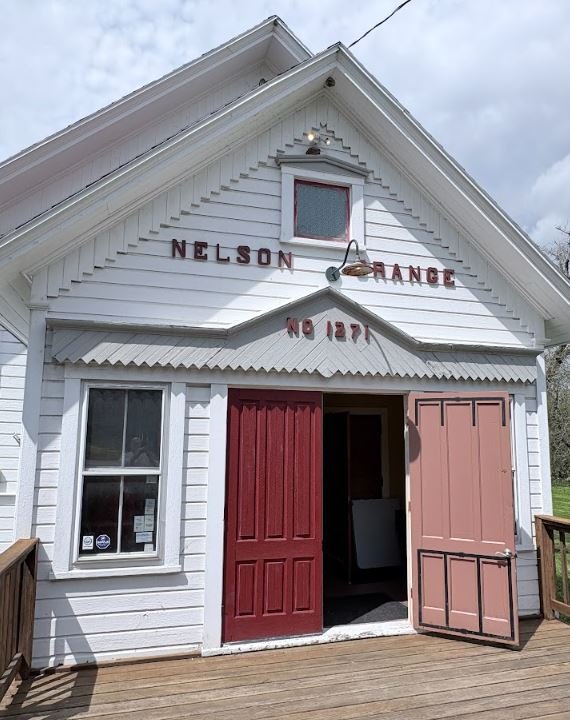
Photo Credit: Hongo David Robertson
The themes that run through his work, community, loss, transformation, resilience, mirror the broader arc of his life. From the experimental energy of the 1960s to the collaborative spirit of theater, and now to the quiet introspection of woodworking, Navias has consistently sought ways to connect people through creative expression. Even now, he resists defining himself too narrowly. The term “artist” came late to him, and even today, he treats it cautiously. For Navias, art is less an identity than a process, a continuous exploration shaped by curiosity and circumstance.
“Hopefully, we never really find ourselves,” he says with a smile. “That’s the beauty of it.”