
Sandy Roe: Capturing the Moments That Already Exist
Finished photographs lean against the walls of Sandy Roe's workroom waiting to be framed. Mat boards cover a large worktable. Beside her computer monitor, canisters of hard drives are stacked one atop another, each containing thousands of images gathered over decades. Together they form the archive of her life's work—a remarkable visual record of landscapes, wildlife, musicians, historic artifacts, and everyday moments that might otherwise have been forgotten.
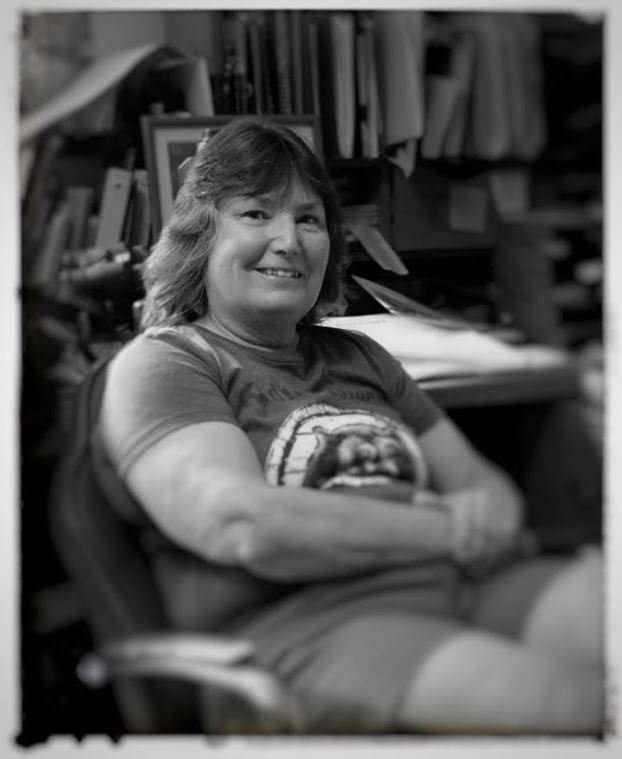
Photo Credit: HonGo David Robertson
This isn't where the photographs are made, nor is it where they are edited. This is where they take their final form before leaving her home and finding a place on someone else's wall.

Photo Credit: Sandy Roe
Roe surveys the organized clutter with a smile. "It looks like a disaster," she says.
Every framed print represents a place she once stood, a musician she listened to, a bird she patiently waited to photograph, or a quiet landscape that caught her attention. The hard drives beside her computer hold thousands more. Looking around the room, it becomes clear that this isn't simply a photographer's workspace. It is an archive built one photograph at a time.
"I'm pretty good at capturing a moment," she says. "I totally suck at manufacturing one." The comment comes almost casually, but it explains nearly everything about the photographs she has made throughout her life. Many photographers enjoy directing people into carefully constructed poses. Roe has never been comfortable doing that. She laughs about the familiar instructions photographers often give their subjects: turn your head a little, look toward the light, stare thoughtfully into the distance.
"It just looks like somebody turning their head and looking off into the distance."
Instead, she waits. She watches musicians lose themselves in a performance. She notices the smile exchanged between band members after finishing a song. She stands quietly beside a stream waiting for the morning light to settle across the water. In the woods she allows wildlife to forget she is there before ever lifting the camera to her eye. Those are the moments she wants.
Nature has always been her first love behind the camera. Forests, rivers, waterfalls, birds, wildlife, and changing seasons continue to draw her outdoors whenever she can find the time. Music eventually became another passion, and over the years she has quietly built one of the largest photographic archives of Central New York musicians. Her candid images have documented festivals, clubs, theaters, and concert stages, preserving performances that have long since disappeared except in memory.
Ironically, the difficult part of photography has never been making photographs. Selling them has. Someone asks if she has a photograph of a local landmark. Finding it may require searching through tens of thousands of archived images. Then come requests for different print sizes, framing options, matting choices, and price estimates. Hours of work often disappear before the customer quietly changes their mind. "I've never been much of a salesman," Roe admits.
The statement perfectly reflects the way she has approached photography throughout her life. While many photographers built businesses around weddings, portraits, and senior pictures, Roe deliberately chose another path. "I've had jobs I hated my whole life," she says. "I didn't want photography to become one of them."
Photography has always remained something she loved. Long before retirement gave her the freedom to pursue it full time, business occupied much of her life. Even as a child she discovered she enjoyed creating opportunities. She sold candy at school and made jewelry that her mother occasionally sold to friends. Numbers came naturally, and accounting was something she happened to be very good at, although she never particularly enjoyed it.
Marriage and children changed her priorities. Determined to raise her three children herself, Roe and her husband established Accu-Therm Technologies, Inc., a heating and air conditioning company that operated successfully for more than twenty years. Working from home allowed her to build a business while remaining present for her family. Her office eventually moved downstairs, creating enough separation that business could stay below while family life remained upstairs.
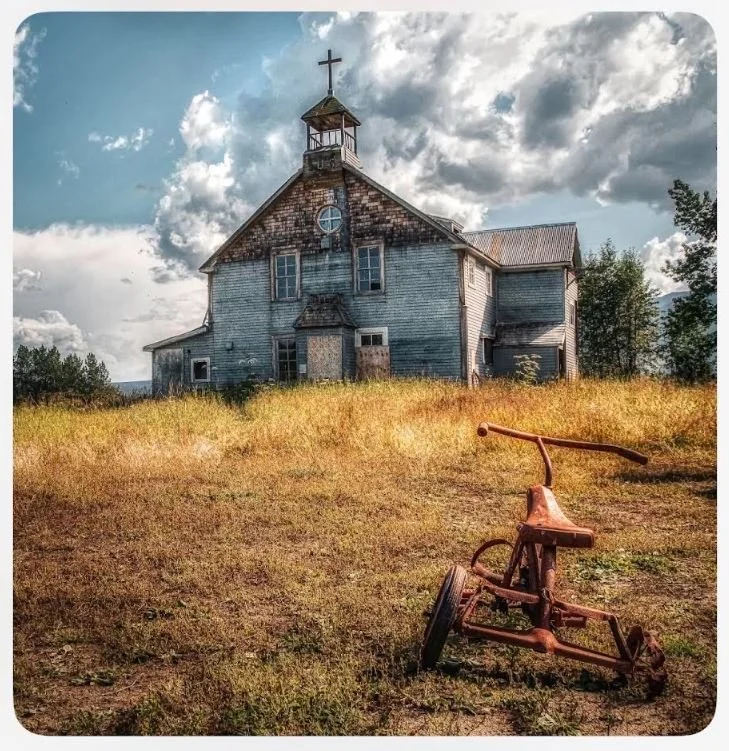
Photo Credit: Sandy Roe
The company served churches, commercial businesses, restaurants, retail stores, and organizations throughout Central New York. Roe handled bookkeeping, scheduling, customer service, and the endless stream of phone calls that accompany any successful service business. "I was always the one answering the phone," she recalls. "When somebody didn't have heat in the winter or air conditioning in the summer, they weren't exactly happy when they called."
Looking back, she speaks about those years without bitterness. They provided stability, raised a family, and taught lessons about people that continue to serve her today.
Still, photography never disappeared. Its roots reached much deeper.
Growing up in Collamer, Roe remembers what she calls her own version of "The Wonder Years." Baseball games with neighborhood children. Apple trees. Walking to the local grocery store. Long summer afternoons when every day seemed to last forever. Moving away at seven years old changed everything. Suddenly she found herself entering unfamiliar schools where friendships had already formed. School district changes meant beginning again several times, always arriving as the quiet new student.
"I'm still not good in groups," she says. "One-on-one I'm fine." Perhaps without realizing it, those experiences taught her to observe before participating. Years later, that quiet instinct would become one of her greatest strengths behind the camera.
Photography itself came from her father, Raymond "Bud" Roe. Bud worked as a projectionist in local movie theaters before joining WHEN-TV, where he operated studio cameras and worked behind the scenes during television broadcasts. At home he constantly photographed birthdays, holidays, family gatherings, and everyday life. Sandy remembers watching the evening news and waiting for the credits to roll so she could see her father's name on the screen. When Bud died of cancer in 1976, just as Sandy was entering seventh grade, he left behind more than memories.
He left behind a Honeywell Pentax camera. Without formal instruction or a darkroom, Roe simply began teaching herself. Many of her father's photographs and home movies disappeared over the years, but the slides and prints that survived have since been digitized, preserving at least part of her family's visual history. Perhaps that experience explains why preserving memories remains at the center of everything she photographs.
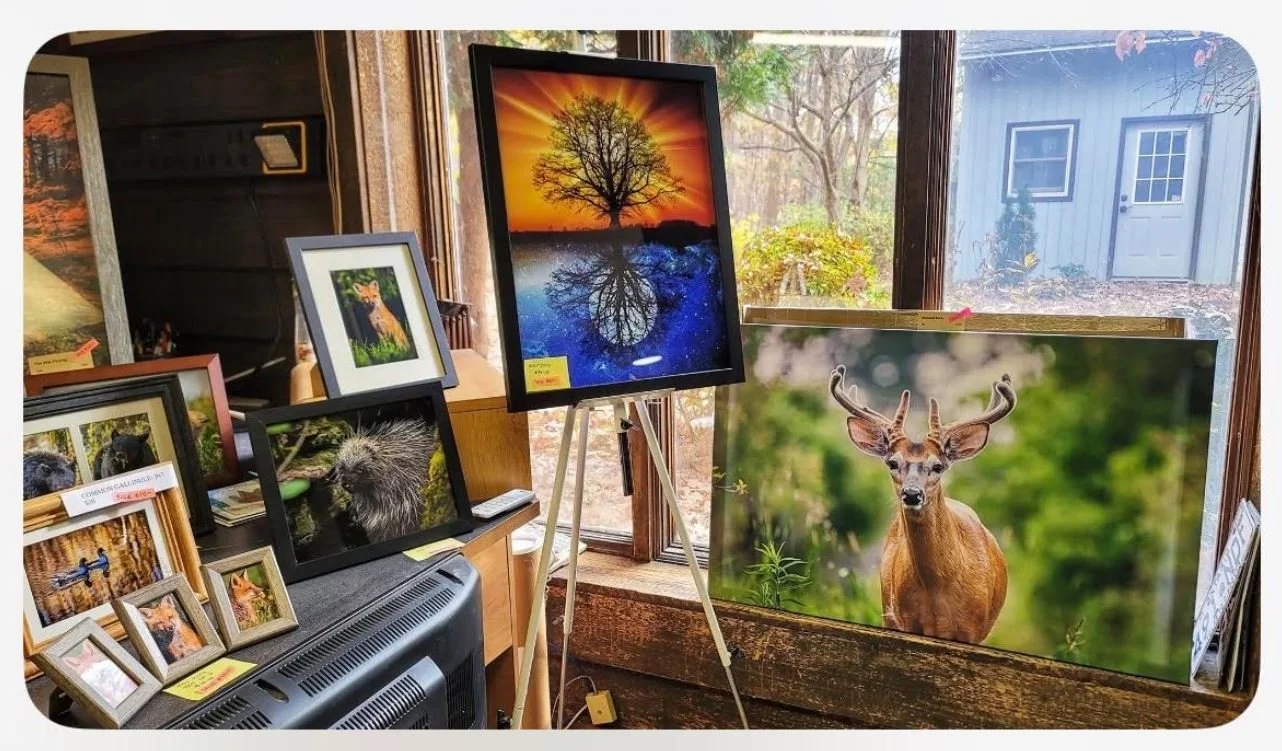
Photo Credit: Sandy Roe
As photography evolved from film to digital, Roe adapted with it. A lifelong Canon photographer, she has recently embraced Canon's mirrorless camera system, appreciating its lighter weight and electronic viewfinder after a series of injuries left her with chronic back pain. Years of carrying heavy telephoto lenses into forests and concert venues have taken their toll, but she wasn't about to stop photographing.
Instead, she adjusted. Like many photographers, she laughs about believing the next camera might somehow make better photographs. Experience has taught her otherwise. Good lenses matter. Patience matters more.
Her work has earned recognition far beyond Central New York. An award-winning photographer, Roe's images have reached audiences throughout the United States, Canada, and Europe. Her photographs have appeared in Smithsonian Magazine, Forbes, Travel + Leisure, Vintage Guitar, Life and Homes, Design NY, Photographers Forum, North American Elk, Homegrown, and numerous other publications.
Her commercial clients have included Byrne Dairy, Alaska Sea Grant, Agape Plastics, Amber Elk Ranch in Michigan, Koniag—an Alaska Native regional corporation—and a wide range of businesses requiring real estate, industrial, archival, product, travel, and tourism photography.
Her photographs have also been exhibited at the Onondaga Historical Association, including All That Jazz – 35 Years of Syracuse JazzFest, and at the Wolf Mountain Nature Center in Smyrna, New York.
Recognition followed. She earned Third Place in an international Photographers Forum competition that attracted more than 10,000 entries from sixty-nine countries, later became a finalist in another worldwide competition featuring more than 9,100 entries, and received the Rosamond Gifford Zoo's Most Artistic photography award.
Yet when Roe speaks about her career, awards rarely enter the conversation. Instead, she remembers the stories. Among her favorite assignments was photographing the remarkable Lincoln Hair Wreath housed by the Onondaga Historical Association. Constructed from the hair of Abraham Lincoln, Mary Todd Lincoln, members of Lincoln's Cabinet, senators, and other historical figures, the intricate nineteenth-century memorial became part of research connected with Smithsonian Magazine.
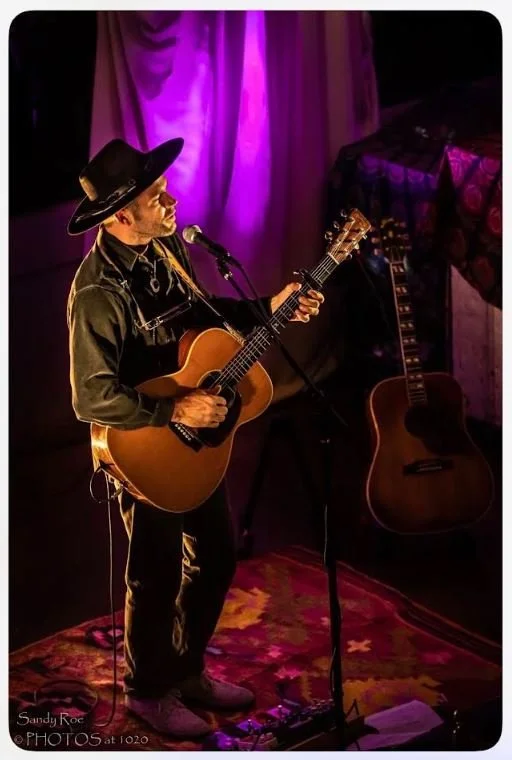
Photo Credit: Sandy Roe
Closer to home, Roe has helped tell Central New York's stories through books as well. She served as the principal photographer for 100 Things to Do in Syracuse Before You Die and Secret Syracuse: A Guide to the Weird, Wonderful, and Obscure, introducing readers to familiar places and hidden corners of the region through her camera. She also contributed photography to John McCarthy's Autumn to Dickens—Around Skaneateles Lake, another celebration of Central New York's unique character and landscape.
Those projects reflect what has always interested her most, not simply making beautiful photographs, but documenting the places and people that give a community its identity.
Her archive of local musicians tells the same story. For years she photographed performances throughout the region, creating candid portraits that have appeared on album covers, promotional materials, websites, and magazine articles. Musicians regularly contact her years later asking if she still has photographs from a concert they played long ago.
Most of the time, she does. They are waiting on one of the hard drives stacked beside her computer. Looking around the room once more, those canisters of hard drives begin to mean something more than storage devices. They represent decades of patience, curiosity, and quiet observation. Together they preserve not only Sandy Roe's life as a photographer but also a remarkable visual history of Central New York.
As our conversation comes to an end, Roe gathers another stack of prints waiting to be matted. More photographs will soon leave her workroom, while thousands of others remain safely preserved inside the growing archive beside her desk.
There is nothing theatrical about the way Sandy Roe approaches photography. She doesn't chase trends. She doesn't manufacture moments. She simply notices them.
For decades she has quietly documented the landscapes, musicians, wildlife, and everyday life of Central New York with honesty and patience. Long after the music has ended and the seasons have changed, her photographs remain, not because they were staged, but because someone was there to recognize that an ordinary moment was worth remembering.
Contact Sandy at: PHOTOSat1020@gmail.com