
On the morning of July 15, 2026, I visited artist Annie Faber at her home and studio, where the light itself seemed to be part of the working environment. Upstairs, surrounded by paintings in various stages of completion, Faber spoke about a creative life shaped by painting, photography, teaching, horses, family, meditation and a persistent curiosity about the spaces that exist between clearly defined things.
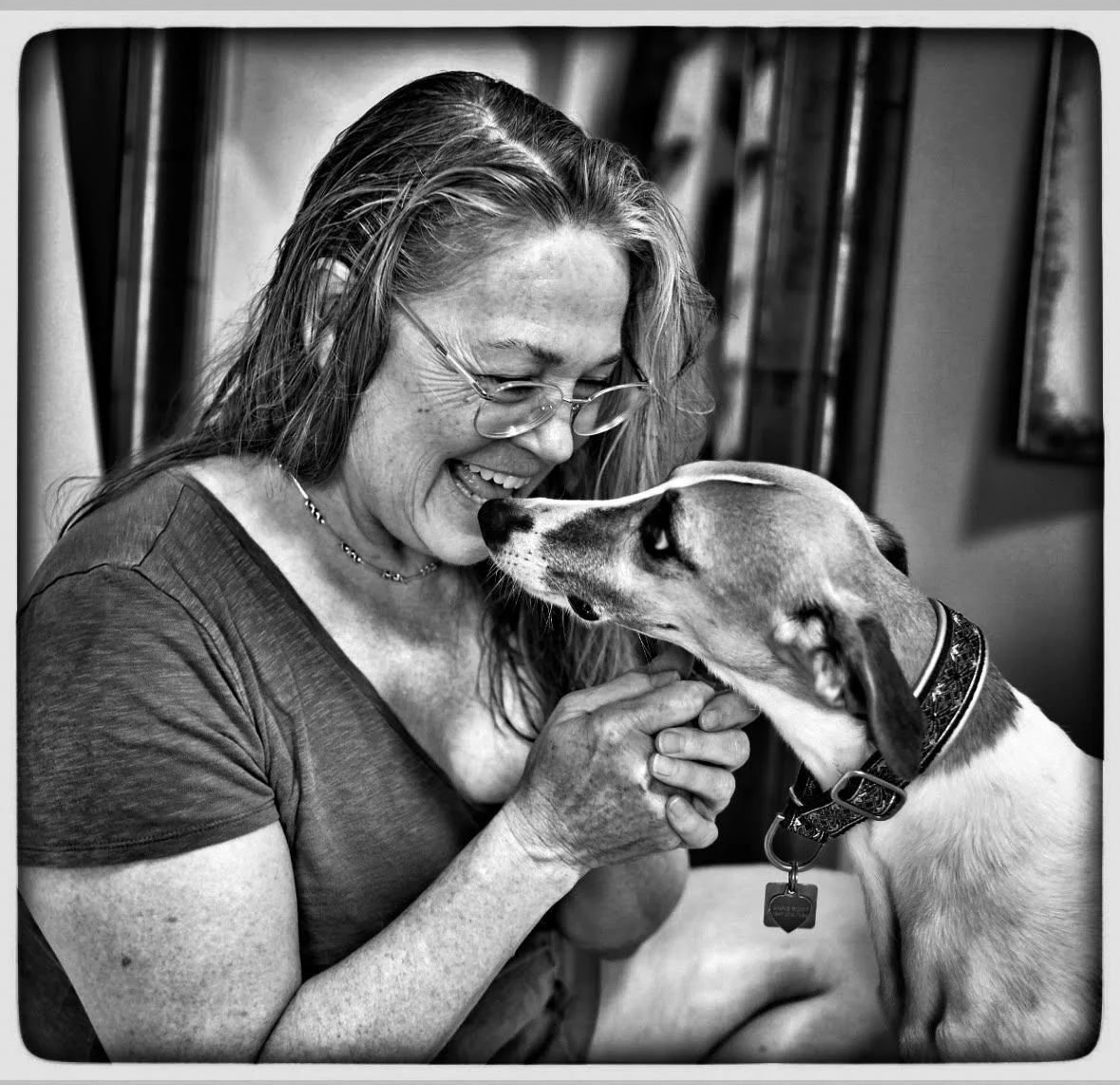
Photo Credit: HonGo David Robertson
Faber continues to approach painting as a process of discovery rather than a destination. Her work is abstract, but she is cautious about attaching labels to it. If pressed, she describes herself as a color-field painter working in nonrepresentational abstraction. Even that description, however, seems secondary to what actually happens between her and a painting.
For Faber, painting is a language that exists before words. She believes that everything said or written about a painting is already a translation of the original experience. That belief is one reason she resisted titling her work for many years. Naming something too early could limit the possibilities of discovering what it might become. “The whole purpose for the work for me was discovery,” she said. “You can’t title or name anything that you don’t know yet.”
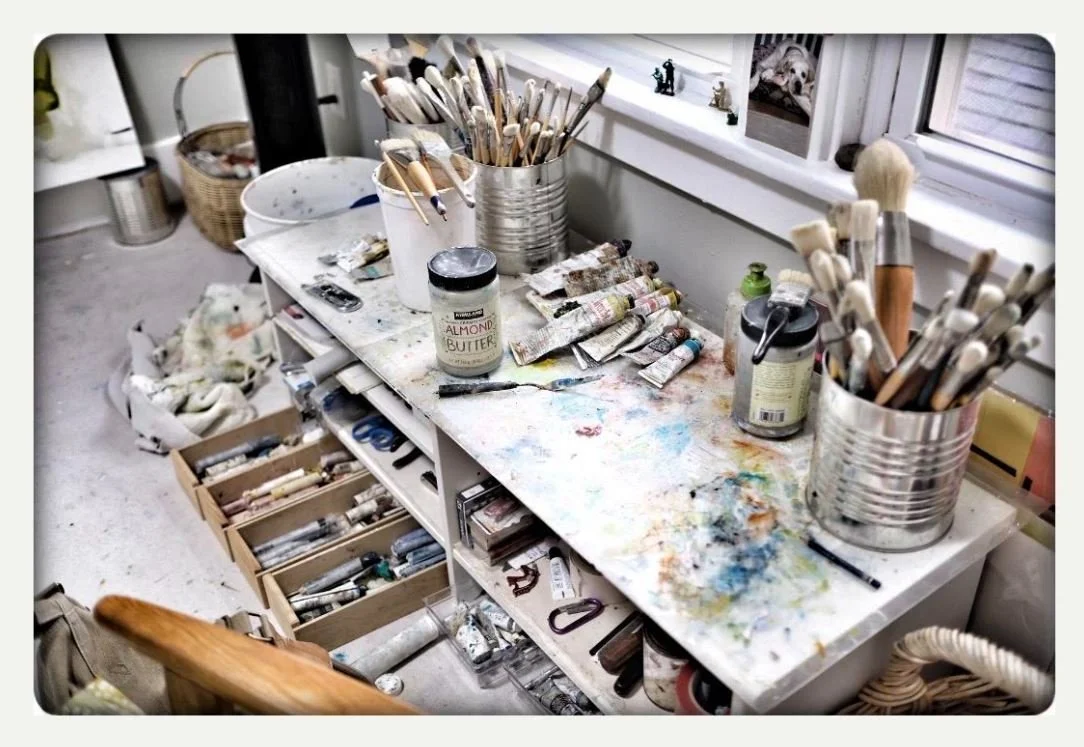
Photo Credit: HonGo David Robertson
Faber's path toward becoming an artist was not direct. She grew up with one foot in several different worlds. Her parents were born in Brooklyn, but her father chose a military career, serving three tours in Vietnam before eventually becoming a flight instructor and later flying for the Connecticut governor through the National Guard. The family eventually settled in Connecticut.
There, Faber experienced the changing landscape of working-class New England as textile manufacturing disappeared and communities struggled with the consequences. At the same time, her mother's side of the family introduced her to another world. There were beautiful homes, collected artwork and relatives connected to painting. Her grandmother made certain that the children experienced live theater. Faber remembers seeing My Fair Lady on Broadway with Rex Harrison and returning home to play the recording repeatedly. These experiences stayed with her, even when no one realized how deeply they were registering.
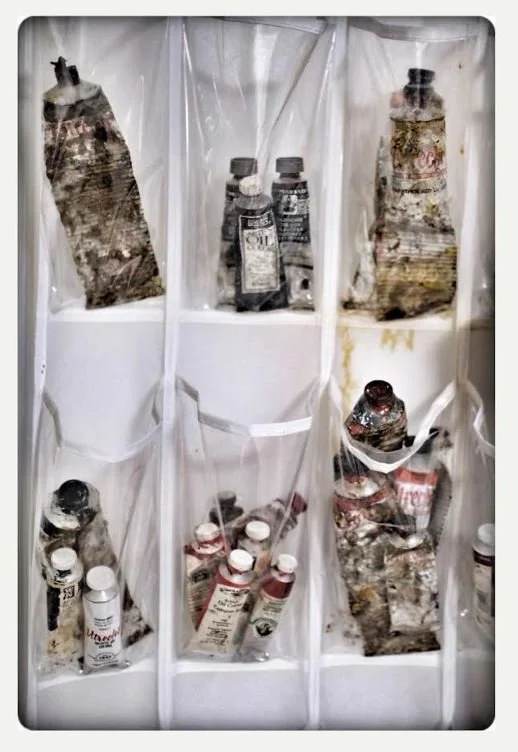
Photo Credit: HonGo David Robertson
Her earliest creative impulses were centered on drawing and horses. Horses dominated her imagination, and for a time she believed they would become her life's work. Even after enrolling at Skidmore College, Faber was not ready to leave that dream behind. During her freshman year, she used the college's January "J-Term" as an independent study, living and working at her riding coach's home and barn. Her days revolved around managing the daily schedule, caring for the horses, and continuing her own training. Immersed in that demanding routine, she came to an important realization: she could not fully dedicate herself to both riding and art. The experience forced her to make a choice.
A significant moment came through a family member, Geraldine, whom Faber called Zicky. Several years older, Geraldine returned home from college with a portfolio of art assignments. As she explained the problems she had been asked to solve in class, the young Faber kept suggesting alternative approaches. Eventually Geraldine told her that she thought Faber might have done one of the projects better. The comment stayed with her. It was not necessarily about drawing ability. It was about seeing possibilities and solving visual problems. That instinct would eventually become central to Faber's approach to painting.
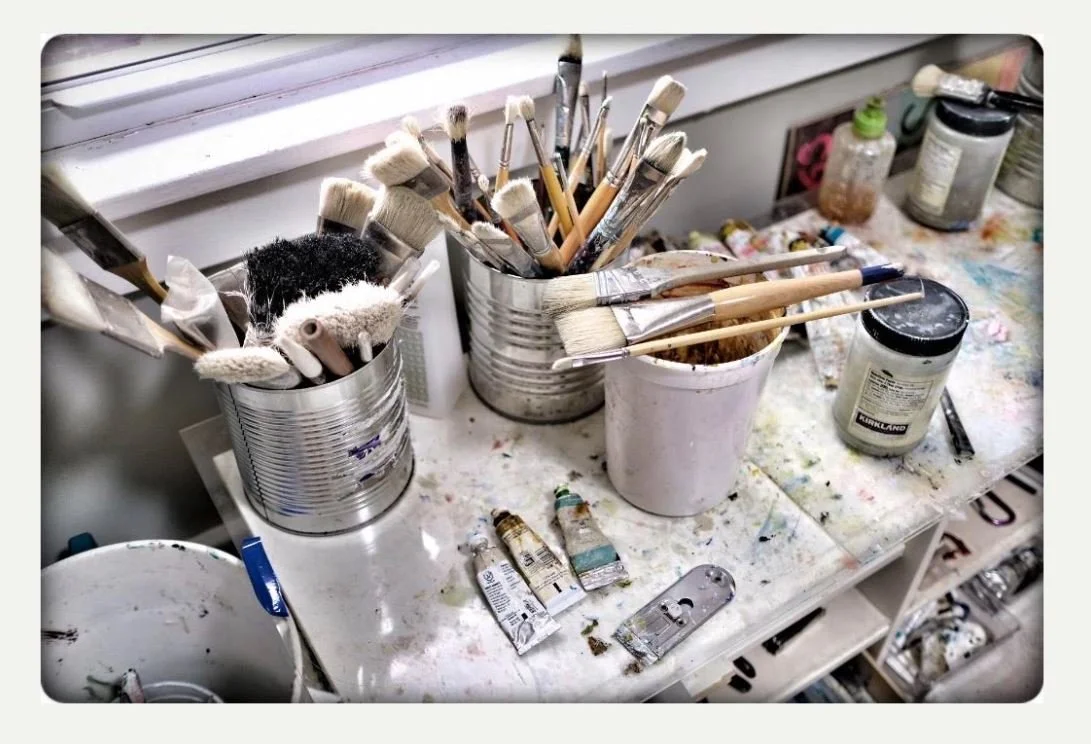
Photo Credit: HonGo David Robertson
When she arrived at Skidmore College, however, Faber hardly felt prepared to become an artist. She had little formal training and almost no knowledge of art history. Other students casually referenced artists she had never heard of. She would leave class, go to the library and look them up. “I felt like an imposter,” she recalled. Instead of discouraging her, the experience taught Faber to examine how images worked. She began deconstructing composition almost as though it were a puzzle. She studied how a mark related to an edge, how space could be activated and how visual tension could move across a surface.
Initially directed toward commercial art, she soon discovered that it was a poor fit. After working summer jobs in New York City, she approached one of her professors and nervously admitted that she thought she wanted to become a painter. His reaction surprised her. He was relieved. As Faber remembers it, he told her she had taken his classes and had rarely followed the directions exactly enough to succeed in commercial art. She was moved into painting. From there, she had roughly two years to develop the portfolio that would eventually lead her to graduate school at Syracuse University, where she completed a 60-credit MFA over three years.
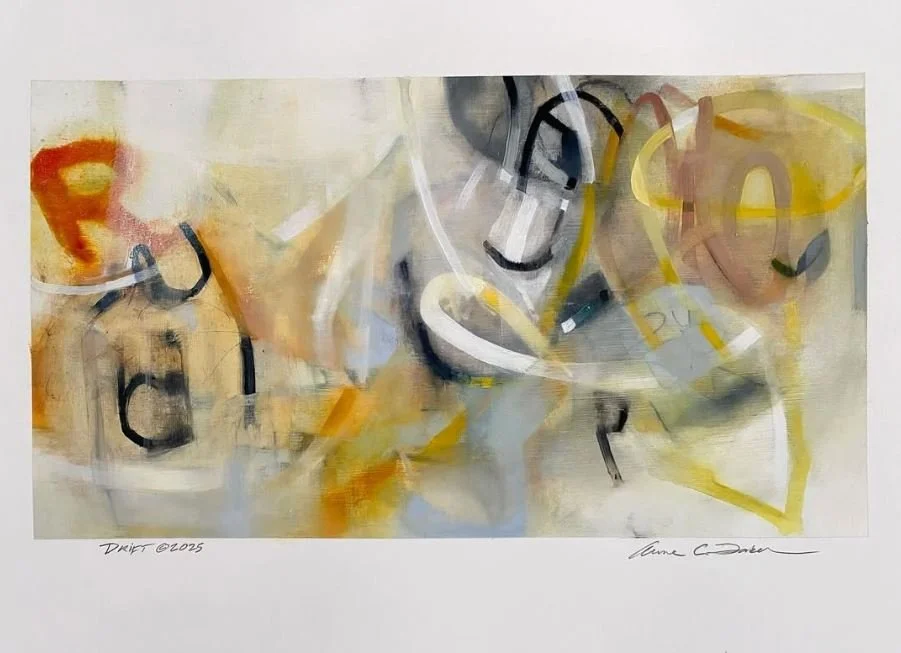
Photo Provided by Anne Faber, Drift c2025 Oil on sized paper 11”x22”
Her education connected her to generations of painters influenced by Abstract Expressionism, formalism and the emerging visual languages that followed them. Yet Faber remained resistant to defining herself too narrowly through art historical categories. She feels closest to the exploratory spirit of the color-field painters, particularly their willingness to allow materials and process to help determine the direction of a work. But her paintings are neither exercises in formalism nor attempts to represent recognizable subjects. “I’m not trying to represent anything,” she said. Instead, she is interested in creating an emotional pace and a particular way of moving through a painting.
Her process often begins outside the studio. Faber photographs architecture, sometimes attracted by something as simple as a tag on a building, the color of a wall or the way light strikes a surface. More often, however, she is looking at negative space: the shape created around a building rather than the building itself. Those photographs can become starting points for a painting. The first marks may be intentional and connected to a specific source or question. After that, the painting begins to move away from its origin. The relationship becomes a conversation.
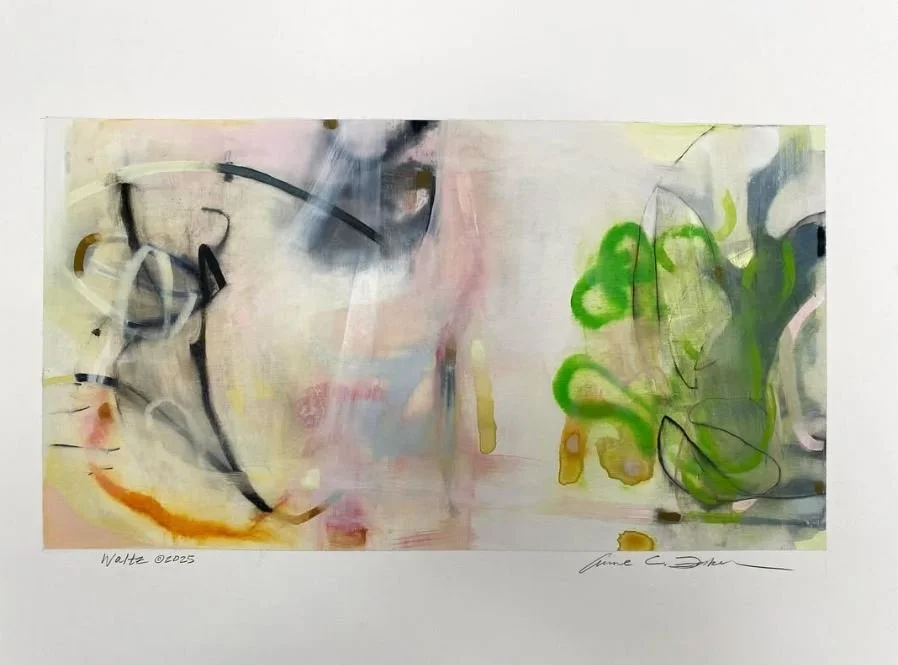
Photo Provided by Anne Faber, Waltz
Faber may add something knowing that she will eventually remove part of it. She builds layers, covers them, exposes earlier passages and searches for relationships between areas of the painting. Shapes may echo one another across the surface. A color buried in an underpainting may unexpectedly provide the solution to a problem months later.
She works on multiple paintings simultaneously because individual works develop at different speeds. Some resolve themselves relatively quickly. Others remain in the studio for long periods. A painting can take a year. Faber described one work that appeared nearly finished but continued to bother her. Different sections were not communicating with one another. She returned repeatedly, bringing darker elements of the underpainting forward and introducing vertical marks. Eventually she realized that the solution had been present within the painting all along. For her, that experience remains almost magical. The painting, in a sense, already knew what it needed. “It is a collaborative effort,” she said. That collaboration requires looking as much as painting. Time spent sitting with a work is as important as the physical act of applying paint.
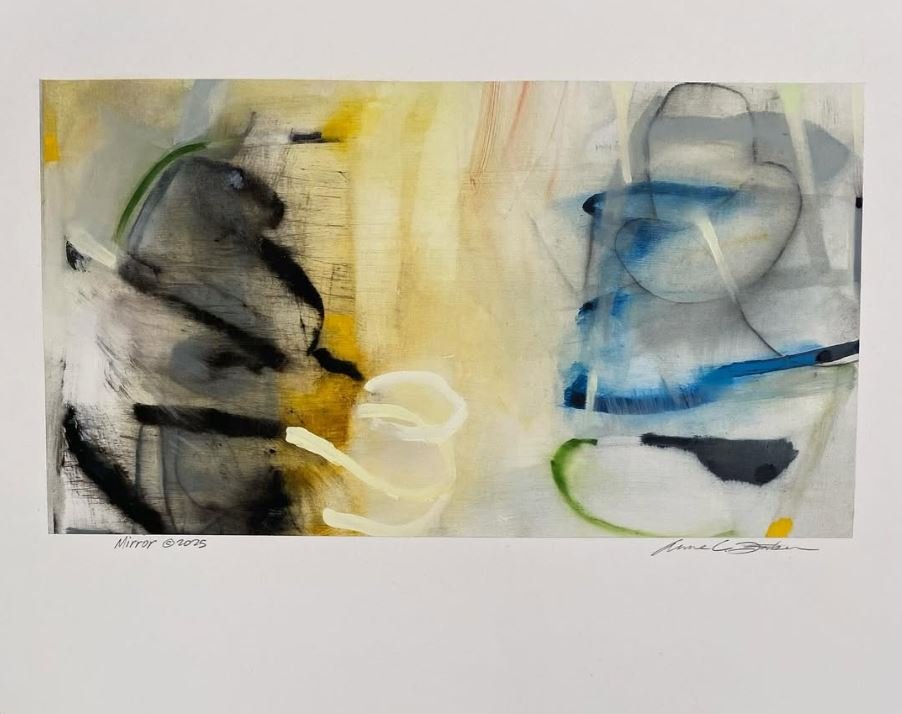
Photo Provided by Anne Faber, Mirror
The finished object matters to Faber, but the process is where much of her deepest engagement occurs. Painting becomes a form of questioning: Could it be this? What happens if I remove that? What if this edge disappears? What happens when these two areas begin speaking to each other? The process has increasingly become reductive. “Sometimes you don’t know what something is, but you can identify what it’s not,” she explained.
Her connection to contemplative practice developed naturally from this approach. Over time, she recognized that moving around the studio, returning to paintings and responding to what they offered resembled a form of walking meditation.
Image-making, she said, helps her understand what she is thinking in much the same way writing helps an author discover thoughts through the act of putting words on paper. The work she is creating now explores what she calls “liminal spaces,” the uncertain territories between established categories, identities and positions.
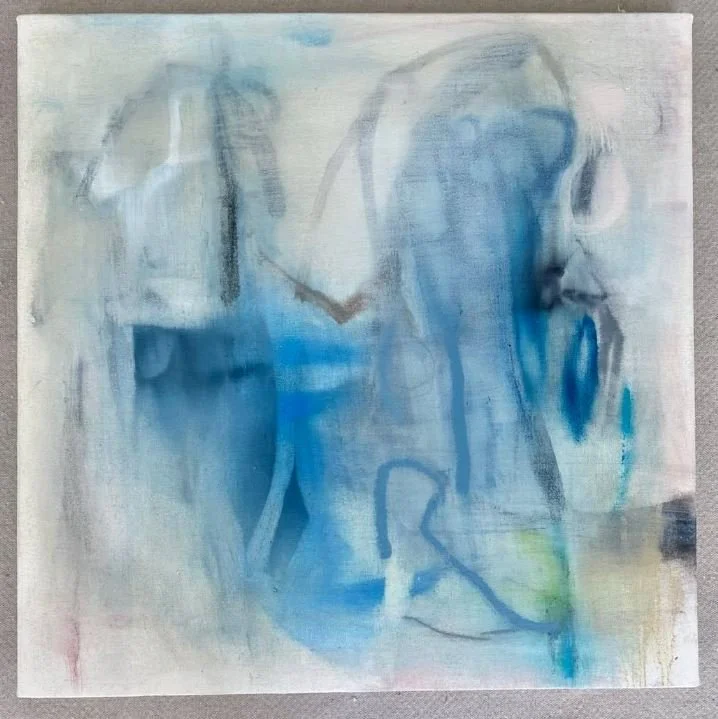
Photo Provided by Annie Faber
The idea is personal. Throughout her life, Faber has often felt herself standing at the edge of communities rather than fully inside them. She grew up connected to both working-class rural life and a family history that exposed her to culture and art. She entered art school without the background many of her classmates possessed. She has lived and worked in different regions, raised three children and maintained a studio practice while teaching and taking other jobs.
She sees power in that position. Standing at the edge can make a person nearly invisible, but invisibility can also create freedom. From the periphery, it is possible to observe. That experience now connects with her concerns about contemporary society. Faber sees people increasingly pushed into opposing camps, with fewer shared spaces where disagreement, uncertainty and genuine conversation can exist. Her paintings do not illustrate politics, but she no longer believes art can exist completely apart from the world in which it is made.
Earlier in her career, she wanted her paintings to function as a “pause from the outside world”. Today she recognizes that her experiences and observations inevitably enter the work, even if they emerge through color, space, scale and tension rather than recognizable imagery.
The idea of the liminal also connects with her resistance to naming things too quickly. Naming can make something appear fixed. Faber is more interested in becoming. (Authors Note to Self: “Liminal” - occupying a position at, or on both sides of, a boundary or threshold)
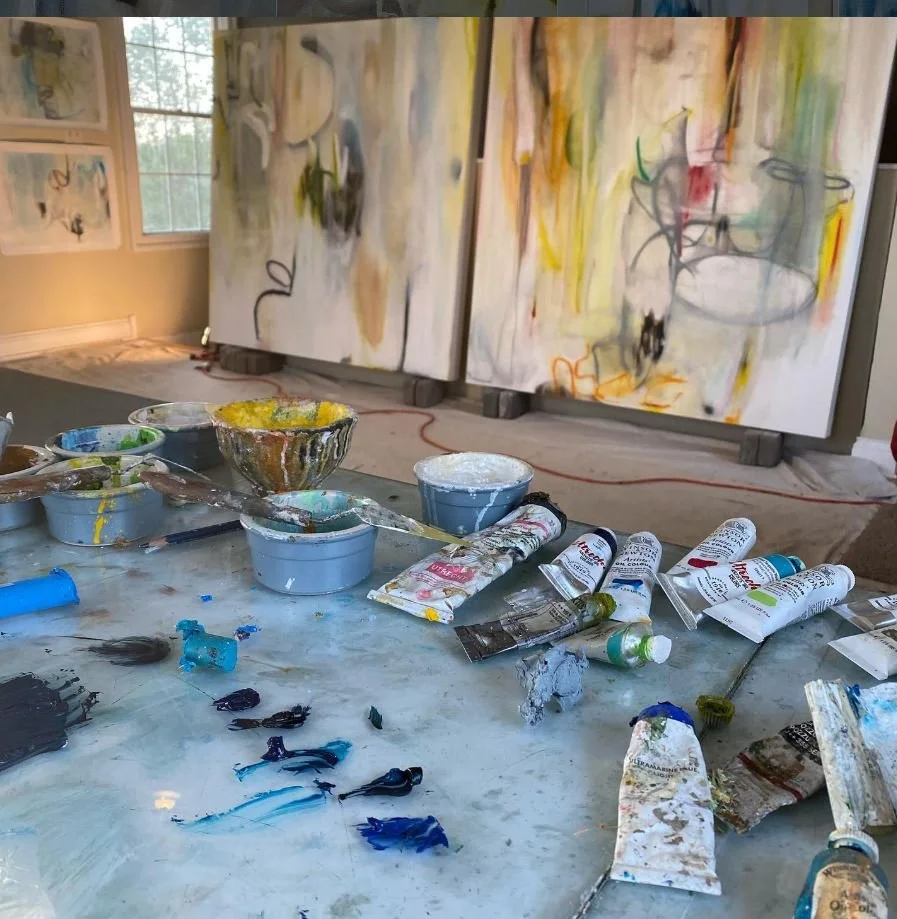
Photo Provided by Annie Faber
Her recent paintings challenge many of the visual habits she developed over decades. She has deliberately used square formats because they remove the automatic compositional dynamics of horizontal or vertical rectangles. Her 60-by-60-inch paintings create a field roughly equivalent to her physical range of vision, allowing her to work almost inside the painting.
She also watches for her own tendencies. Every artist develops a recognizable hand, she believes, much like a signature changes with age while remaining identifiable. Faber can see recurring gestures in her paintings, including a tendency to hang forms from edges or create visual relationships between opposite sides of a composition. The challenge is to recognize those habits without allowing them to become shortcuts.
Her current work has forced her to reconsider many of the methods she once relied upon to construct a painting. The process has been slower, but she remains committed to craftsmanship and to making the strongest object she can. She is, as she describes herself, an “aesthetic materialist,” deeply interested in what materials can do and in the knowledge that comes from mastering them.
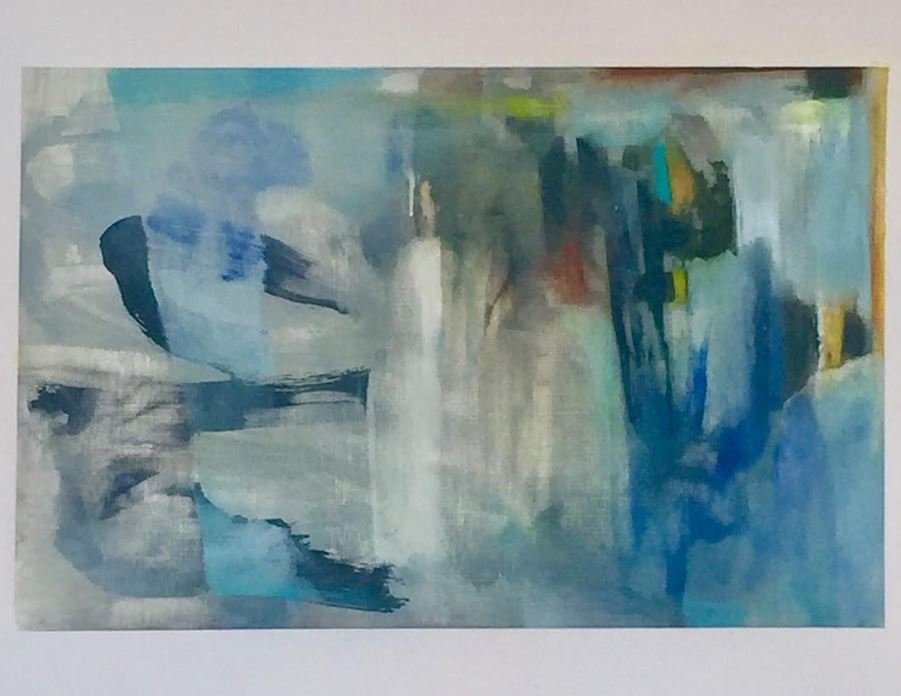
Photo Provided by Annie Faber
Throughout her career, Faber has also taught photography, drawing and painting. After completing her MFA at Syracuse University, she moved to the west coast; spending a year under contract at The Thacher School in Ojai, California. After her contract, she moved to Atlanta, where she taught photography at The Lovett School. Teaching required her to deepen her own understanding of photography and its history while continuing to develop as an artist.
More recently, she has worked as a teaching assistant, including one-on-one work with students requiring additional support. She spoke with particular pride about helping one young student become increasingly independent. For Faber, teaching and making art share something fundamental: both involve paying attention, responding to what is actually happening and knowing when to step aside.
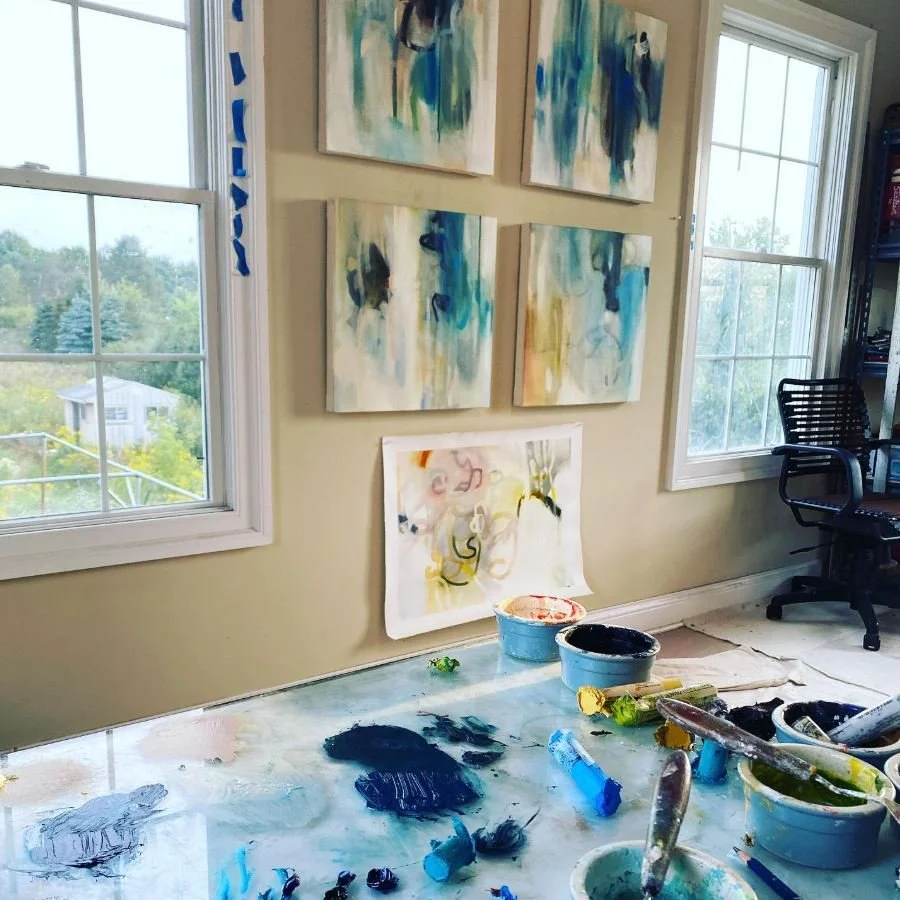
Photo Provided by Annie Faber
Her life has often required balancing art with practical responsibilities. Raising three children, working full time and moving between communities affected the traditional trajectory expected of a professional artist. She continued painting, but the midcareer milestones that often help artists establish gallery representation did not arrive in the conventional way.
She maintains a relationship with a gallery in Chicago but acknowledges that the business side of art has never come naturally. What has remained constant is the work. Following an exhibition at the Kirkland Art Center, Faber began developing the body of paintings now filling her studio. Seeing earlier works together in an exhibition changed her understanding of them. In the studio, she could work on several large paintings at once, but she could never see the entire group together. The exhibition allowed the paintings to enter into a larger conversation.
Now she is beginning another. Her children have moved into their own adult lives, creating a new period of transition. She is considering what comes next professionally and personally while continuing to build the new paintings. Once again, she finds herself in an in-between place.
For an artist whose work has increasingly become concerned with liminal spaces, the uncertainty may be appropriate. Faber does not need to know exactly where the paintings are going before she begins. She needs the materials, the questions and enough time to pay attention. The rest comes through the process. A mark is made. Another is removed. Something buried returns to the surface. The painting changes, and the artist changes with it.
For Annie Faber, the work continues in that uncertain territory between knowing and discovering, where a painting does not necessarily provide an answer but creates a place in which a question can remain open.
Contact Annie at: annecfaber12@gmail.com
Instagram: @annecfaber12