
Ken Nichols: From Persistence to Pottery
A working pottery studio in Central New York, surrounded by spinning wheels, drying clay, and shelves of finished mugs, Ken Nichols sits comfortably in the middle of it all. There is nothing hurried about him. His voice carries the ease of someone who has already done the hard part decades of work, reinvention, and persistence and now finds himself exactly where he is meant to be.
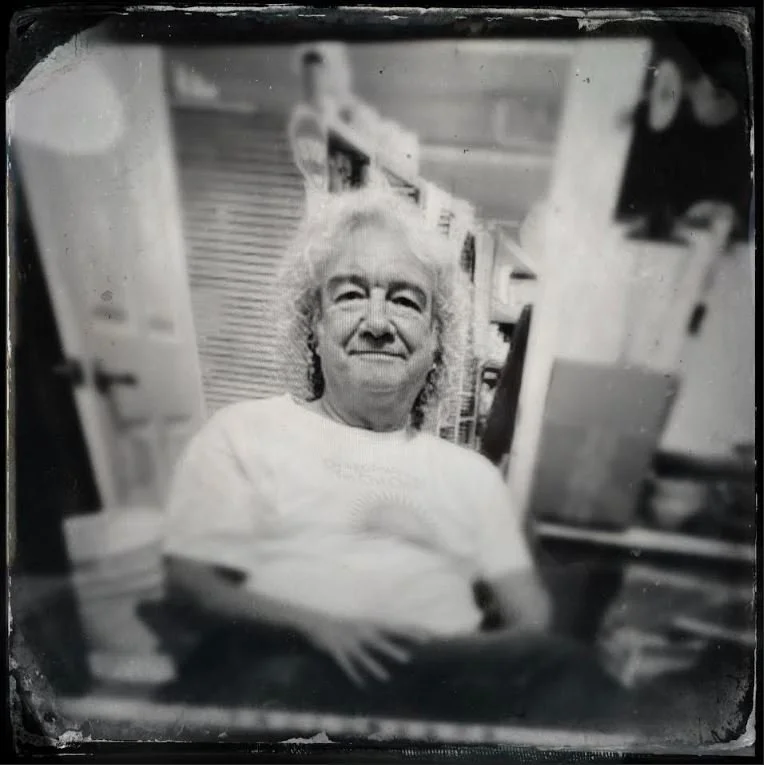
Photo Credit: Hongo David Robertson
At 70, recently retired after a long career in graphic design and industrial marketing, Nichols has returned to something elemental: making things with his hands. Clay, he says, is honest. It doesn’t pretend. It doesn’t care about credentials or résumés. It responds only to touch, patience, and time. But Nichols’ journey to pottery, like much of his life, was not linear. It was shaped by detours, frustrations, self-teaching, and a stubborn refusal to quit. “I’ve been drawing forever,” Nichols says. “Like every artist, it seems.” He grew up in a household that encouraged creativity. His parents supported his interest in art from an early age, letting him draw throughout school. But encouragement at home didn’t always translate into opportunity in the classroom. In high school, Nichols found himself pushed onto an academic track math, science, college prep even as he insisted that he wanted to be an artist. “They kept saying, ‘You can take calculus, you can take physics,’” he recalls. “And I’m like, you don’t understand, I’m going to be an artist. I need to take art classes.” At the time, the art program available to him offered little more than basic supplies, “yarn and three colors of acrylic paint,” as he puts it. It wasn’t enough to build the kind of portfolio he needed.
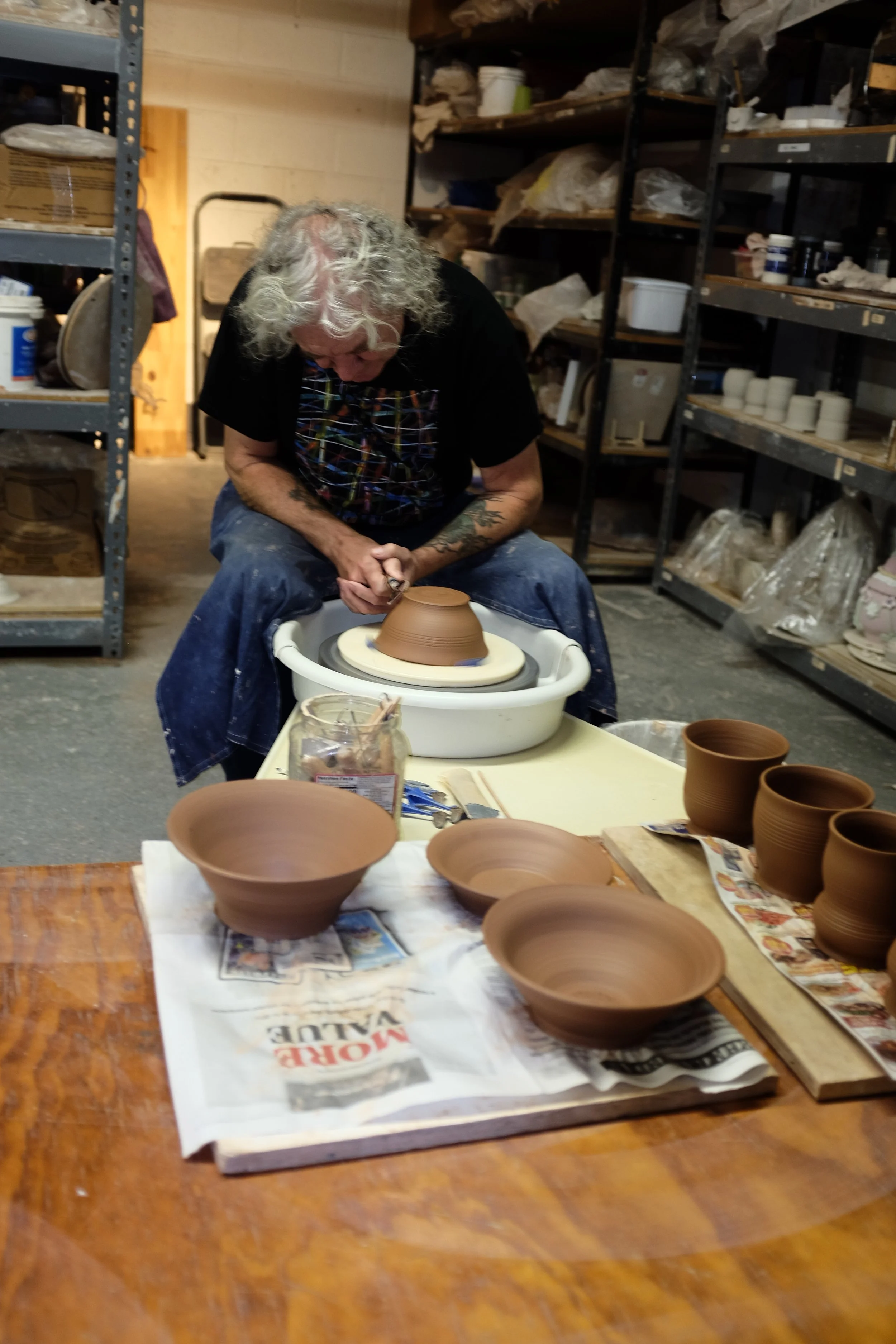
Photo Credit: Hongo David Robertson
Nichols applied to several colleges, including the Rochester Institute of Technology (RIT). Unlike one university that accepted him without even requiring a portfolio, RIT demanded proof of his artistic ability. When he presented his work, the response was blunt. “They told me straight to my face,” he says, laughing, “‘You’re going to come in at the bottom of your class.’” For many students, that kind of assessment might have been enough to turn them away. For Nichols, it became fuel. “I was like, fine,” he says. “I’ll work.” At RIT, he initially pursued communication design but quickly grew disillusioned with the program’s rigid aesthetic philosophy minimalist, stripped-down, heavily influenced by European modernism. “It was all about making everything as simple as possible,” he says. “Black and white, Helvetica, no personality.” Nichols pivoted to drawing and painting instead, determined to focus on the fundamentals he felt were missing. Still, he describes his formal art education as “substandard,” relying more on self-directed learning than instruction. “A lot of it, I just taught myself,” he says. “By doing it.”
After graduating, Nichols entered the job market with his portfolio in hand, making the rounds at agencies. One phone call stands out. He reached out to a well-known design firm in Skaneateles. The response was immediately discouraging. “The guy says, ‘You’re from RIT? Don’t even bother coming in. I already know what’s in your portfolio,’” Nichols recalls. But when Nichols clarified that he had focused on drawing and painting, not design, the tone shifted. “‘Oh,’ he says. ‘Okay come in.’” Nichols didn’t get the job. But the experience reinforced a pattern that would follow him throughout his career: doors closing, then reopening just enough. His first real job wasn’t glamorous. He found work at a small agency assembling sample cases for Corning, gluing electronic components into place for sales presentations. “I just needed a job,” he says. “Minimum wage, three dollars and change an hour.” But inside that modest start was an opportunity. The company produced elaborate slide presentations, precursors to modern digital media, requiring hand-painted visuals, animation techniques, and photographic processing.
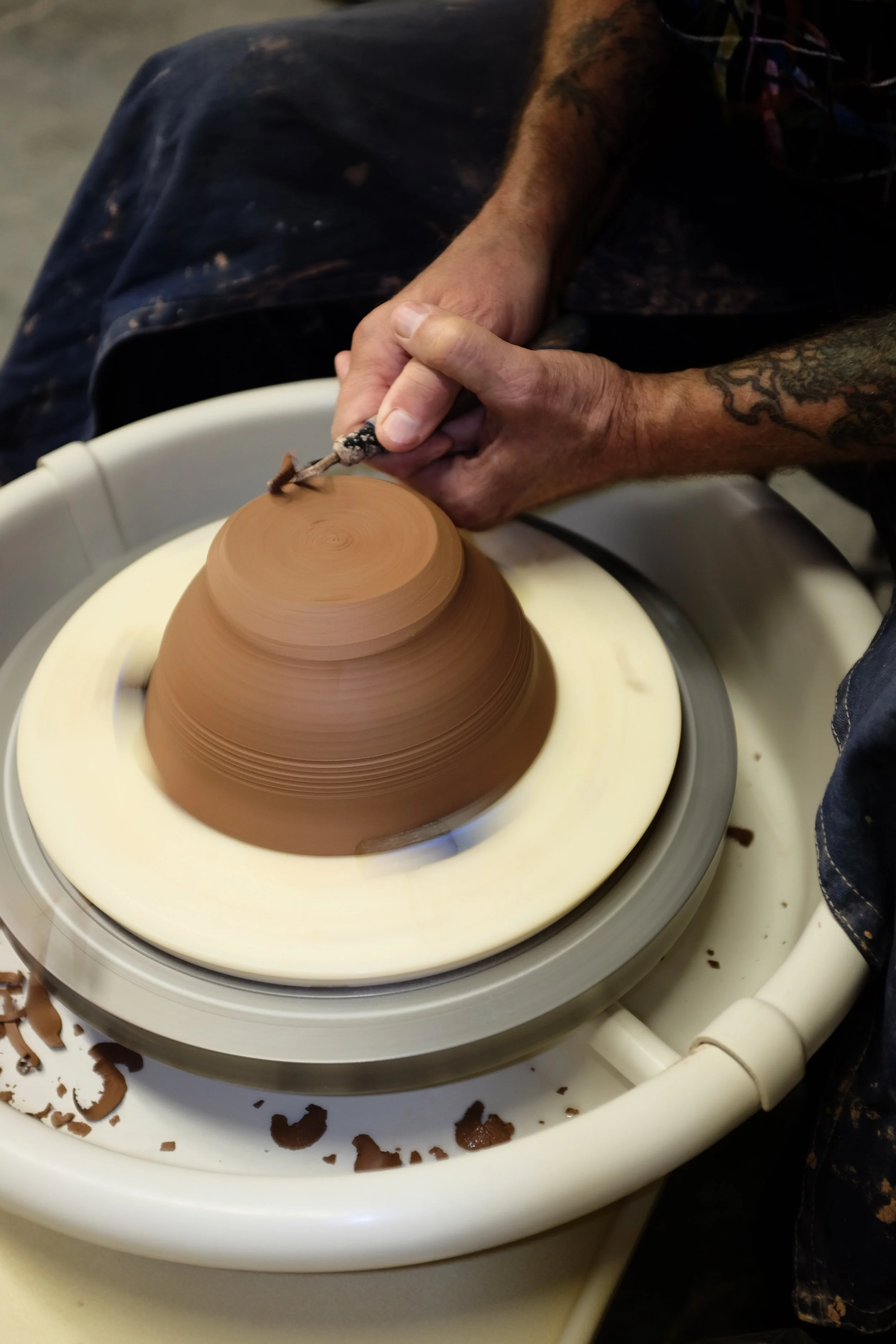
Photo Credit: Hongo David Robertson
Within a short time, he moved from assembly work to creative production, then into photography and design. “I just kept saying yes,” he says. That willingness to adapt, to learn, to step into unfamiliar roles became a defining trait. Over the years, Nichols’ skills took him into surprising corners of the art world. In Boston in the early 1980s, he found himself hand-painting high-end bathroom fixtures sinks, tiles, even entire toilets for luxury clients. “It was old-world craftsmanship,” he says. “You’d paint the design, then fire the whole thing in a kiln.” He landed the job under unusual circumstances: during his interview, he was forced to hold his one-year-old daughter, who was crying uncontrollably, while completing a painting test. “I’ve got her in one arm, screaming her head off, and I’m painting with the other hand,” he says. “The guy looks at me and goes, ‘You’re hired.’”
Back in Central New York, Nichols spent years working in multimedia production, creating slide shows for corporate client’s complex presentations combining imagery, sound, and storytelling. Later, he transitioned into digital work, teaching himself computer graphics as the industry evolved. “I learned everything along the way,” he says. “Technology, design, whatever it took.” Like many in creative industries, Nichols eventually faced the reality of technological disruption. As companies began producing their own presentations using software like PowerPoint, the demand for specialized slide production declined. “It didn’t matter if it looked good or not,” he says. “They could do it in-house.”
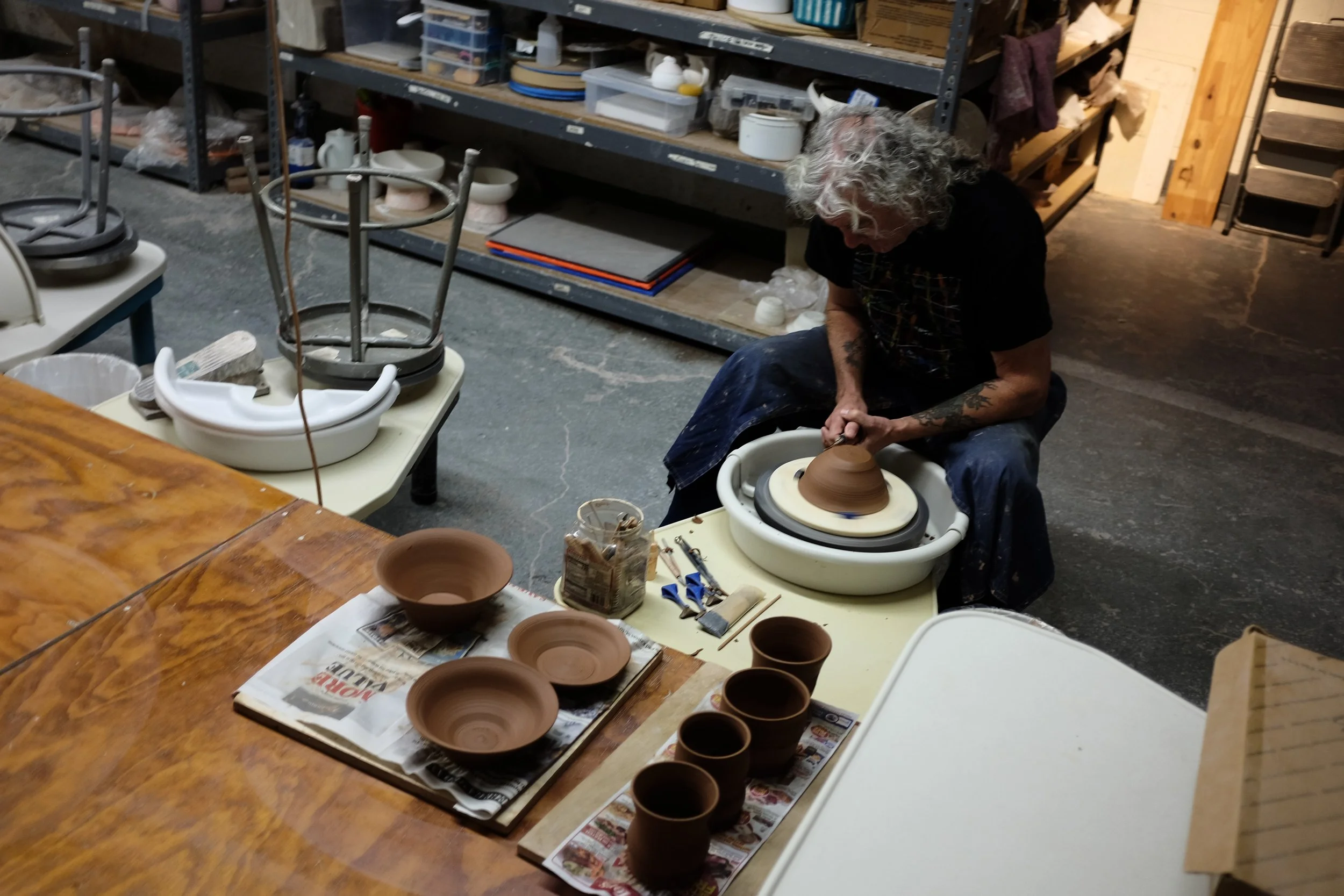
Photo Credit: Hongo David Robertson
Nichols adapted again, taking on roles in technical illustration and training systems creating visual guides for complex machinery, including work for the U.S. Mint. “It was interesting,” he says. “But it was mind-numbing.” After years focused on technical work, Nichols felt the need to reconnect with something more intuitive. “I wanted to be like a kid again,” he says. “Not think about it just do it.” He began painting abstractly, inspired in part by artists like Wassily Kandinsky. “I love things that look like they should mean something,” he says, “but don’t.” It marked a shift from representation to explorational willingness to let go of control and embrace uncertainty.
For most of his adult life, Nichols balanced art with practical work. Employed for 22 years at Oneida Air Systems located in Oneida, New York, eventually serving as head of marketing before retiring in April 2023. “I was a real adult with a real job,” he says. “I did what I had to do.” Unlike the romantic notion of the struggling artist, Nichols built a stable career while continuing to create on the side. “You adapt,” he says. “You use what you’ve got.”
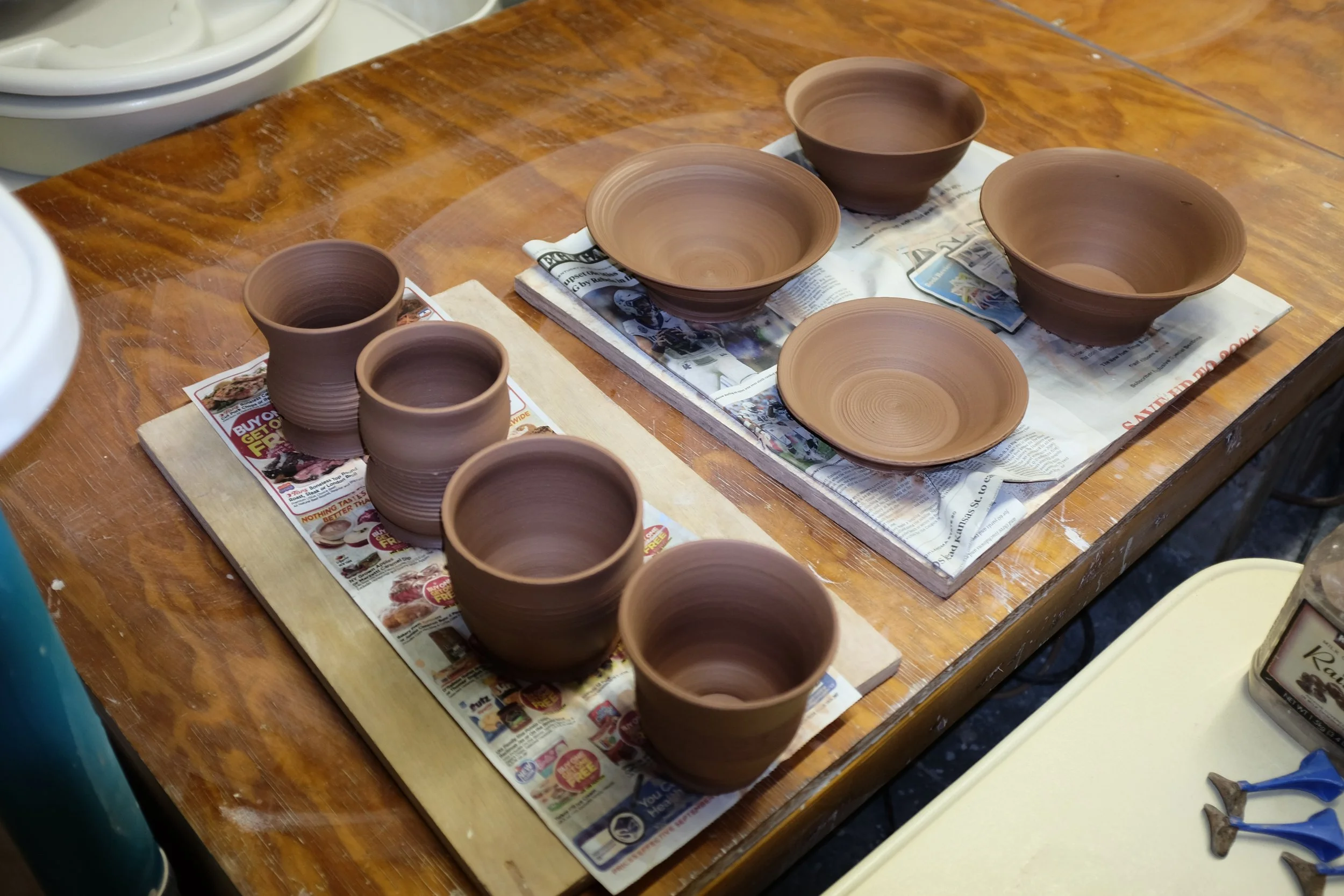
Photo Credit: Hongo David Robertson
Pottery entered Nichols’ life almost by accident. One evening, flipping through a local penny saver a habit he rarely indulged, he spotted an ad for pottery classes at a nearby studio. “I walked across the parking lot the next day and signed up,” he says. “I was their first student.” That studio would grow into a thriving creative space, and Nichols would become one of its regulars. “I always wanted to do pottery,” he says. “You take a lump of dirt and turn it into something functional.” For Nichols, pottery offers something painting often cannot: integration into daily life. “A painting hangs on a wall,” he says. “A mug you use it every day.” His work has developed a following, with collectors returning to purchasing additional pieces. “I’ve had people tell me my mug is part of their morning ritual,” he says. “That means everything.” He recounts stories of customers distraught over broken pieces, some even bringing fragments back to him. “They’re holding it like it’s a tragedy,” he says. “And I get it. It becomes part of their life.”
Unlike some potters who produce highly uniform work, Nichols embraces variation. “No two pieces are the same,” he says. “Even if I try.” He sees this as a strength, not a flaw. “You have to pick them up, look at them,” he says. “There’s one that fits you.” One lesson Nichols emphasizes is the importance of creative independence. “The two most important fingers an artist has,” he says, raising his hands, “are these so you can stick them in your ears.” He laughs, but the point is serious. “When people start telling you what your art should look like, you’ve got to block that out,” he says.
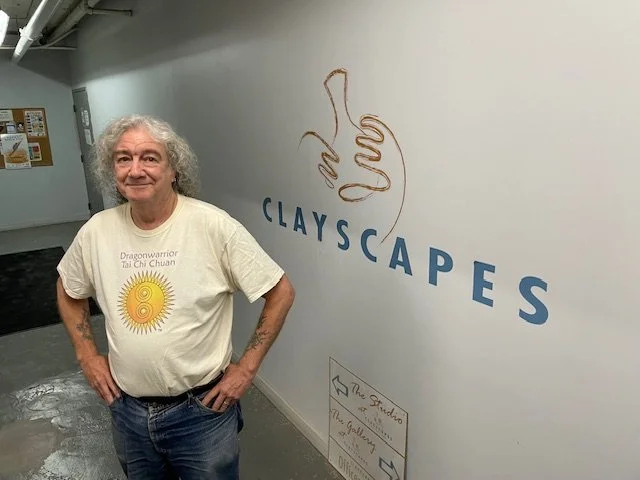
Photo Credit: Hongo David Robertson
Asked what matters more skill or passion, Nichols doesn’t hesitate. “Perseverance,” he says. He has seen talented artists abandon their work after facing criticism, unable to reconcile their self-image with reality. “They were the best in their school,” he says. “Then they get to college, and suddenly they’re not.” Nichols, by contrast, started at the bottom and stayed. “I just kept going,” he says.
For over forty years, Nichols had practiced tai chi. And for nine of those forty years, Nichols has practiced tai chi daily, outdoors, regardless of weather. “Snow, rain, whatever,” he says. “No excuses.” It’s not about mastery, he explains, but consistency. “I don’t know if it’s helped me physically,” he says. “But mentally? Absolutely.”
Now retired, Nichols spends his days in the studio, making pottery, connecting with others, and continuing to learn. “It’s everything I wanted it to be,” he says of retirement. There is no sense of arrival, no final destination, only the ongoing process of making. Looking back, Nichols sees a pattern: a life shaped not by perfect opportunities, but by persistence. “I was never the most talented,” he says. “But I kept going.”