
Judi Witkin: The Long Thread of Art & the Geometry of Beads and Memory
The studio of Judi Witkin is filled with color. Beads spill from trays and containers in shades of blue, copper, emerald, and gold. Intricate necklaces hang from walls, while unfinished projects wait on tables beneath the morning light, pouring through the east-facing windows of Delavan Studios. There is a calm to the space, part workshop, part sanctuary.
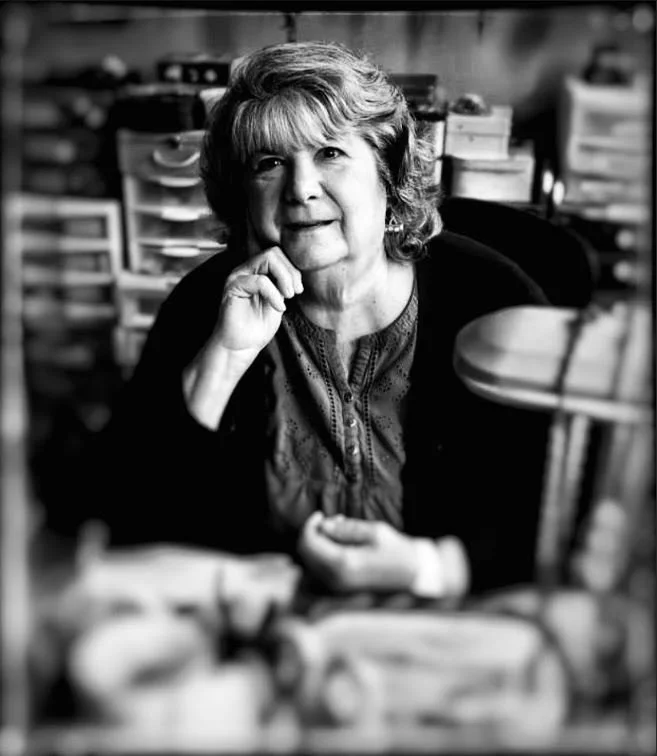
Photo Credit: Hongo David Robertson
Witkin did not arrive at this art form quickly. Her path wandered through painting, orchids, education, marriage, divorce, and decades of teaching before she finally found the medium that felt like home. Sitting before her work, she speaks of someone who has spent years learning how creativity truly operates, through persistence, curiosity, and time.
Born in Philadelphia, Witkin’s introduction to art began in extraordinary circumstances. For the first four years of her life, her family lived in the former home of the renowned painter Thomas Eakins. Her parents had purchased the four-story row house after it had passed through several owners, and much of the artist’s original studio remained untouched.
“The fourth floor was still his studio,” she recalled. “My father couldn’t afford to put in a fire escape, so nobody used it. It just stayed there.”
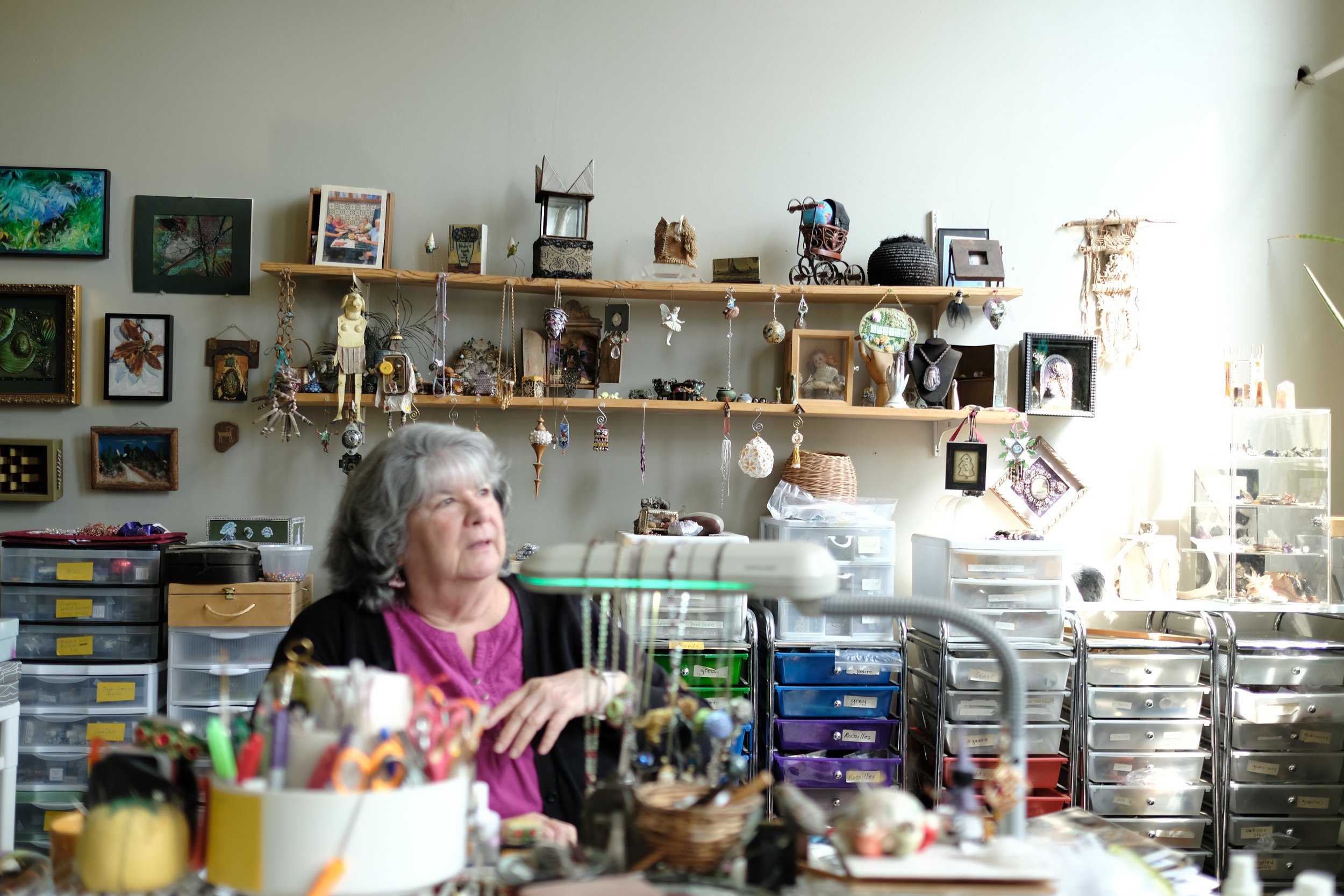
Photo Credit: Hongo David Robertson
The space carried an almost mythic presence for the young Witkin. Her parents often took her to the nearby museum to see Eakins’ paintings and explain that this was the artist whose house they lived in. As a child, she misunderstood and believed the painter still lived upstairs. “I was terrified,” she laughed. “I thought he was still on the fourth floor.” Though she remembers the fear of the fourth floor, she also remembers the atmosphere.
Art was not distant or academic in her childhood; it was composed into daily life. By the time she could hold a pencil, she was drawing.
When her family moved to the suburbs, the change felt stifling. Witkin described those years as rigid and creatively sterile, a place where conformity mattered more than imagination. As soon as she was old enough, she returned to the city and enrolled at the Moore College of Art & Design, majoring in painting. Yet even then, painting never felt entirely natural to her.
“It was too loose and smeary,” she said. “I’m more of a put-things-in-place person.”
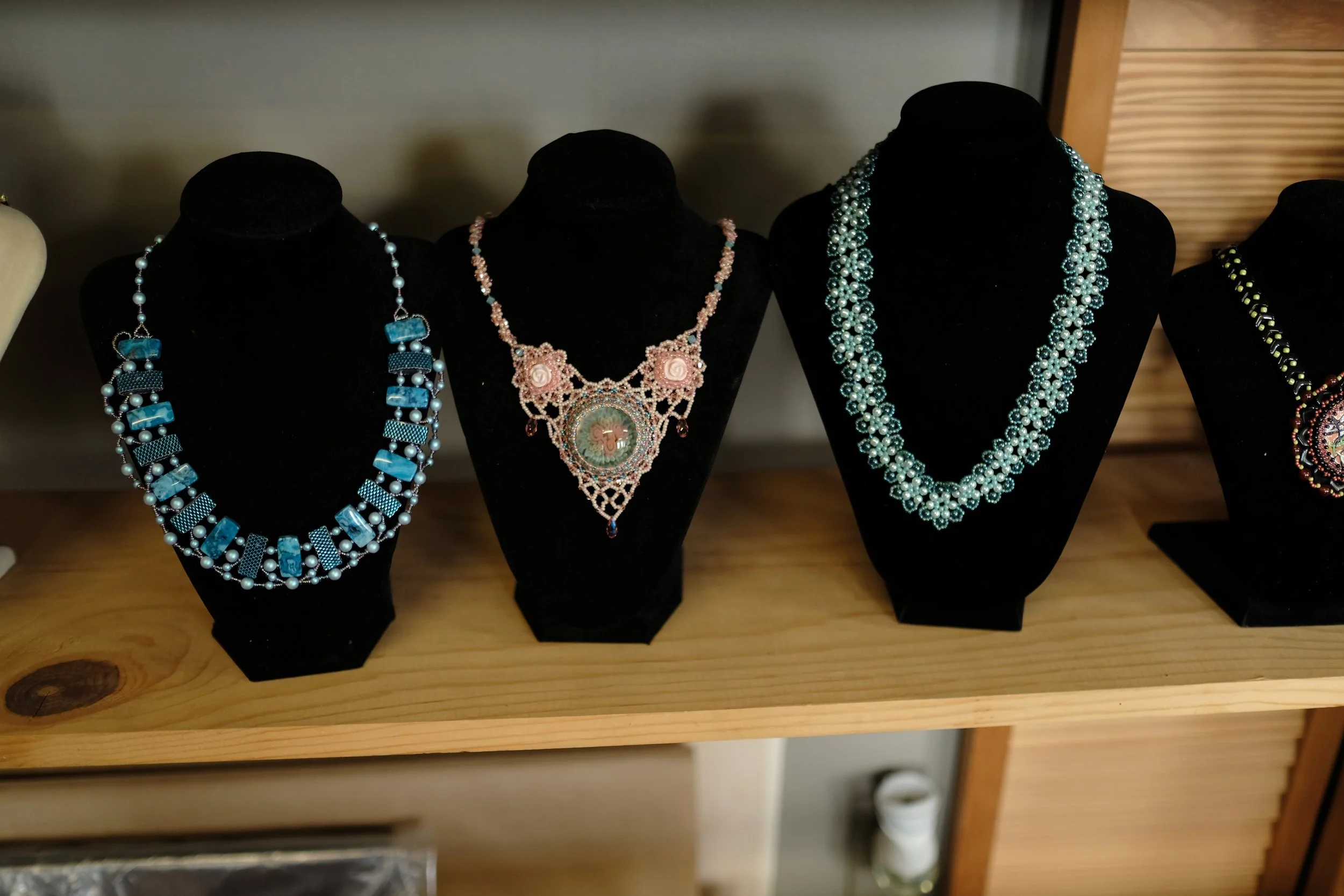
Photo Credit: Hongo David Robertson
That statement explains much about the work she eventually embraced. Beadwork appealed to her because of its structure, precision, and tactile quality. Geometry mattered. Placement mattered. Every piece depended on order.
Marriage eventually brought her to Syracuse, where her first husband taught at Syracuse University. Arriving from Philadelphia, she initially found the city difficult to love.
“One of the faculty wives told me, ‘If you’re going to survive here, you either take up sports or grow green things.’”
Witkin chose orchids.
For years, orchids became both hobby and refuge. She immersed herself in raising them while continuing to experiment artistically in an attic studio at home. Glasswork, basketry, quilting, ceramics, she explored medium after medium, always searching for something that truly fit. Meanwhile, life moved forward. She earned a master’s degree in education from Syracuse University and eventually spent twenty-six years teaching special education in the inner city.
Teaching paid the bills, but art remained essential.
“That was what was keeping me happy,” she said.
The turning point arrived unexpectedly in 2008 through the Orchid Club she belonged to. As president of the club, Witkin needed to give a presentation to a gardening organization in Hamilton, New York. Nervous about driving home at night, she agreed to stay overnight with the club’s president, a woman named Tisha.
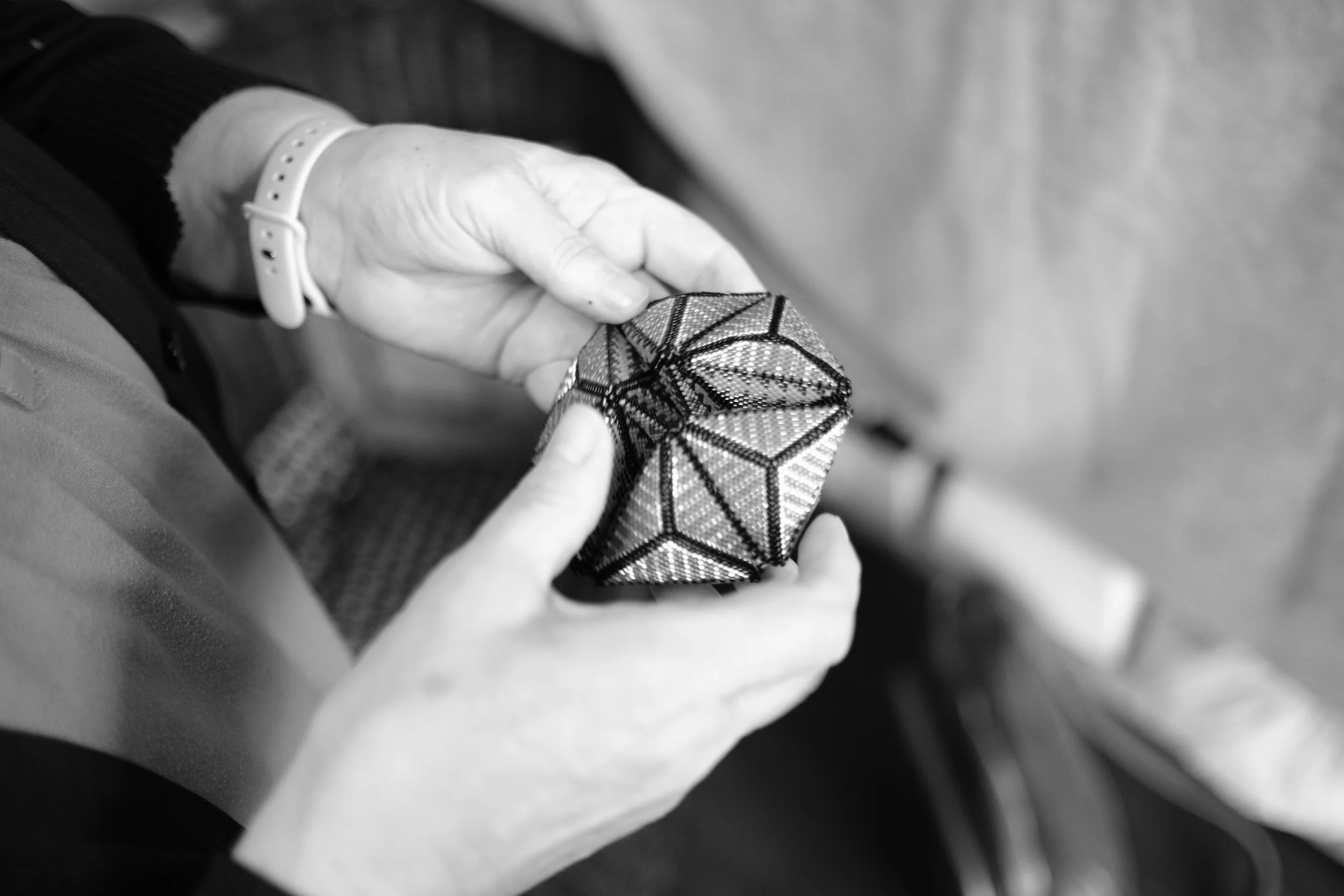
Photo Credit: Hongo David Robertson
That evening, after the lecture, a nor’easter blew in so heavily that Witkin became stranded at Tisha’s home for three days.
It turned out Tisha was not only a gardener, but also a master bead artist.
“We got up every morning, her husband cooked for us, and we spent the day in her studio,” Witkin said. “She taught me my first stitches, how to read patterns, how beadwork worked.”
The experience changed everything.
“There’s something mysterious about beads,” she explained. “They’ve been around since the beginning of humanity. Bone, shell, decoration, people have always used them. It feels ancient. Spiritual.”
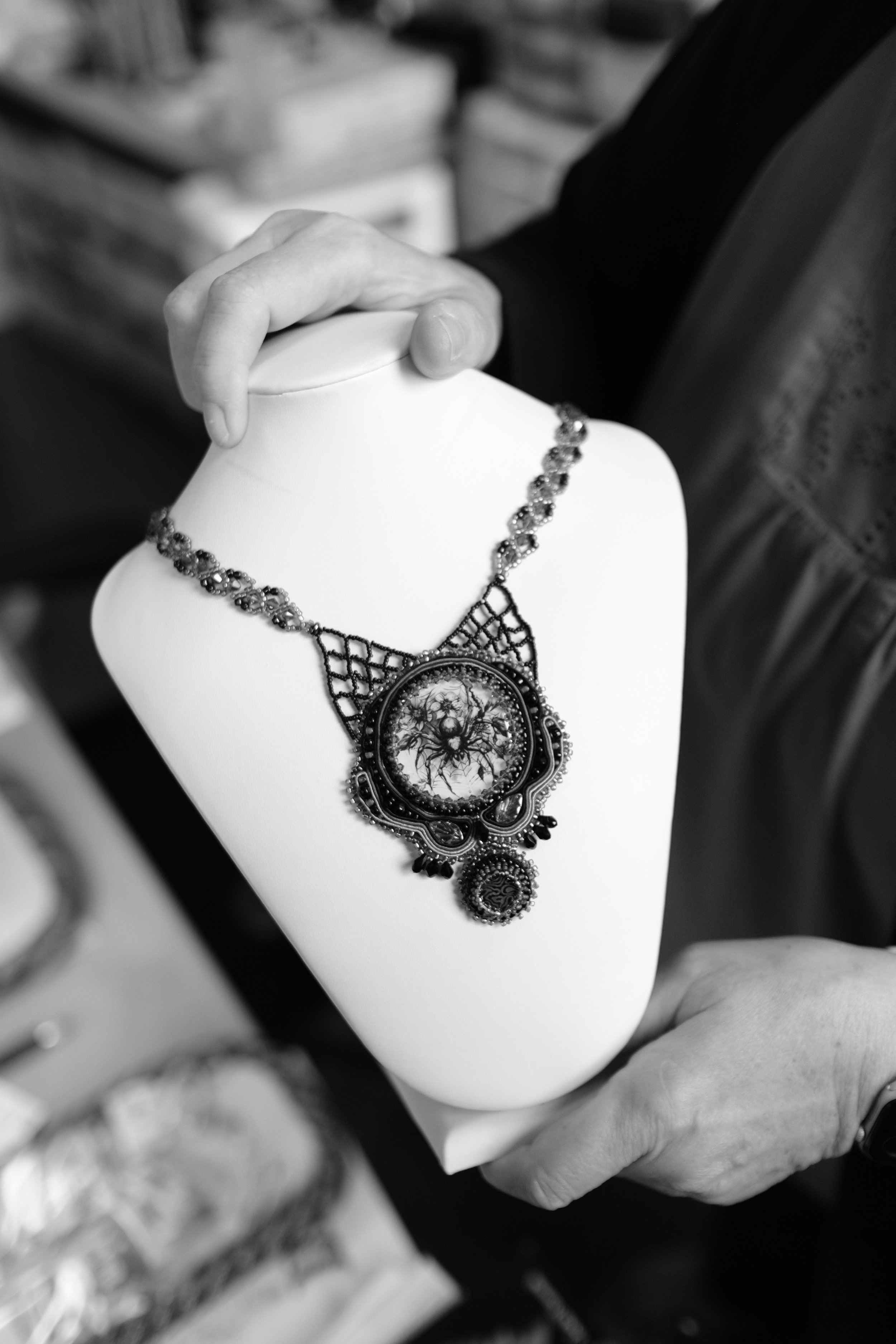
Photo Credit: Hongo David Robertson
Unlike painting, beadwork immediately made sense to her. It satisfied her love of structure while still allowing endless invention. Patterns could be followed, altered, or abandoned entirely. Mistakes were not catastrophic.
“If you don’t like what you’re doing, the only thing you’ve wasted is thread and time,” she said. “The beads get recycled.”
After retiring from teaching in 2010, Witkin discovered she could lose herself entirely in the process. Hours disappeared unnoticed while she worked. Some days she would look up at two in the afternoon and realize she had never got dressed. She would lose herself in her work. It was all encompassing. That realization of her passion, led her to rent studio space at Delavan.
“I needed someplace that would get me up and out of the house,” she said.
The Delavan Studios community, located on the west side of Syracuse, New York, suited her perfectly. Her husband, painter Mark Raush, already had a studio upstairs. The building itself, once tied to the old Curry Plow Company and later associated with John Deere manufacturing operations, has evolved over decades into one of Syracuse’s most important artist spaces.
Witkin speaks about the building the way some people speak about neighborhoods or families. Artists drift in and out of one another’s studios. Conversations begin in hallways. Inspiration circulates naturally.
Inside her own space, the work ranges from wearable jewelry to elaborate sculptural bead constructions that resemble jeweled reliquaries or contemporary interpretations of Fabergé forms. Some pieces are entirely original. Others begin with purchased patterns that she alters and expands upon.
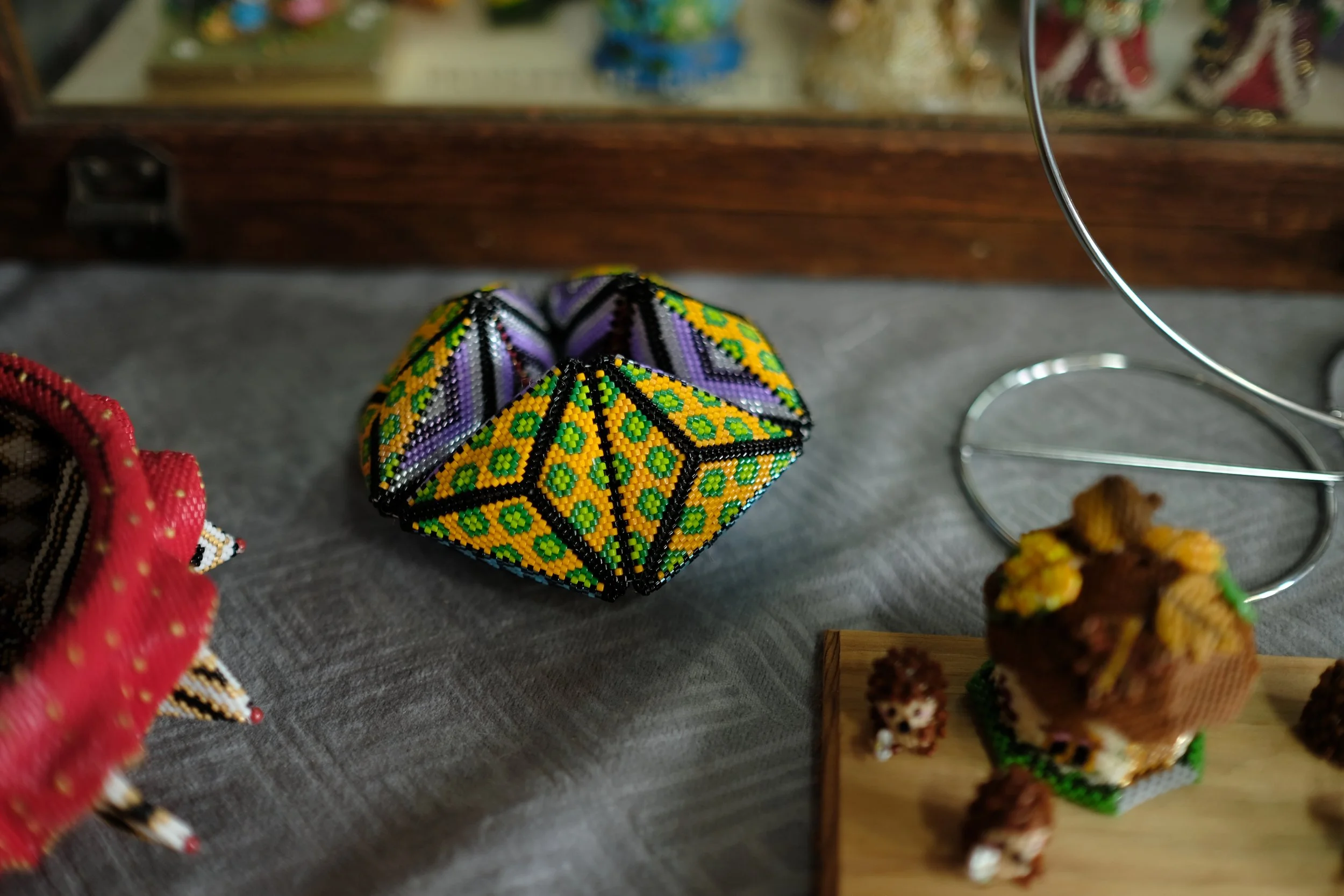
Photo Credit: Hongo David Robertson
“Sometimes when I’m not feeling creative, I’ll use somebody else’s pattern,” she said. “But I always learn something from it.”
Much of her strongest work draws inspiration from cultural traditions and historical design systems. She studies African textiles, Egyptian ornamentation, Indigenous geometric patterns, and ancient bead traditions stretching back thousands of years.
“I love geometry,” she said simply.
One series was inspired by Kente cloth traditions and mud-dyed African textiles. Another incorporated orchid motifs, tying together two lifelong passions.
Despite the extraordinary labor involved in the pieces, Witkin is remarkably unconcerned with selling them. She once belonged to Gallery 54 in Skaneateles, but eventually stepped away from regular gallery sales.
“People want ten-dollar earrings,” she said. “I don’t want to spend my life making ten-dollar earrings.”
For Witkin, the work itself matters more than commerce. Some pieces become gifts. Others remain in her collection indefinitely. The value lies in the making.
That attitude became even stronger during the COVID-19 pandemic. While galleries closed and sales slowed, her studio at Delavan remained open under safety restrictions, giving artists a place to continue working and seeing one another.
“It was wonderful,” she said. “You didn’t feel trapped at home.”
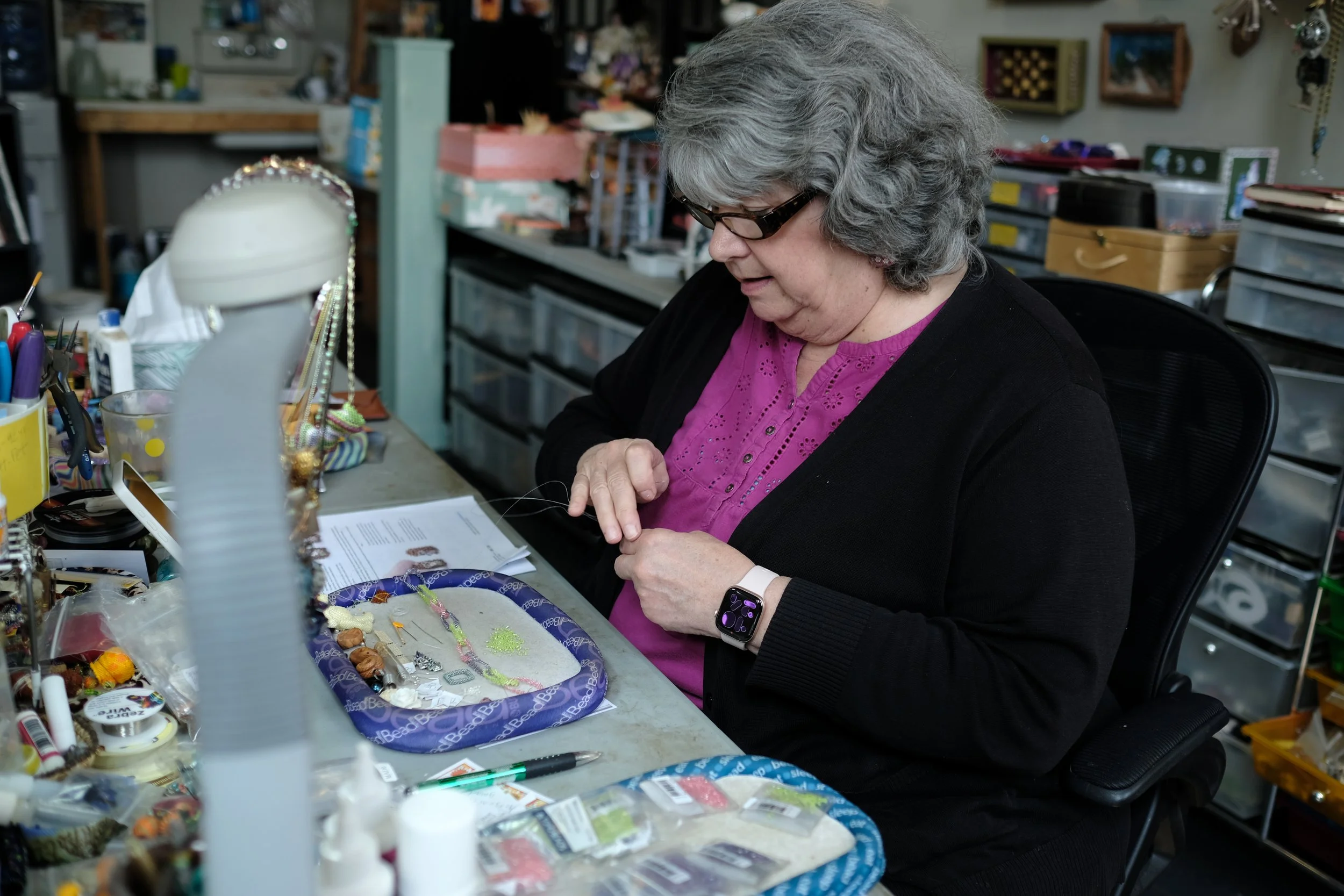
Photo Credit: Hongo David Robertson
The pandemic shifted her priorities. Rather than creating work intended for seasonal sales, she began making only what genuinely interested her.
“Now I just make whatever I feel like making.”
Near the end of the interview, Witkin demonstrated a new project bound for Japan, part of an international peace-chain initiative aiming to create a beadwork chain stretching a mile long. Watching her work, needle passing carefully through tiny glass beads, it became obvious that beadwork is not simply craft for her. It is meditation. Language. Continuation.
Throughout the conversation, one theme surfaced repeatedly: art as survival. Not fame, not money, not prestige, but survival. The act of making things allowed Witkin to navigate change, loneliness, divorce, teaching, aging, and uncertainty. It gave shape to her days and meaning to her attention.
At one point she reflected on how strange it was that she had spent decades searching through different mediums before finally arriving at beads.
“I finally found my medium,” she said.
Looking around the studio, filled with pieces that shimmer under the morning light, it is difficult to imagine she was ever meant to work in anything else.