
John Fitzsimmons: The Long Road Back to the Studio
The door to John Fitzsimmons' studio at the Delavan Center in Syracuse opens onto a space that immediately reveals the habits of someone who has spent a lifetime making things. Large paintings lean against the walls. Etching plates, presses, handmade panels and carefully organized tools occupy nearly every available surface. Nothing appears decorative for its own sake. Everything has its purpose. The studio reflects the artist himself, measured, thoughtful and quietly industrious.
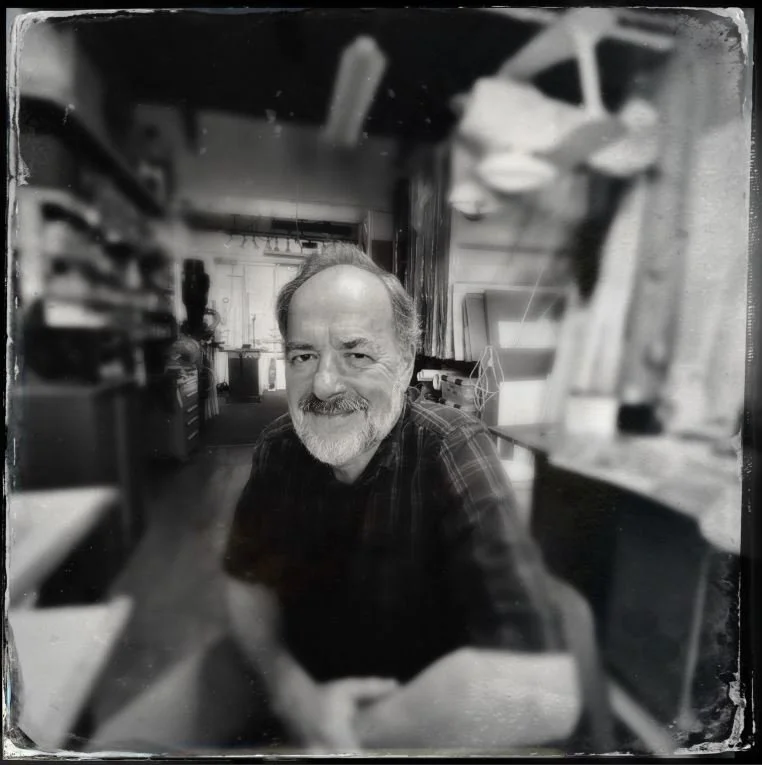
Fitzsimmons has occupied this studio for more than a decade, but the path that brought him here was anything but direct. His career has wound through fine art, industrial design, manufacturing, product development and patent work before returning, full circle, to painting and printmaking.
"I always wanted to make things," he says simply.
Although born in Fulton, New York, John Fitzsimmons considers nearby Baldwinsville the place where he grew up. It was there that his fascination with art first took hold. Throughout his school years, he filled sketchbooks with drawings while developing an equally strong interest in chemistry and the sciences. When his family relocated to Lockport during his teenage years, those early interests traveled with him. The combination of artistic curiosity and analytical thinking that began in Baldwinsville would become a defining characteristic throughout his life, shaping not only his work as a Fine Artist but also his successful careers in engineering, product design, and invention.
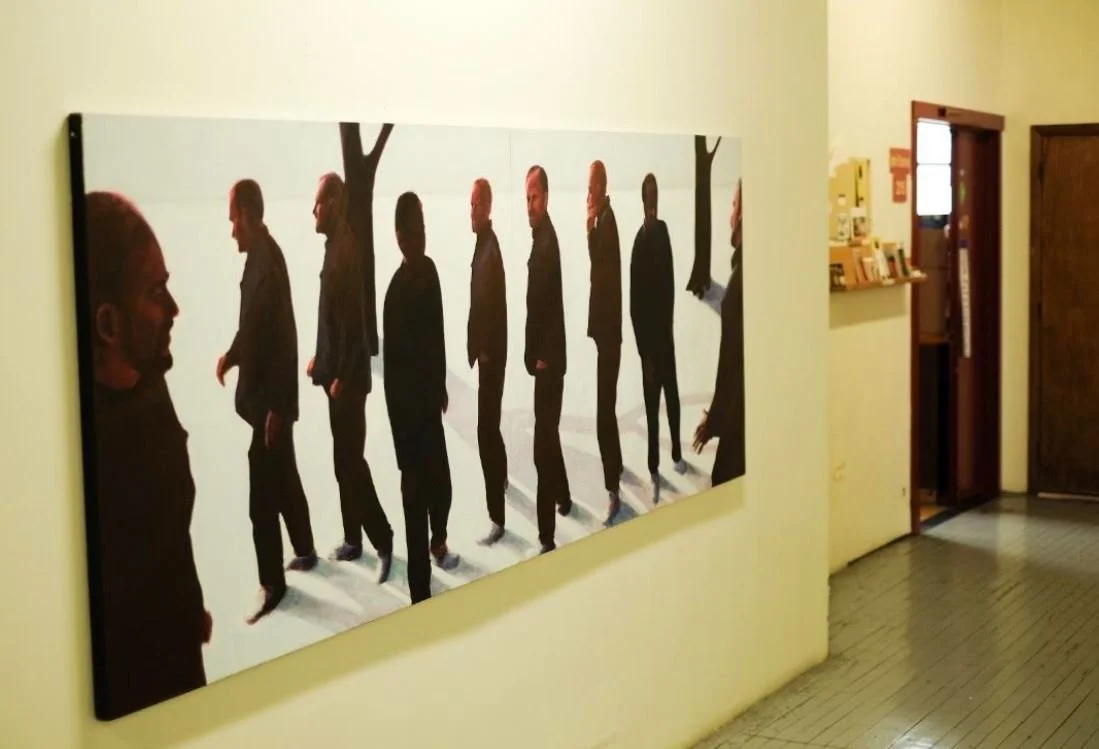
Photo Credit: HonGo David Robertson - Fitzsimmons Painting: - "I, in my" - 42 x 120", oil on panel
School, however, was never easy. Living most of his life with significant hearing loss, Fitzsimmons struggled through years of classrooms that offered few accommodations. Lectures were difficult to follow, language classes nearly impossible. At the time, hearing impairments were rarely addressed in public education the way they are today.
"I could read really well," he recalls. "But lectures were a real disadvantage."
Despite those challenges, his commitment to becoming an artist never wavered. He enrolled at the State University of New York at New Paltz as a fine arts major, but his time there lasted only a year. One of his instructors encouraged him to pursue a more rigorous art education, suggesting he apply to both Cooper Union and the Art Academy of Cincinnati. He was accepted to both.
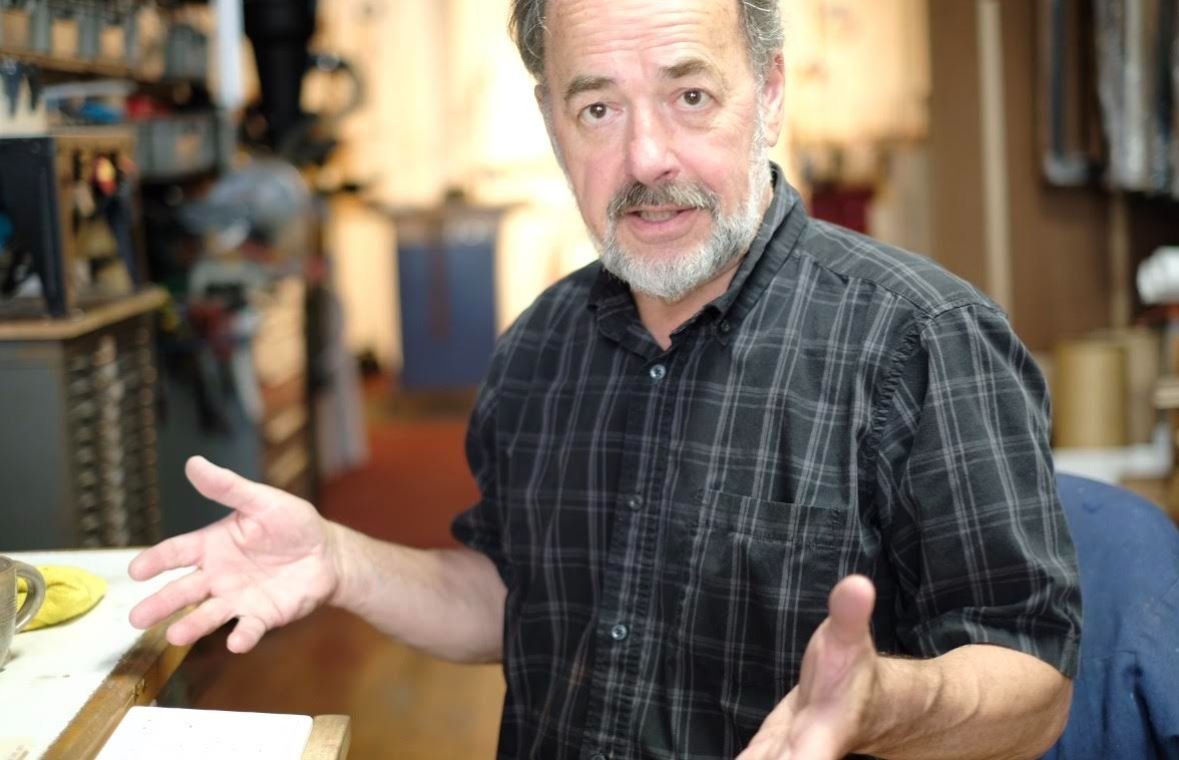
Photo Credit: HonGo David Robertson
Cooper Union offered one of the nation's most prestigious art educations, complete with a full scholarship. Cincinnati offered a demanding classical foundation in drawing and studio practice. Administrative circumstances eventually led him to Cincinnati, a decision he still views with mixed emotions. Looking back, he believes Cooper Union may have changed the course of his career, but Cincinnati provided something equally valuable: discipline.
"It was an enormous amount of drawing," he says. "Everybody had to study everything from drawing, printmaking, sculpture, to photography. It was a very comprehensive foundation." The experience reinforced his belief that craftsmanship matters. Every discipline informed the next, and every technical skill became another tool for visual problem solving.
After graduation, Fitzsimmons hoped to continue developing as an artist in New York City. He pursued admission into the Whitney Museum's Independent Study Program, one of the country's most respected opportunities for emerging artists. Although selected as the first alternate, the program ultimately required graduate-school enrollment, something he had deliberately chosen not to pursue. "I was tired of school," he says.
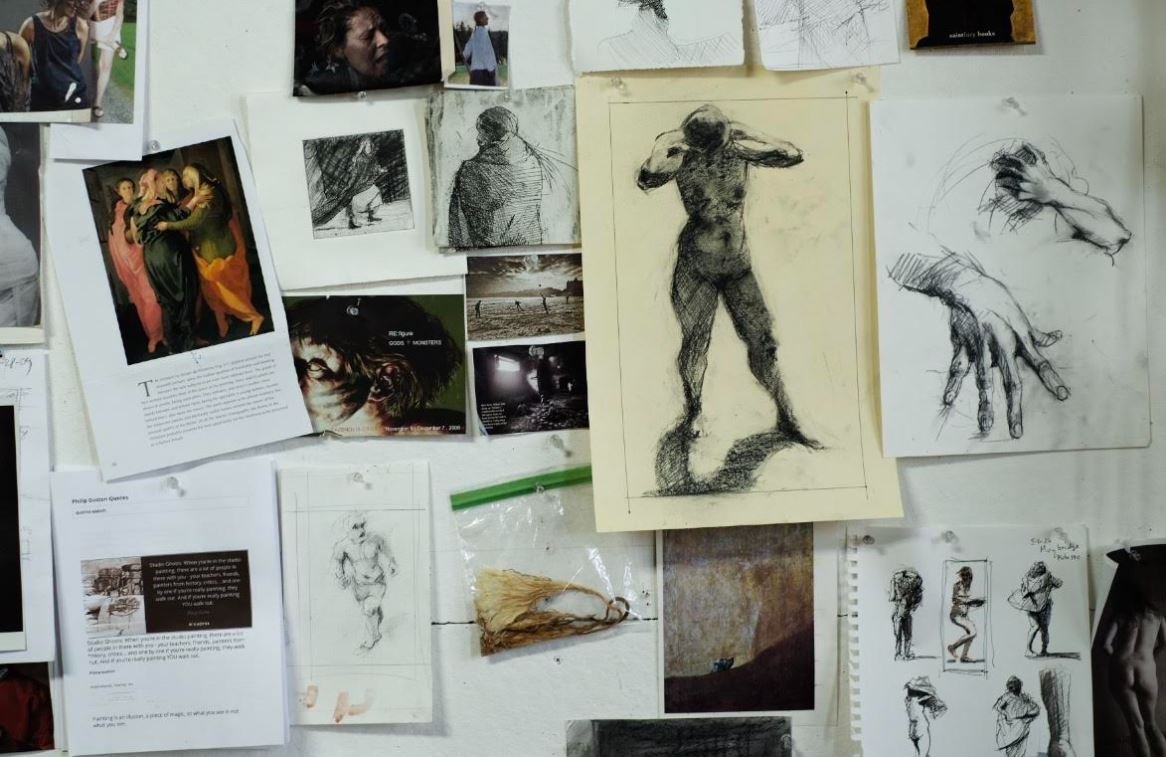
Photo Credit: HonGo David Robertson
Life intervened. Marriage, family responsibilities and his father's purchase of a manufacturing company in Utica redirected his attention toward business. Fitzsimmons joined the family operation, Diversified Case, a company producing carrying cases for clients including Kodak and other manufacturers. The business employed as many as seventy people. For thirteen years he immersed himself in manufacturing, learning production, engineering and business management while watching American manufacturing slowly confront increasing pressure from overseas competition.
After leaving the family company, Fitzsimmons launched his own enterprise buying and selling industrial machinery. He brokered surplus equipment, machine tools, presses and manufacturing assets throughout Central New York. For a time, business flourished. Manufacturing remained strong enough that factories regularly upgraded equipment, creating opportunities for dealers who understood both machinery and industry.
Then came economic shifts that dramatically altered the landscape. "The local manufacturing just faded away," he says. The attacks of September 11 accelerated changes already underway. Many companies downsized or disappeared altogether, reducing opportunities throughout the industrial sector. Yet even while building businesses, Fitzsimmons never completely abandoned art.
Painting remained in the background, waiting. Design work filled some of that creative need. Throughout his industrial career he developed products, solved engineering problems and accumulated dozens of patents. Much of that work eventually led him to Oneida Air Systems, where he spent another thirteen years in product development before retiring.
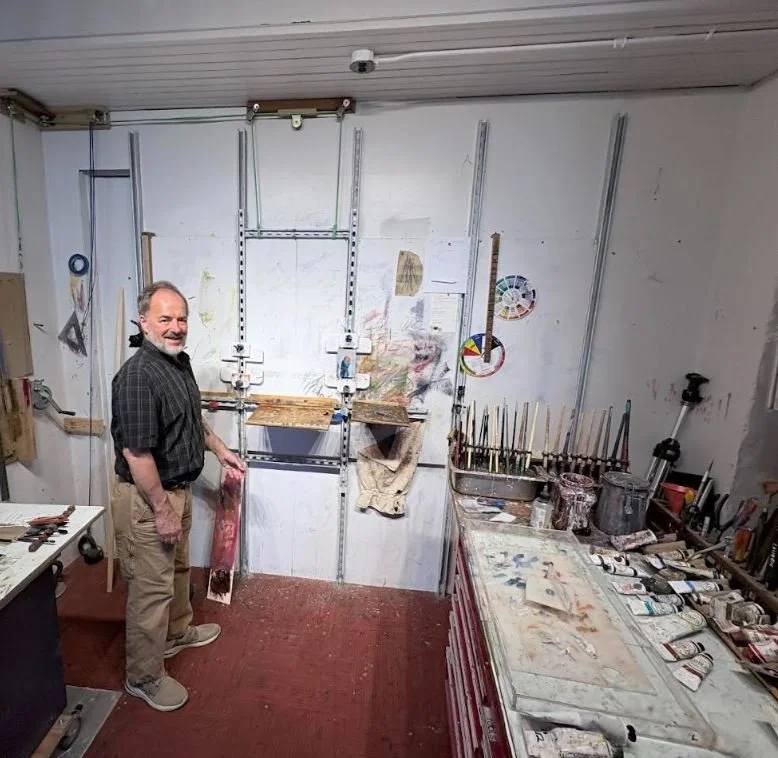
Photo Credit: HonGo David Robertson
His artistic instincts proved surprisingly valuable in engineering. Creative thinking, he believes, transfers naturally between disciplines. Inventing products, designing machinery and composing paintings all begin with the same essential question: how do you solve a problem elegantly? "It was something I always enjoyed doing," he says.
Like many inventors employed by large companies, the patents belonged to his employers. Recognition mattered less than the satisfaction of creating practical solutions. Still, throughout those decades, painting remained unfinished business. "I always thought I'd paint more someday," he says.
Retirement finally offered that opportunity. Almost immediately, life interrupted again. His retirement coincided with devastating family health crises. His daughter became critically ill with brain cancer. Shortly afterward Fitzsimmons himself required multiple surgeries that left him sidelined for an extended period. Today he speaks about those experiences without self-pity. They simply became another part of life's unpredictable rhythm.
Now recovered, he has returned fully to the studio. His paintings occupy much of the space, many measuring six by eight feet or larger. Nearby sits his etching press alongside handmade plates, proofs and works in progress. Even his painting panels are fabricated in the studio. Everything around him reflects a lifetime of building rather than buying.
"I make almost everything," he says. That self-reliance extends beyond practical necessity. It represents a philosophy. The process matters. Not because process is more important than finished work, but because understanding materials allows ideas to develop honestly. He is careful not to romanticize craftsmanship. Artists, he believes, sometimes become overly attached to technique. "It becomes all about the process," he says. "Then you start evaluating everything by tiny details. It's just a tool."
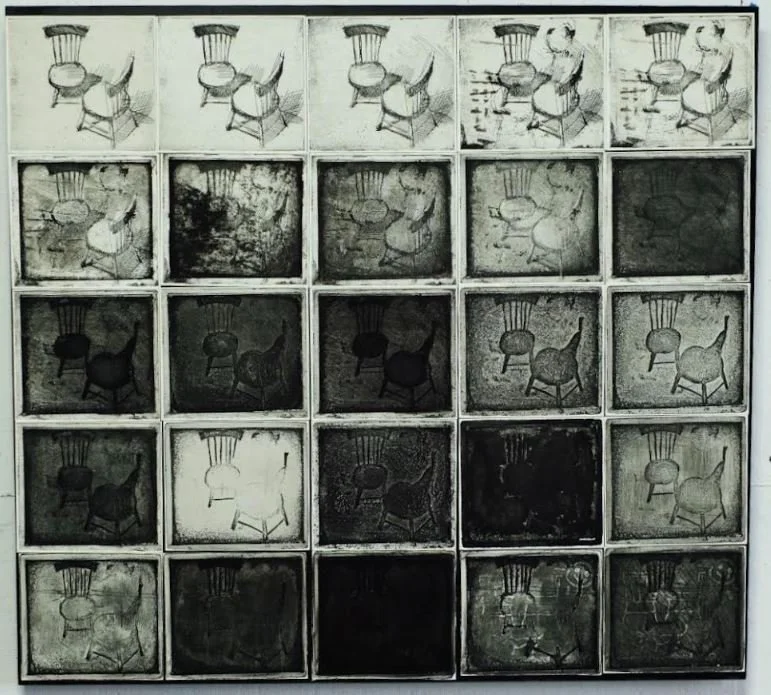
Photo Credit: HonGo David Robertson - Fitzsimmons Etching - "Fifty Chairs" 27 x 30" (50 versions of one etching)
That perspective has evolved over decades. Rather than becoming consumed by technical perfection, Fitzsimmons focuses on larger questions.
Regarding the Artist…three things should be considered:
Why should he paint?
What should he paint?
How should he paint it?
Those three questions dominate his thinking. Interestingly, the question many people ask artists, why they paint, receives far less attention from him.
"The 'why' is dangerous," he says. Searching for a practical justification can become paralyzing. If painting must constantly prove its usefulness or financial value, the artist risks talking himself out of making art altogether. Instead, Fitzsimmons accepts painting as something that simply belongs in his life.
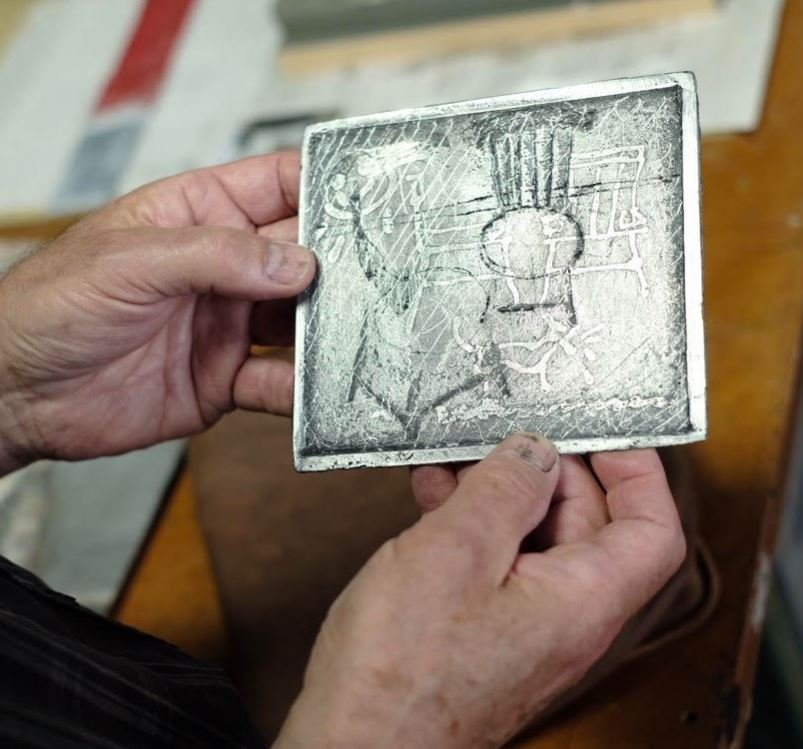
Photo Credit: HonGo David Robertson
"I paid my dues," he says. "I'm in a position where I can do anything I want." That freedom has allowed him to pursue increasingly personal work without worrying about commercial expectations or academic approval. His relationship with academia has always been complicated. Although grateful for his formal training, he never embraced the politics that often accompany institutional art.
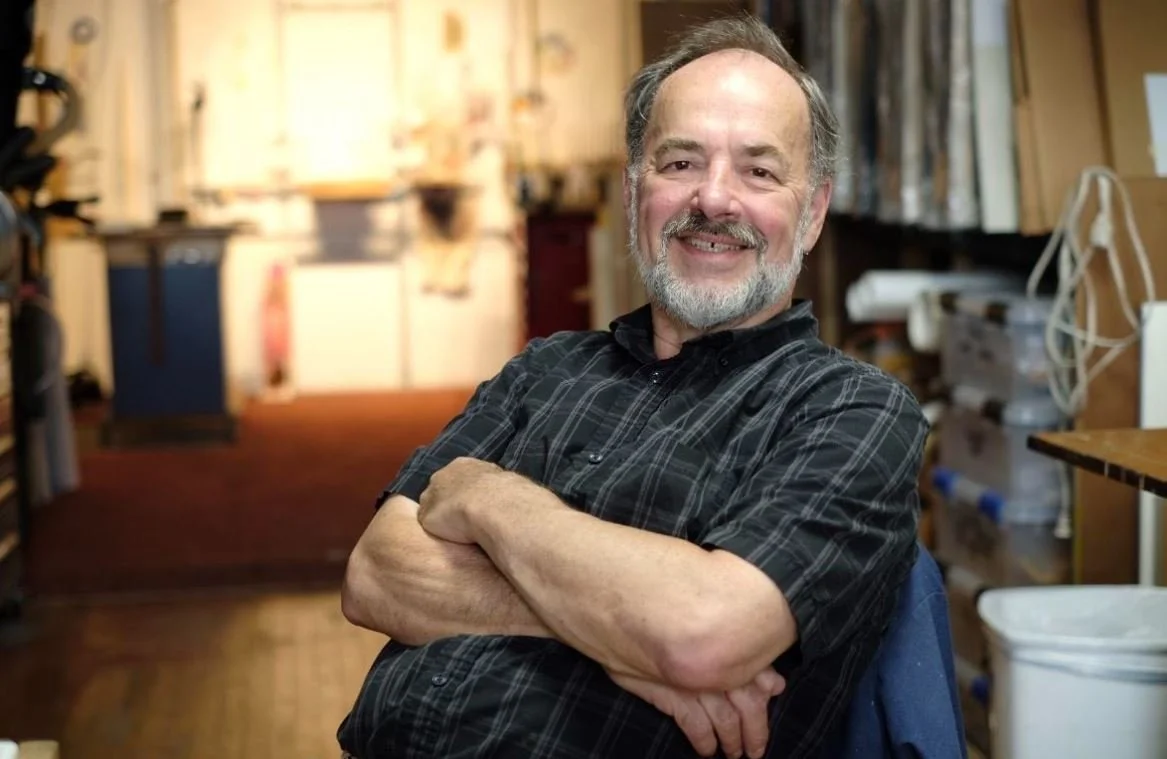
Photo Credit: HonGo David Robertson
He speaks instead about conversations with other working artists. Those exchanges matter. Regardless of style or subject matter, painters eventually arrive at many of the same questions. The discussions become less about trends and more about enduring concerns that artists have wrestled with for centuries.
Looking across art history, from the Renaissance through contemporary painting, Fitzsimmons sees an ongoing conversation between what artists choose to paint and how they choose to paint it. The relationship between those two ideas fascinates him far more than critical theory or fashionable interpretations. His influences reflect that broad curiosity.
Shelves throughout the studio hold books on artists spanning generations. He continues visiting museums, studying exhibitions and absorbing ideas from painters whose work challenges him. Recently he recommended the Charles Burchfield exhibition at the Munson Museum, admiring Burchfield's deep personal vision of nature and his willingness to pursue an individual path regardless of prevailing trends.
Fitzsimmons also remains deeply connected to Central New York's artistic community. He contributes work to Sculpture Space's annual fundraising exhibition, an organization he respects for providing artists with meaningful opportunities and professional resources. For one fundraiser he created a complex print built through more than twenty-five successive states, allowing viewers to see the evolution of the image itself.
Earlier years produced even more unconventional contributions. One memorable piece transformed an upholstered easy chair into a sculpture constructed entirely from white bread. Purchased during the charity auction, the work eventually fulfilled its title, "White Bread Chair, To Be Consumed by Critters". The piece was placed in the winning bidders front yard, allowing the neighborhood squirrels to gradually devour it. The story makes him smile.
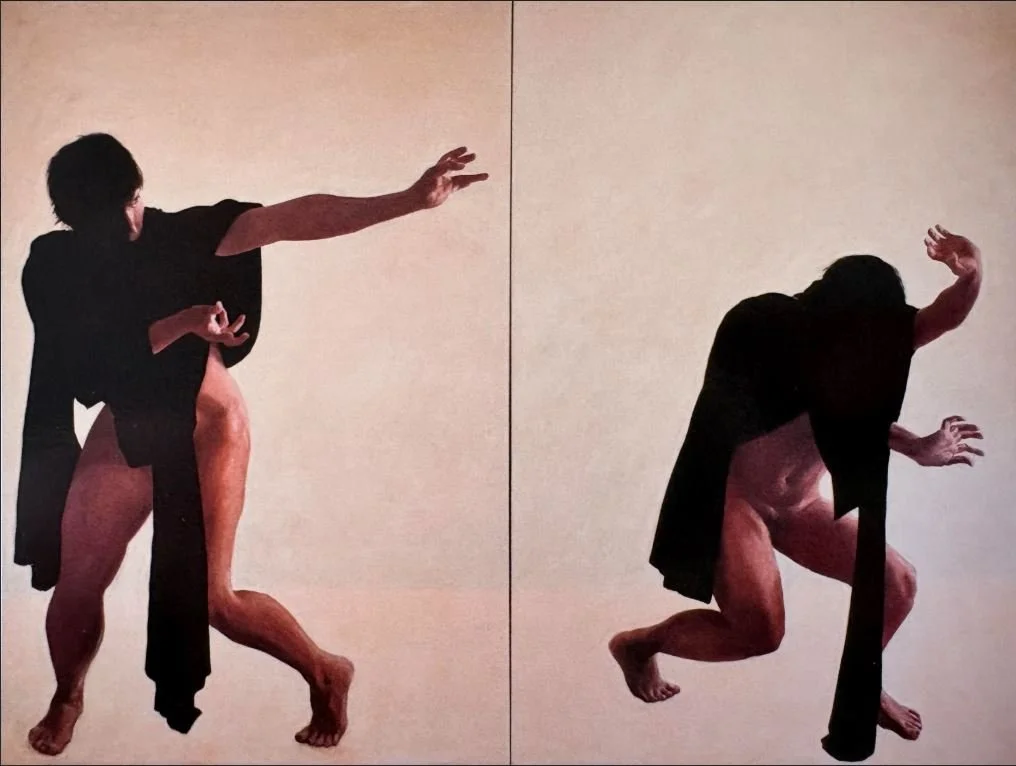
Photo Credit: HonGo David Robertson - Fitzsimmons Painting: - "October Wind", 72 x 96 inches, oil on canvas
Today, Fitzsimmons maintains an active exhibition schedule that reflects both the consistency of his studio practice and the respect he has earned among curators and fellow artists. His work regularly appears in juried and invitational group exhibitions throughout New York State, allowing audiences to encounter his paintings alongside those of both emerging and established contemporary artists. While group exhibitions provide opportunities to place individual works into broader artistic conversations, he is equally focused on developing larger bodies of work. A solo exhibition scheduled for Rochester this December will offer viewers a more complete look at the evolution of his recent paintings, presenting years of exploration in scale, surface, and composition. Even with exhibitions on the horizon, Fitzsimmons remains less concerned with the public milestones than with the daily discipline of returning to the studio. For him, each exhibition is not a conclusion but simply another point along an ongoing process of inquiry, experimentation, and making.
After decades spent balancing the demands of art, engineering, business ownership and raising a family, the studio has finally become the center of John Fitzsimmons' daily life. For years, painting existed alongside careers in manufacturing, product development and invention. Creativity found expression not only on canvas but also through engineering solutions, patented products and the practical challenges of designing objects for industry. Today, those competing responsibilities have largely fallen away, allowing him to devote himself to the work that first drew him to art as a young man. His days are now shaped by the rhythms of the studio, building panels, preparing etching plates, experimenting with printmaking, and moving between large-scale paintings that often evolve over weeks or months. There is no sense of trying to make up for lost time. Instead, Fitzsimmons approaches each day with the patience of someone who understands that a lifetime of experience, whether earned in a factory, a design office or an artist's studio, ultimately feeds the same creative impulse. The studio is no longer something he fits into the margins of life; it has become the place where the many strands of that life, artist, inventor, craftsman and problem solver, have finally converged.
Walking through the Delavan Center, visitors quickly recognize that Fitzsimmons belongs to a generation of artists who built careers in multiple worlds before fully dedicating themselves to personal work. Manufacturing sharpened his problem-solving abilities. Product design refined his sense of function. Fine art remained the constant thread connecting every chapter.
Looking around his studio, it becomes difficult to separate the painter from the inventor. Both emerge from the same impulse: the desire to make something that did not previously exist. Whether building industrial equipment, designing patented products, constructing an etching plate or covering a large panel with paint, John Fitzsimmons continues asking the same questions that have guided him since art school.
Not why. But what comes next, and how should it be made.
Contact John at:
John Fitzsimmons
johnfitzsimmons99@gmail.com
Studio 215, Delavan Studio Building
509 W. Fayette St
Syracuse, NY 13204
www.johnfitzsimmonsart.com
315-427-1090 email preferred