
Jack Hardendorf: An Artist’s Artist. A Lifetime of Making and a Master of Many Disciplines
The June Thursday I drove to Jack Hardendorf's home in Camillus was already pushing ninety degrees before noon. I expected to spend an hour talking with an artist. Instead, I spent the morning discovering that, despite knowing Jack for nearly a decade, I really didn't know him at all.
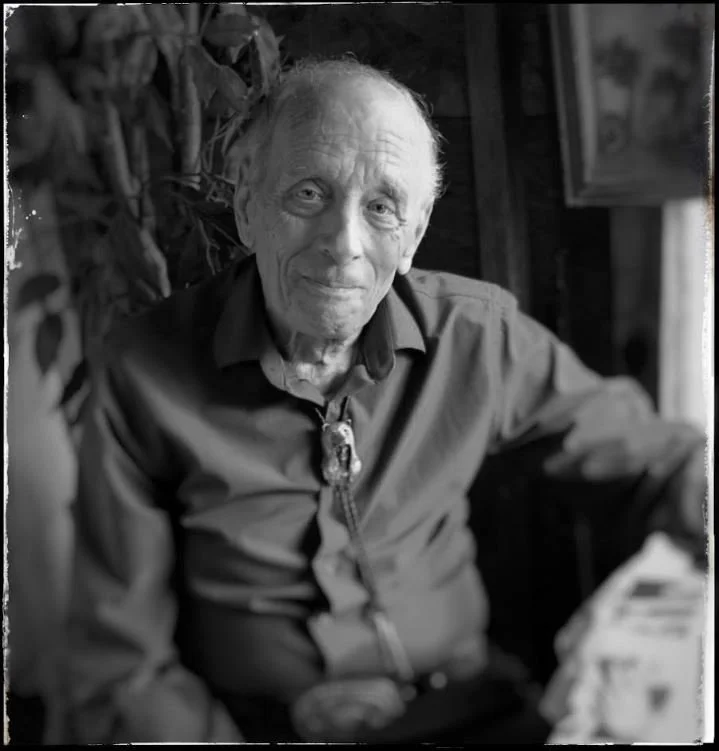
Photo Credit: HonGo David Robertson
Jack greeted me from the second-floor screened porch, directing me to the proper entrance before leading me into what felt less like a house than a working museum of his life. Before we had even sat down, he was explaining how one of his sculptures comes to life.
"It starts with a drawing," he said. "Then the armature, the sculpture, the mold, the casting, and finally the finished piece. Every step matters."
That philosophy—respecting every step of the process—would become the thread that connected everything I saw during my visit.
As photographers, we naturally began by talking cameras. Jack has spent decades behind Nikon equipment, while my Fujifilm X-Pro2 hung from my shoulder. Like many photographers, we quickly moved from discussing brands to talking about the craft itself—the reliability of older cameras, the advantages of mirrorless systems, and the discipline required when every frame of film counted because there was no screen to instantly confirm whether you had succeeded or failed.
"Come on," he said. "I'll give you the tour."
Every room revealed another dimension of Jack's creative life. Sculptures stood beside drawings. Easels held finished and unfinished works. Wildlife studies shared space with photography, graphic design portfolios, antique furniture, books, collectibles, and artwork by other artists. Despite the sheer volume of material, nothing felt cluttered. The house was organized around ideas. Every object represented another skill mastered, another project completed, or another subject worth exploring.
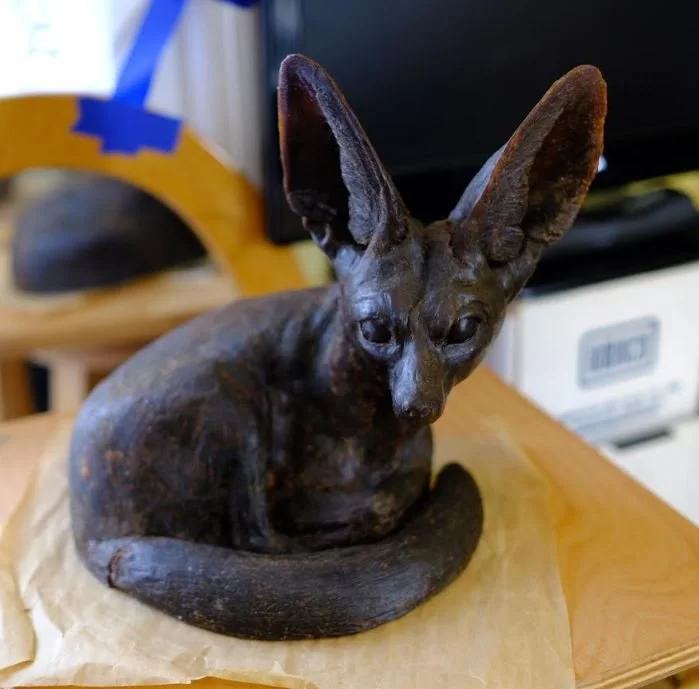
Photo Credit: HonGo David Robertson
It quickly became clear that Jack has never been interested in defining himself by a single discipline. During his career he has worked professionally as a taxidermist, sculptor, photographer, graphic designer, illustrator, mold maker, and painter. He doesn't see those pursuits as separate careers but as parts of one creative life. Drawing sharpens observation. Sculpture teaches anatomy. Photography develops an understanding of light and composition. Graphic design strengthens communication. Each discipline informs the next, creating a body of work built on curiosity, craftsmanship, and a lifelong commitment to learning.
His art began with taxidermy. His father entered the profession during the Carrier Corporation strike in the early 1960s, and thirteen-year-old Jack found himself working alongside him. The commercially available forms used inside mounted animals disappointed him. Instead of accepting them, he began sculpting his own.
That decision changed everything. Learning to build accurate forms required understanding anatomy, proportion, muscle structure, and movement. Those same lessons naturally led him toward sculpture. Today, every wildlife sculpture begins with careful observation, followed by drawing, construction of the armature, sculpting, mold making, casting, and finally painting. For Jack, craftsmanship is measured by understanding every stage of production. When discussing his sculptures, he often returns to process. He wants to know whether another artist can draw the subject first. Can they build the armature? Can they sculpt it? Can they make the mold? Can they produce the casting? Can they finish the final piece? To him, mastering an art form means understanding it completely from beginning to end.
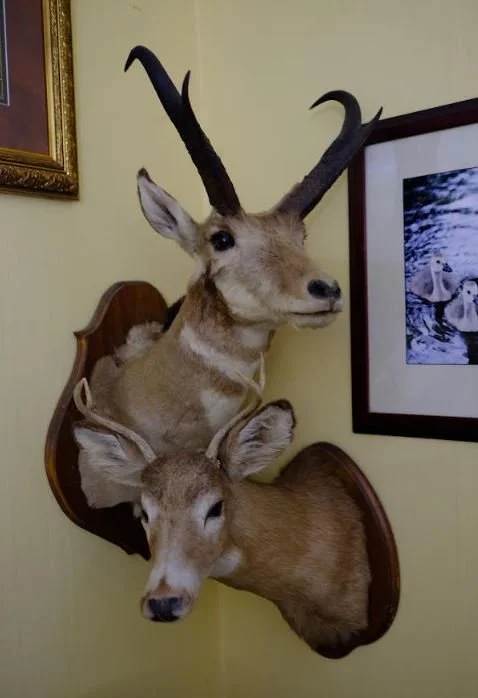
Photo Credit: HonGo David Robertson
His confidence comes from decades of experience rather than arrogance. Throughout our conversation he repeatedly challenged accepted methods, particularly in taxidermy. He believes anatomy should always come before appearance, and he has little patience for shortcuts that sacrifice realism.
The sculptures filling his studios reflect that philosophy. Some are highly realistic wildlife studies. Others are entirely imaginative. One piece titled The Conversation particularly caught my attention. Three abstract figures appear to be engaged in discussion, yet Jack intentionally leaves their identities open to interpretation. They could represent people, monks, women, or simply forms existing together in space. He prefers that viewers complete the story themselves.
That willingness to leave room for interpretation appears throughout his artwork. Not everything needs an explanation. Jack also maintains an active photography studio. Although he spent years photographing professionally, he admits his relationship with photography has changed. Carrying heavy equipment has become less appealing, and concerns about theft have made him more cautious about taking expensive camera gear into public places. Even so, photography remains another creative outlet rather than a profession he has abandoned.
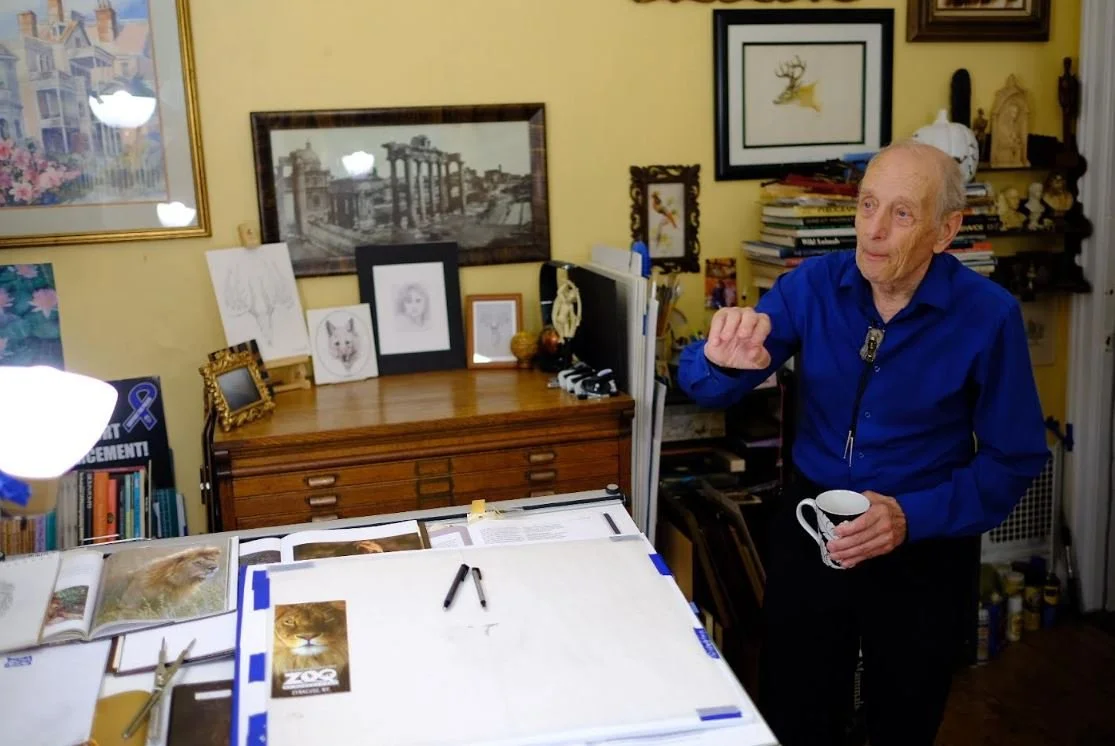
Photo Credit: HonGo David Robertson
He spoke fondly of the film era, when photographers needed to understand exposure, chemistry, and timing before ever pressing the shutter. Digital technology has made photography more accessible, but he believes something valuable was learned by photographers who developed film and understood the science behind every image.
Photography also became essential to his sculpture work. After repeatedly receiving poor documentation of finished sculptures, Jack decided to photograph his own work. Once again, dissatisfaction with someone else's process became an opportunity to learn another profession.
That pattern repeated itself throughout our conversation. If he needed graphic design, he learned graphic design. If he needed molds, he learned mold making. If he needed illustrations, he learned illustration. Rather than hiring specialists, he became one.
Walking through Jack's house, I realized that every room had a purpose. One served as his two-dimensional studio, complete with a large drafting table where drawings and design work begin. Another was devoted to sculpture, where clay studies, molds, castings, and works in progress occupied nearly every available surface. Even the hallways displayed finished pieces, framed drawings, and photographs that marked different stages of his artistic life.
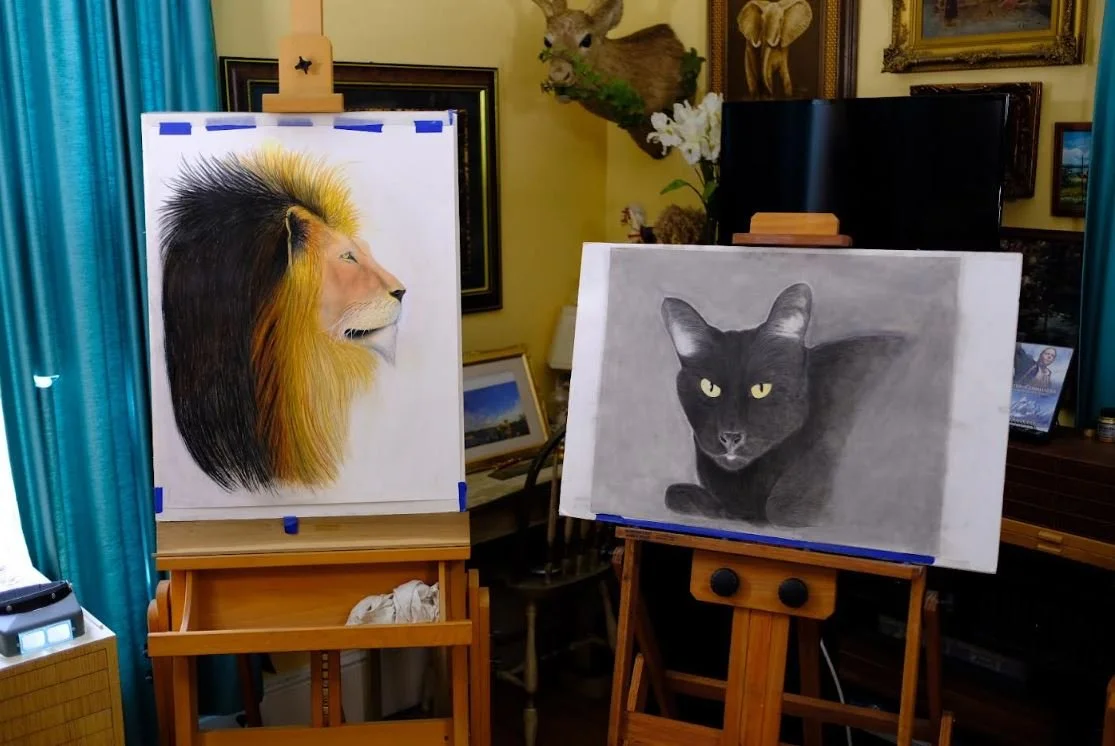
Photo Credit: HonGo David Robertson
The house itself is an essential part of Jack's story. Built around 1856 as the original Bennett Farmhouse, it has long since evolved into something far more than a residence. Since moving there in 2008, Jack has transformed nearly every room into a working studio. One space is devoted to drawing and graphic design, another to sculpture and mold making, another to photography, while hallways, stairways, and even quiet corners have become galleries displaying finished pieces, works in progress, collections, and inspirations gathered over a lifetime.
What struck me most was that nothing appeared staged for a visitor. This was not a home decorated with artwork; it was a home built around the act of creating. Every table, easel, drafting surface, and shelf serves a purpose. Clay sculptures wait beside drawings that will eventually become castings. Cameras sit ready for the next project. Books on anatomy, wildlife, and the Old Masters share space with antique tools, reference materials, and completed works spanning decades.
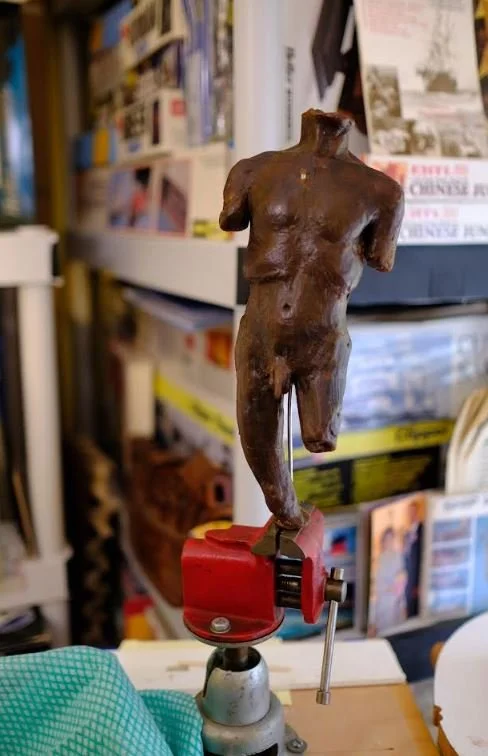
Photo Credit: HonGo David Robertson
The entire house functions as one interconnected studio where ideas move freely between drawing, sculpture, photography, taxidermy, and graphic design. A sketch begun at the drafting table may eventually become a sculpture. That sculpture may become a mold, then a casting, and finally a finished work. Photography documents the process, up to the finished product. Every discipline feeds the next.
Walking through Jack's home, I realized I wasn't simply touring an artist's studio, I was walking through the physical record of a lifetime spent making things. Every room reflects his restless curiosity and refusal to be confined to a single medium. It is, in the truest sense of the phrase, an artist's artist studio: a working environment where the emphasis is not on display, but on process, craftsmanship, and the continual pursuit of the next idea.
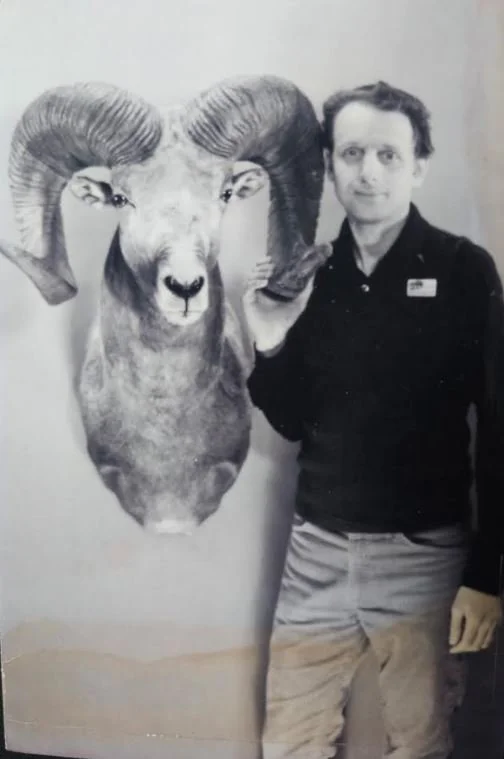
Photo Provided by Jack Hardendorf - - The argali is the largest living wild sheep, native to the highlands of Central Asia, including regions like the Himalayas, Tibet, and the Altai Mountains. This particular Argali care from Pakistan. Its horns weighed about 36 lbs.
One of the biggest surprises of my visit was discovering the extent of Jack's commercial graphic design career. I had always known him as a photographer and was familiar with his reputation as a taxidermist and sculptor. What I didn't realize was how many businesses throughout Central New York had relied on his creative work over the years.
Jack has designed everything from restaurant menus and brochures to logos, business cards, signs, book covers, contracts, and advertising materials. As we talked, he pulled portfolio after portfolio from shelves and cabinets. Each one documented another client, another business, another commission, and another creative challenge he had accepted. It was a body of work that, like so much else in his home, had quietly accumulated over decades. Looking through those portfolios, I began to understand that Jack's career wasn't defined by a single discipline. Whether he was designing a menu, sculpting wildlife, or photographing a finished piece, he approached each project with the same attention to detail and commitment to craftsmanship.
Once again, the common thread was self-reliance. If someone needed a menu, he learned menu design. If a business required a logo, he designed the logo. If a publisher needed a cover, he created it. Photography often supplied the images, illustration supplied the artwork, and graphic design brought everything together into a finished product. He told me he enjoys solving problems. Every new project presents another opportunity to learn something he did not know before. That curiosity extends well beyond his own work.
Throughout the house are books devoted to anatomy, wildlife, sculpture, painting, and the great masters of art history. He believes artists should continually study those who came before them. Looking through one volume of classical paintings, he remarked that studying the masters becomes part of who an artist is. Their understanding of anatomy, composition, and craftsmanship provides lessons that remain valuable regardless of changing styles or trends.
Jack doesn't dismiss contemporary art, but he places enormous value on technical ability. He believes artists should understand the fundamentals before attempting to break the rules. For him, drawing remains the foundation of every creative discipline.
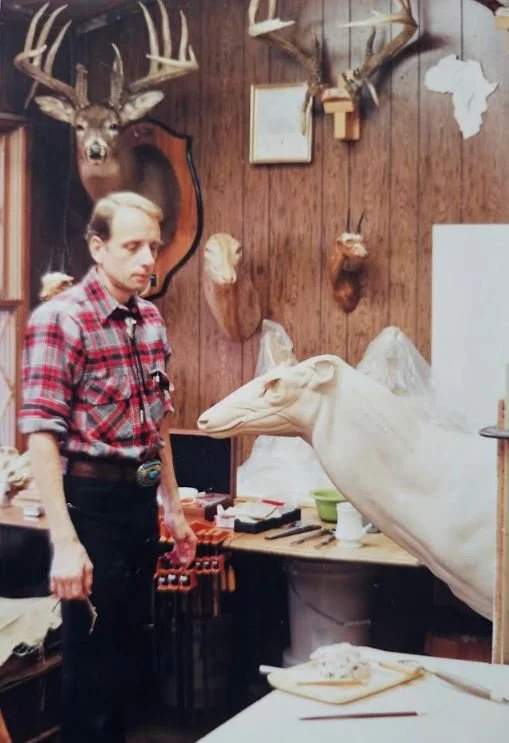
Photo Provided by Jack Hardendorf - - White-tailed Deer Sculpture. “One of my best” according to Jack.
"If you can sketch a mushroom," he told me, "you can sketch anything."
At first, I wasn't entirely convinced by the statement. But as I walked through his studios and looked at decades of drawings, sculptures, molds, castings, photographs, and designs, I began to understand what he meant. Jack isn't really talking about mushrooms. He's talking about learning to see. If you can simplify a subject to its basic forms and truly understand its structure, you can build from that knowledge into almost anything.
That philosophy runs through his entire career. Whether he's sculpting wildlife, designing a logo, creating a mold, or photographing a finished piece, every project begins by breaking a complex problem into manageable parts. For Jack, mastery isn't a matter of talent as much as patience, observation, and a willingness to start with the fundamentals.
His enthusiasm has not diminished with age. At nearly seventy-eight, he continues to think about future projects rather than past accomplishments. He spoke about sculptures he still wants to build, prints he intends to release, graphic design commissions still underway, and improvements he wants to make to techniques he has already practiced for decades.
When I asked whether he preferred sculpture, photography, taxidermy, or graphic design, he surprised me by saying he had no favorite. Each discipline satisfies a different part of his curiosity. One naturally leads into another. That attitude explains why he has never viewed himself as simply a taxidermist or simply a sculptor. He considers himself a maker.
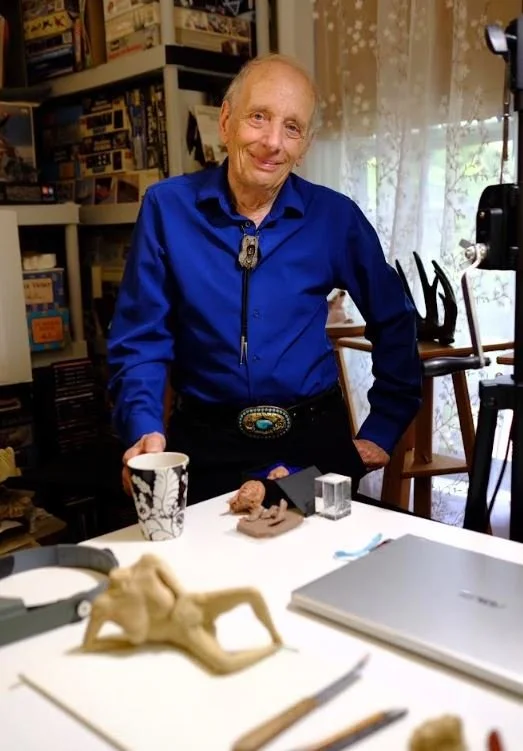
Photo Credit: HonGo David Robertson
Much of our conversation centered on craftsmanship rather than recognition. Jack expressed frustration that careful work is not always appreciated, particularly in today's fast-moving digital culture. Social media, he believes, often rewards visibility more than skill. He has reached a point where recognition matters less than producing work that satisfies his own standards.
He encourages people to remain curious, think for themselves, and avoid allowing others to define what they should create. He believes artists grow by stretching their abilities rather than remaining comfortable within a single specialty. Throughout his career he repeatedly stepped into unfamiliar territory simply because he wanted to understand how something worked.
Formal education was never part of that journey. Jack is entirely self-taught. Everything he knows came through observation, experimentation, reading, and thousands of hours of practice. Ironically, despite never attending art school, he has been offered teaching positions and professional opportunities that would have taken him across the country. Personal circumstances kept him in Central New York, but he speaks about those opportunities without regret. The work itself has always mattered more than titles.
During our conversation we also talked about professionalism. Jack believes artists should respect both their craft and themselves. He dresses professionally when working because, in his view, appearance reflects pride in one's profession. He extends that same expectation to the work itself. Every drawing deserves careful attention. Every sculpture deserves proper anatomy. Every design deserves thoughtful composition.
That consistency is evident throughout his career. Whether creating a business card, sculpting a lion, photographing wildlife, designing a restaurant menu, or building an award-winning taxidermy form, he approaches each project with the same seriousness.
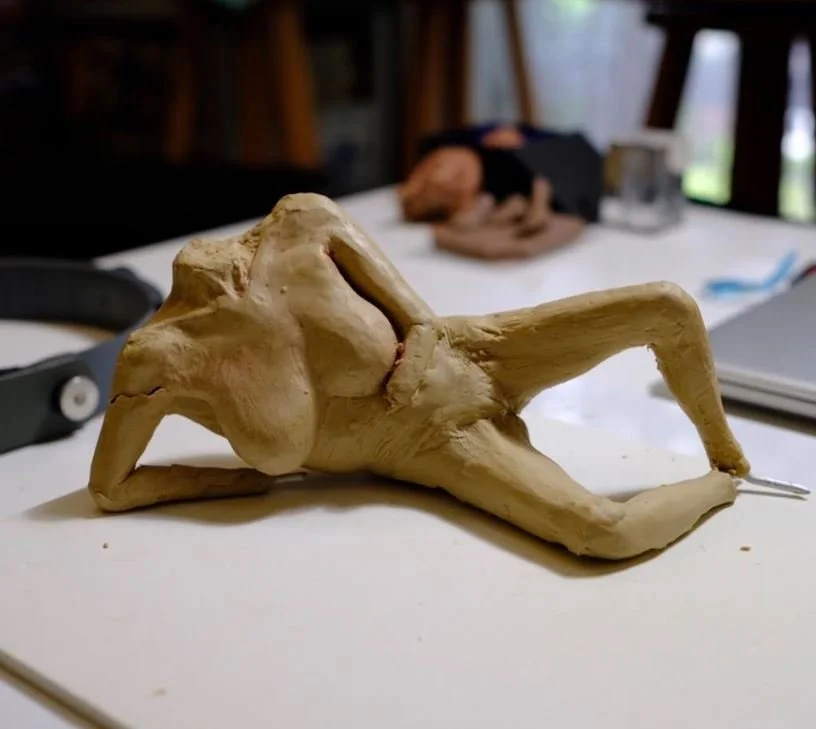
Photo Credit: HonGo David Robertson
As our conversation continued, I realized I had spent far longer at Jack's home than I had originally planned. Every room led to another conversation, another portfolio, another sculpture, or another story about how one creative discipline naturally evolved into another. It wasn't simply a tour of his home; it was a walk through a lifetime of curiosity and craftsmanship.
At one point I mentioned that the finished article would probably run about 1,500 words.
Jack laughed.
"You'll never do it," he said. "Can't be done."
He was right.
As I sit at my desk at 4:30 on a Friday morning putting the finishing touches on this story, the word count has passed 2,500. Even that feels insufficient. It is remarkably difficult to distill a lifetime spent mastering photography, taxidermy, sculpture, graphic design, illustration, mold making, and countless other creative pursuits into a single article.
For me, Jack Hardendorf is an artist's artist. Creating isn't simply what he does; it's how he lives. Every room in his home reflects a lifetime of curiosity, study, experimentation, and craftsmanship. Drawings become sculptures. Sculptures become molds and castings. Photographs become graphic designs. One idea naturally leads to the next.
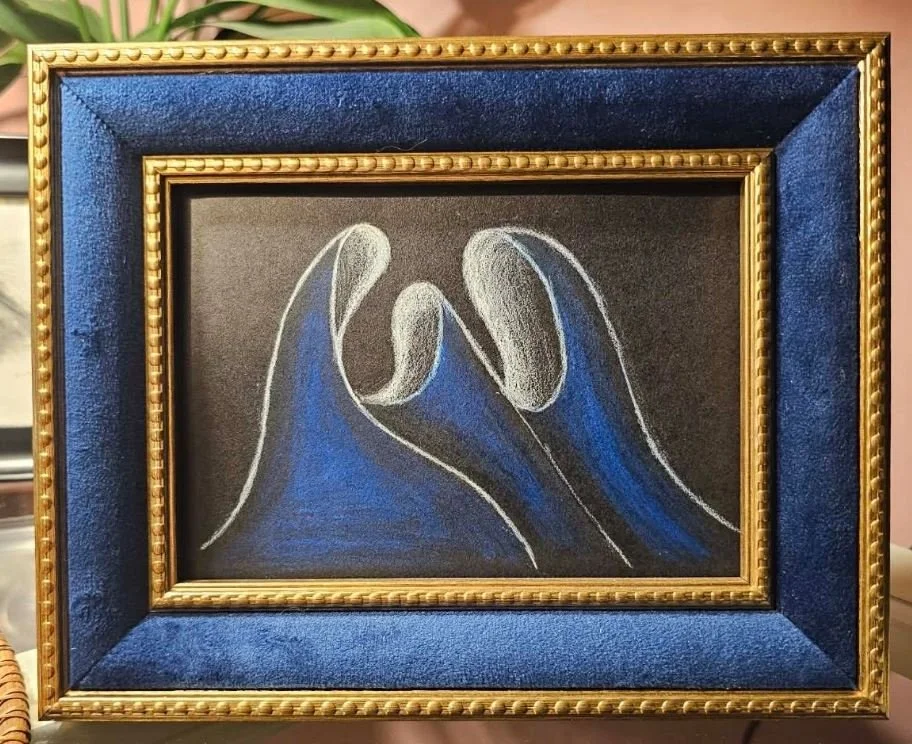
Photo Credit HonGo David Robertson - - “The Conversation”
His home is more than a place to live. It is his sanctuary, his workshop, his gallery, his library, and his classroom. It is a space where inspiration and hard work coexist, where projects wait patiently for completion, and where decades of learning are visible on every wall, shelf, and workbench.
I arrived expecting to interview a photographer and maybe a bit of a painter. I left having met a man whose creative life defies easy definition. Jack Hardendorf has never been content to master a single discipline. Instead, he has spent a lifetime pursuing knowledge wherever his curiosity has led him. In a world that often rewards specialization, Jack reminds us that there is still something remarkable about the artist who simply wants to learn how to make the next thing better than the last.
When I drove away from Jack Hardendorf's home that Thursday afternoon, I knew I had far more material than I could ever fit into a 1,500 word article which I had originally envisioned. The visit lasted much longer than I had planned, and so did the writing. Every conversation led to another story. Every room revealed another talent, another collection, another project waiting to be finished. In truth, I could have spent another afternoon exploring his studios and written several other pages writing about them.
Some artists create remarkable work. Others build a remarkable life around creating. For me, Jack Hardendorf is an artist's artist, a man whose curiosity, craftsmanship, and relentless desire to learn have shaped not only his work, but the very world in which he lives.
Note: This article is 2,560 words in length, it could have and should be more.
Contact Jack:
Email: thebusinesscardman@yahoo.com
Email: thesculptorman1@gmail.com
Cell: 315.412.3742