
Dusty Pascal: Hero at the Door, Performing Music, the Closest Thing to Flying
On a warm mid-May, Thursday morning, I drove into the rolling beauty of Skaneateles to meet musician and artist Dusty Pascal. The village was waking slowly, under the spring sun. Dusty’s home, originally built in 1814, sits quietly among the rural landscape. Early in our conversation, Dusty proudly pointed out the old peg-and-post beam construction, running his hand along the massive timbers that have held the structure together for more than two centuries. There was admiration in his voice when he talked about the craftsmanship.
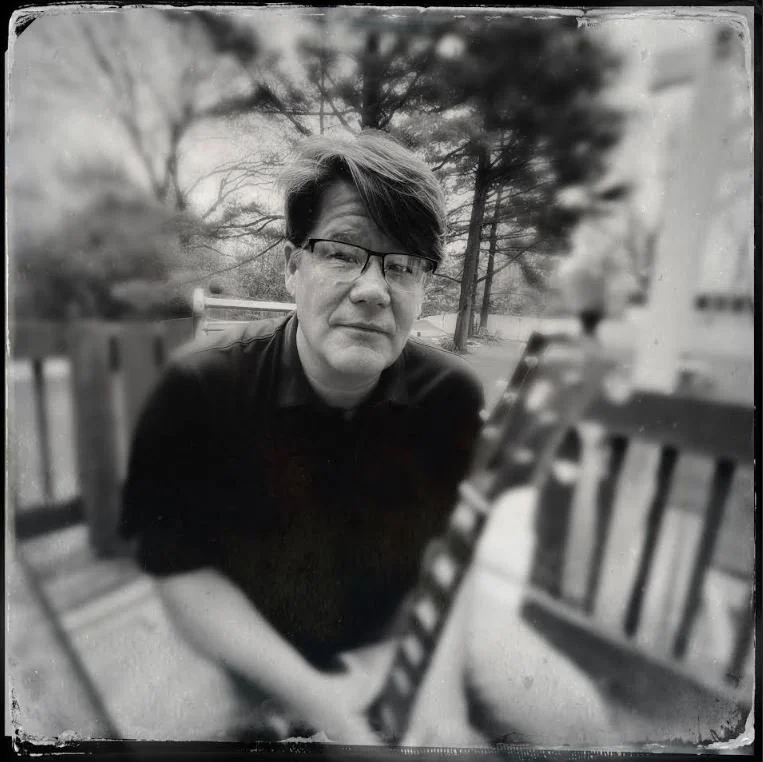
Photo Credit: Hongo David Robertson
Before I even reached the front door, I was greeted by Hero, Dusty’s six-year-old Australian Shepherd. Hero approached with an immediate warmth and curiosity. Dusty laughed and introduced him immediately, proudly declaring Hero to be “The Greatest Dog Ever.” At first, I quietly thought to myself, well, that sounds like a proud dog owner talking. Every dog owner believes their dog is the greatest dog ever. But after spending the morning with Hero, I have to admit, I started believing it too. Sorry, Buck (my dog). Hero has somehow mastered the remarkable ability to let himself outside by pulling on a hanging leather strap attached to the door whenever he wants to go out to pee. Then, once he decides he is ready to come back inside, he simply pushes the door open with his snout like it is the most natural thing in the world.
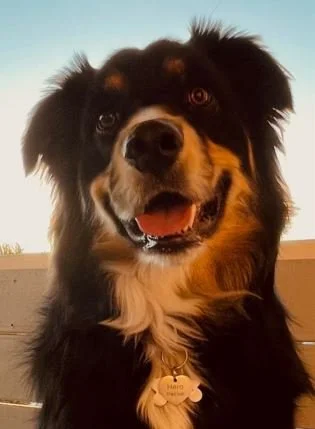
Photo Provided by Dusty Pascal
Dusty Pascal is known throughout Central New York as a songwriter, musician, and performer. Throughout our conversation, Dusty spoke not as someone trying to preserve a myth around creativity, but as a man deeply shaped by work, illness, family, survival, and love.
He grew up moving constantly. As the youngest of six children, he spent his childhood bouncing between towns across New York State, including Cato, Oxford, and eventually back to Skaneateles. His father worked tirelessly in the family roofing and chimney business, a trade begun by Dusty’s grandfather in the 1940s. The company evolved from masonry and brickwork into roofing, eventually becoming one of those trusted local family businesses whose reputation travels faster than advertising ever could. Dusty learned the trade young. He spent years working labor on rooftops before realizing his real strength was communication. He knew the business inside and out, but more importantly, he knew how to speak to people. Just from our short conversation, I felt very comfortable with Dusty. His father recognized that early and placed him in front of customers while he was still young.
What stayed with Dusty most deeply, however, was not simply the work ethic of the business but the poetry inside it. His father, Jack Pascal, was not only a roofer and provider; he was a writer. Dusty described him as a beautiful poet, a man who carried songs and language quietly alongside hammers and ladders. One of Dusty’s most cherished songs came directly from his father’s writing. During one performance in Skaneateles, Dusty noticed his father sitting in the audience scribbling on a napkin rather than watching the show. He later learned that Jack had just come from visiting a dying friend who had told him goodbye for the last time. Out of that grief came a poem called “Lonesome.” Dusty then recited the first few stanzas of the poem by heart.
“I see'd the pain upon their faces
When they said they had to go.
And I knew they really meant it
Cause I watched them packing slow.
Them tail lights was fading
Ahh the crunching of the stone
See I can handle lonesome,
I just cant handle it alone.”
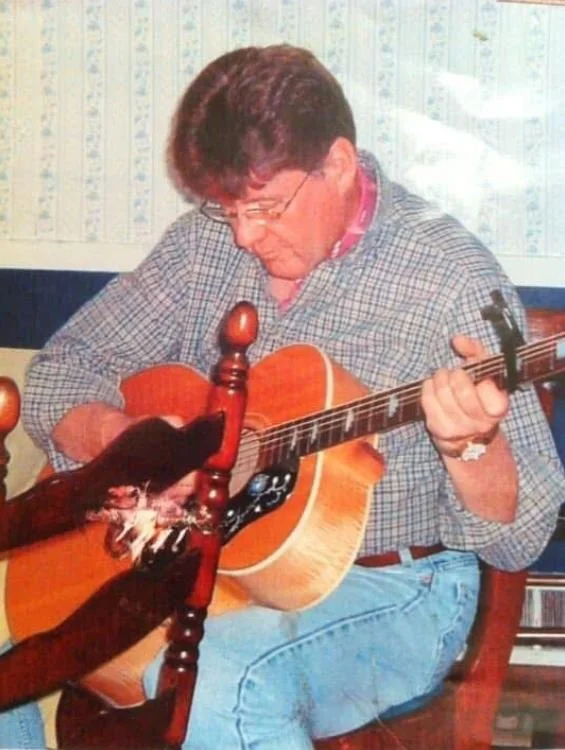
Jack Pascal - Photo Provided by Dusty Pascal
Dusty took the words and almost immediately set them to music. He still considers it among the finest recordings he has ever made, perhaps because the words did not originate from his own striving. They arrived honestly, fully formed, carrying their own emotional truth.
Listening to Dusty describe songwriting was like hearing someone talk about weather patterns or spiritual forces. He does not entirely believe songs belong to the songwriter. He speaks about music as something that arrives when a person gets out of the way enough to receive it. The less control he exerted over a song, the better it became. He described the creative process almost like entering a trance, where vulnerability mattered more than skill and openness mattered more than ambition.
That relationship with creativity changed dramatically after a near-death experience in 2021. Dusty suffered an aortic dissection, a catastrophic medical emergency that should have killed him. He was airlifted to University of Rochester Medical Center where he survived against staggering odds. The experience transformed him. He spoke candidly about how much emotional baggage he had been carrying before the event…stress, fear, pressure, unnecessary mental weight. Surviving stripped much of it away. Oddly, it also changed his relationship with music. The urgent need to chase songs disappeared.
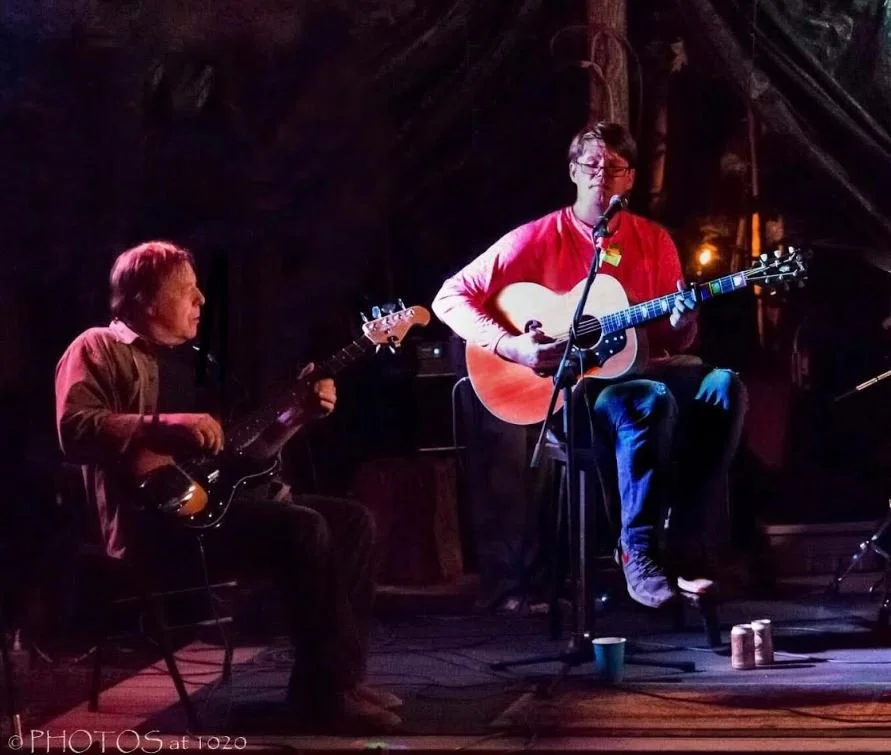
Photo Provided by Dusty Pascal
Then came another challenge. During a period when his family was already carrying enormous emotional strain, Dusty was diagnosed with leukemia. For many people, the word alone feels like a death sentence, but Dusty approached it differently. He spoke about the diagnosis with honesty but also with perspective. The illness forced him to slow down, to walk every day, to pay attention to his body, and to rethink the way he was living. Instead of allowing fear to consume him, he focused on healing, mindset, and family. He talked openly about how those experiences changed him spiritually and emotionally. The man sitting across from me that morning was not speaking from theory. He had already walked directly through fear and uncertainty and somehow emerged softer, calmer, and more appreciative of life than before.
For many people, one of these experiences would have been enough to break them. Dusty endured all three almost simultaneously. Yet somehow, he speaks about that period not with bitterness but gratitude.
What became clear throughout our conversation was Dusty’s understanding that life inevitably brings challenges. Illness, loss, financial stress, uncertainty, heartbreak, none of it can be avoided forever. Yet he believes those very hardships sharpen a person’s appreciation for ordinary moments. He spoke about learning to value simple things that once passed unnoticed: a towel waiting on the floor after a shower, coffee in the morning light, hearing his children laughing in another room, or simply sitting quietly at home while music drifts through the house. Surviving cancer and enduring so many other personal trials gave him a renewed awareness of how precious everyday life really is. It stripped away much of the noise and left behind gratitude.
He described long walks with his son during those difficult months, sometimes talking, sometimes simply breathing beside one another in silence. Those walks became meditations. They softened him. They clarified priorities. Through all the fear and chaos, what emerged was a deeper understanding of what mattered most: family, presence, gratitude, and connection. “It’s never as bad as we think it is,” he said more than once during our conversation. It was not optimism in the shallow sense. It was hard-earned perspective.
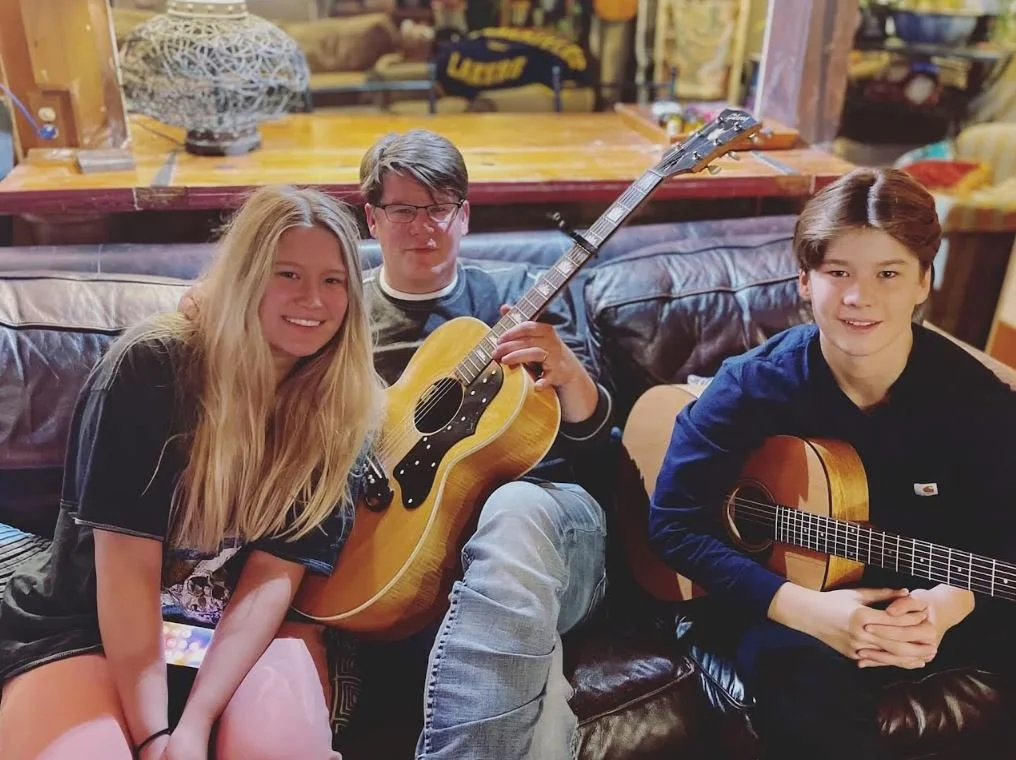
Photo Provided by Dusty Pascal
His children are musicians too. Tatumn and Jude both write songs, and Dusty speaks about their artistry with unmistakable pride. Rather than trying to preserve his own spotlight, he seems energized watching creativity emerge through them. The house itself vibrates with music. Songs move from room to room. Guitars lean against walls. Creativity continues, even if Dusty himself performs less frequently now.
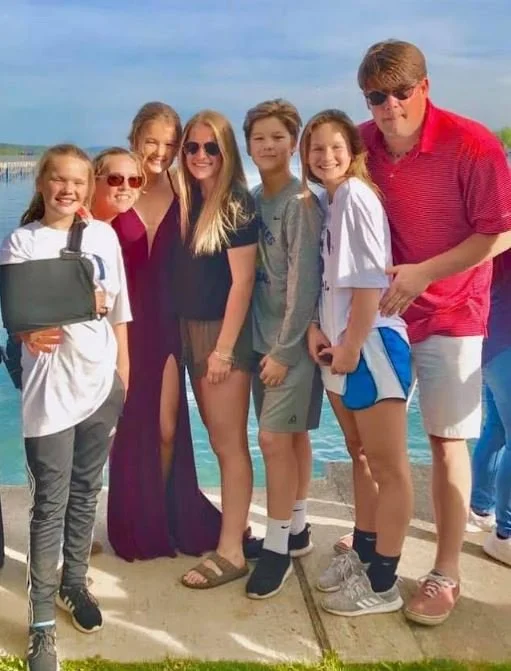
Photo Provided by Dusty Pascal
During our talk, we shared stories about illness, mortality, and strange spiritual moments that seem to occur near the edge of suffering. Dusty described vivid experiences during his hospitalization, moments that felt beyond explanation. I shared some of my own experiences battling blood cancer and undergoing a bone marrow transplant. The conversation stopped feeling like an interview and became something closer to two people comparing maps from difficult territory. There was comfort in that honesty.
And throughout it all, Dusty kept returning to one central idea: appreciation. Appreciation for survival. Appreciation for family. Appreciation for music, even if it now occupies a quieter place in his life. He spoke about watching mourning doves build a nest outside the family window, taking turns protecting their young, carefully preparing them to leave the nest. To Dusty, it mirrored exactly where he now finds himself as a father. There is beauty in preparing people you love to eventually fly away from you.
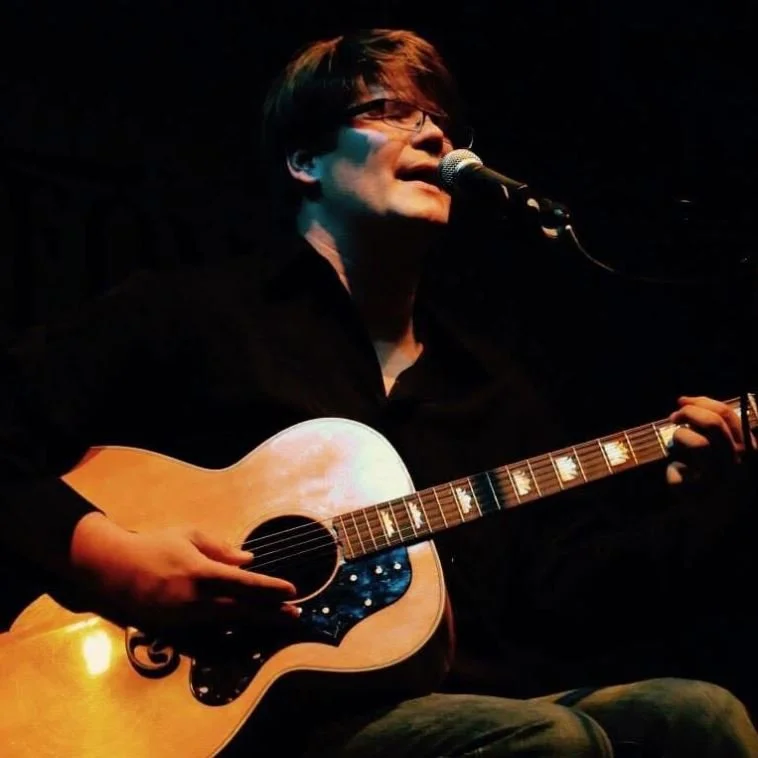
Photo Provided by Dusty Pascal
Before I left, I wanted a photo of Dusty with one of his guitars. The images came out looking almost like an old tin type, weathered and timeless like his 1814 farmhouse. Hero wandered nearby, occasionally checking in on us before settling back down. We talked a little longer about guitars, old songs, and future performances. As I packed up my gear, Dusty admitted he still feels music calling to him sometimes. Maybe not with the same urgency as before, but enough to remind him it is still there waiting. “Nothing’s like music,” he said before I left. “It’s the closest thing to flying you can get.”
Jack Pascal’s “Lonesome”
I see'd the pain upon their faces
When they said they had to go.
And I knew they really meant it
Cause I watched them packing slow.
Them tail lights was fading
Ahh the crunching of the stone
See I can handle lonesome,
I just cant handle it alone.
And theres a meadow off the highway
Where the blacktop it turns to blue
And the monuments are testaments
To friends that I once new
But they faded like the fog
That disappates in morn
And only stones in words
Are proof that they was born
So I’m gonna keep on turnin' pages,
Til I find me direction home.
See I can handle lonesome,
I just can’t handle it alone.
Im going to keep on turning pages
Until I find direction home
See I can handle lonesome
Just can't handle it alone.
And I know that there’s a reason
That will someday be revealed
Why the briefness of our continance
Is preconceived and sealed.
But knowin’ don’t come easy
Reason hard to understand
You can medicate a broken heart
But not the lonely in a man. But I can, I can,
Keep on Turning pages
Til I find me direction home.
See I can handle lonesome,
I just can’t handle it alone.