
I met multi-talented artist, musician, performer, and educator Luba Lesser at Freedom of Espresso in Fayetteville, New York, for what quickly became a wide-ranging conversation about creativity, opportunity, and the unpredictable paths that shape a life.
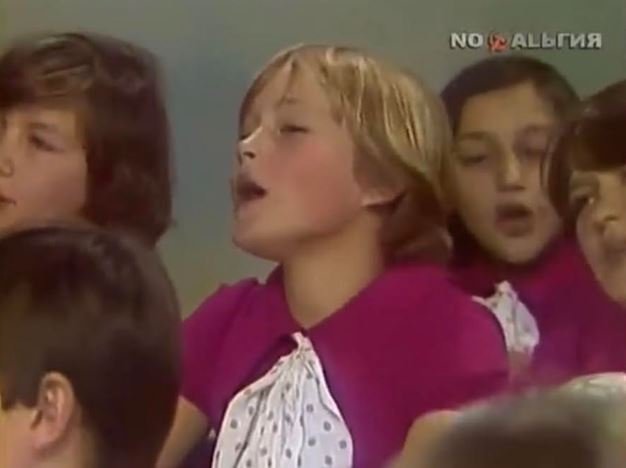
Luba's story begins thousands of miles from Central New York, in Moscow, where music entered her life before she was old enough to decide whether she wanted it there. She began learning piano at four. By eight, she was singing with a professional state children's choir as part of a select group that traveled throughout the Soviet Union and internationally. At fourteen, she completed a seven-year music school program. Music was already deeply embedded in her life, but at the time, Luba wasn't convinced it belonged to her.
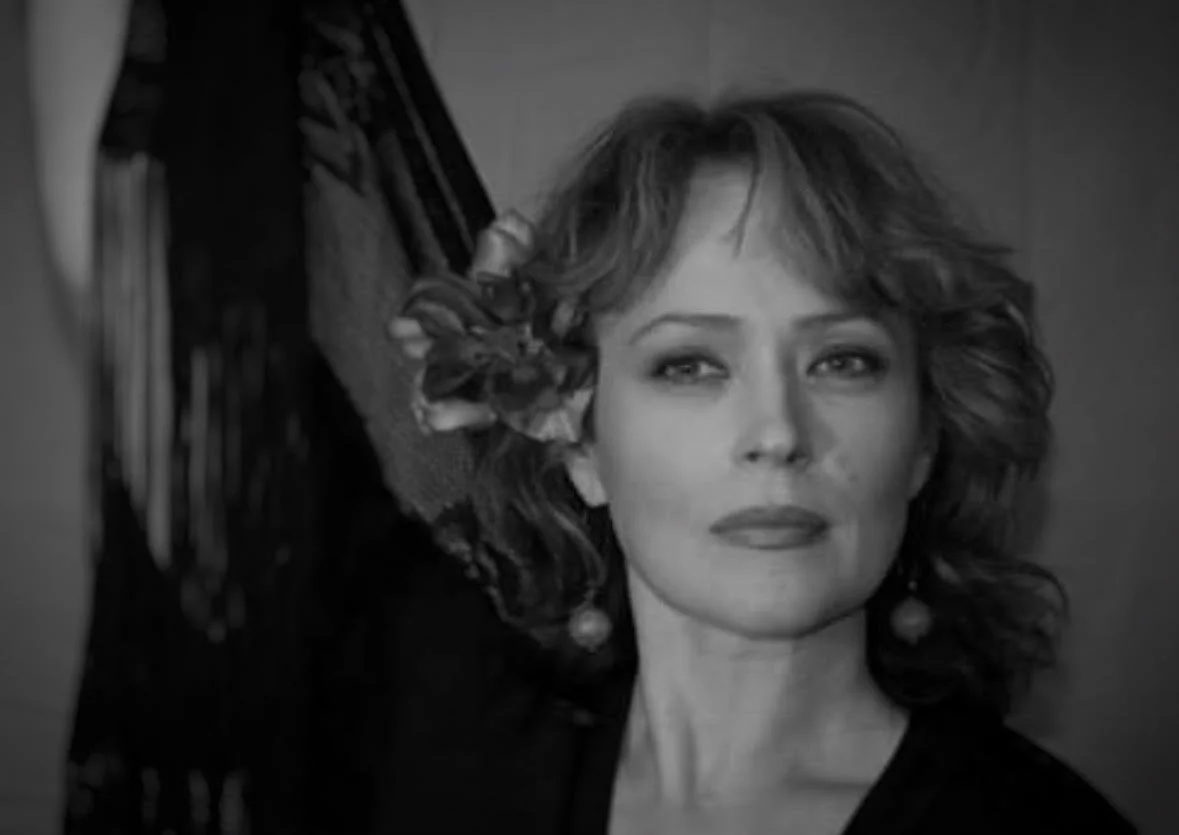
Her mother, a self-taught visual artist who drew remarkably well and had a strong musical sensibility, encouraged her education from an early age. Her father was a professional Greco-Roman wrestler who later coached at the national level. Luba describes herself with humor as the family's "experimental model," the first child whose parents invested considerable energy in music, reading, education, and new experiences.
By fourteen, she had had enough. She decided she was finished with music. She also declared that she would never become a teacher. Life, as it often does, had other ideas.
After stepping away from music, Luba eventually began to miss what had been such a large part of her childhood. But when she returned, she did so differently. This time, she was choosing the direction. She began singing backup with a musical group connected to her former piano teacher and became increasingly interested in jazz. Later, she entered a jazz studio program in Moscow, surrounding herself with other young musicians who were exploring music on their own terms. That distinction, doing something because she chose it rather than because it was expected of her, would become an important thread running through Luba's life.
Her formal education initially took her toward mathematics and teaching. She attended Moscow Pedagogical University but left after a year and a half, realizing she did not want the life she saw ahead of her. Her parents were understandably concerned, and her father arranged an opportunity for her at another prestigious institution. Luba visited the school and knew almost immediately that she didn't belong there. Instead, she decided to find a job while figuring out what came next.
An unexpected conversation with a stranger on the Moscow subway eventually led her to the Great Russian Ice Show. Asked if she could type, the teenage Luba confidently said yes. She couldn't. When her new employer handed her several pages that urgently needed to be prepared for a meeting at the Ministry of Culture, her lack of typing skills quickly became apparent. Luba assumed she would be fired. Instead, her boss told her to learn. So she did.
Within months, that same young woman was given an assignment that would have intimidated people with years of experience. While other members of the organization traveled to Paris, Luba was sent to Rostov-on-Don, a city in southern Russia and asked to prepare an upcoming tour engagement. She had never managed anything remotely comparable.
Suddenly, she was responsible for accommodation and transportation for elite figure skaters, contracts with the venue, technical requirements, publicity, group sales, individual ticket sales, and nearly every logistical detail required to bring a major production into a city.
She approached the challenge with a philosophy that has stayed with her ever since. Don't begin by telling yourself you can't do something. "I think when you don't know what you're doing, and you don't say, 'I can't because I don't know,' you just go and say, 'Sure. Bring it on.'"
Luba figured it out. She sold approximately 97 percent of the available tickets, dramatically outperforming the company's usual results while spending comparatively little money. Her success attracted attention within the organization. Before long, people with considerably more experience were gone, and Luba was moving upward.
Within about a year, still only in her early twenties, she had become a general manager and was working at a high level in Moscow's entertainment industry. The experience gave her something more valuable than a job title. It taught her that she could figure things out.
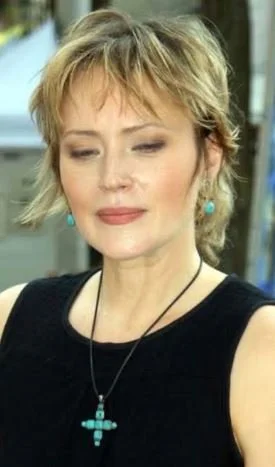
"If I set out to do something, is it going to be perfect? Maybe not. But I can do it." That belief would become essential when Luba's life changed again.
As the Soviet Union entered a period of political instability and eventual collapse, uncertainty spread throughout the country. Private enterprise had only recently begun to emerge, and no one knew exactly what the future would bring. Luba had a friend living in Syracuse and decided to leave Russia temporarily while the situation developed. She never intended to stay.
She arrived in Central New York at twenty-one, speaking virtually no English. In Moscow, she had already built an extraordinary résumé in the entertainment industry. In Syracuse, few people knew what to make of the young Russian woman trying to explain a professional life that seemed almost impossible for someone her age. Luba suddenly found herself beginning again.
First, she learned to drive. Then she learned English. She taught herself much of the language by watching television with closed captions, listening to the spoken words while reading them across the screen. She worked wherever opportunities appeared. She translated, worked in retail sales, finance and banking, and later became marketing director at a large architectural firm in Syracuse. She also became involved in film and arts administration. The career she had known in Moscow was gone, but Luba continued doing what she had always done. She kept moving. And music kept following her. When Luba finally moved into her own apartment in Syracuse, two things were important to her: a television that could help her continue learning English and a keyboard.
Before long, she realized how much she missed singing. She joined the Syracuse Chorale and began taking voice lessons. A teacher encouraged her to continue her music education at Onondaga Community College. By then, Luba was twenty-seven, older than many of the students around her and navigating an American educational system that was entirely different from the one she had known in Moscow. She tested out of the college's mathematics requirements and once again immersed herself in music.
Her education continued to evolve alongside her performing career. Lesser earned a master's degree in vocal performance from Syracuse University, deepening the musical training that had begun in Moscow and continued through her years of performing with the Syracuse Opera, LuBossa, and other ensembles. She later earned an EdD in CIA—Curriculum, Instruction, and Assessment—with a specialization in Arts Integration.
The combination reflects the two sides of Lesser's professional life: the artist who continues to perform and explore new forms of music and the educator who is interested in how the arts can become part of the way people learn. For Lesser, those two worlds are not separate. Music, performance, education, and creativity continually inform one another.
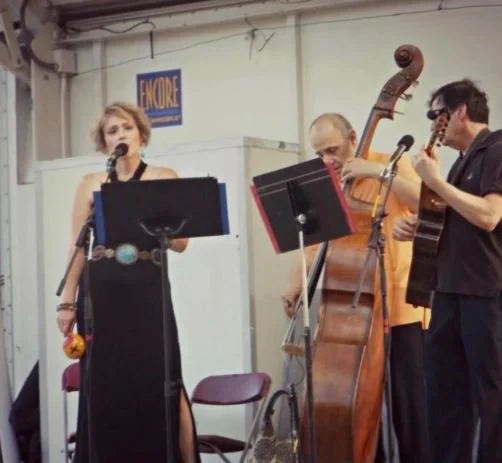
Opera also became an important part of Luba's artistic life. She performed with the Syracuse Opera for sixteen years, appearing in numerous productions while continuing to build her career as an educator and performer. Her final production with the company was Astor Piazzolla's María de Buenos Aires, where she not only sang but also performed as the production's lead tango dancer. Smiling as she recalled the performance, Luba made it clear that Argentine tango remains one of her great artistic passions.
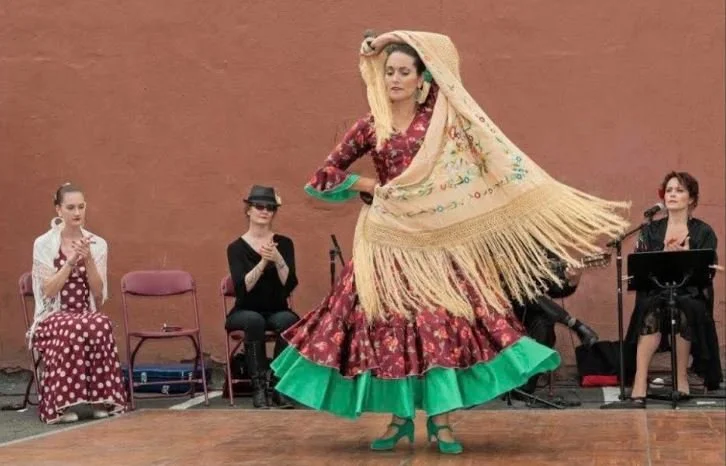
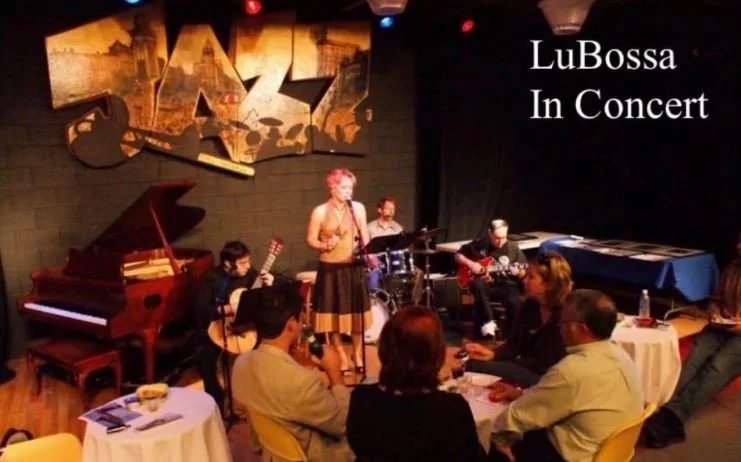
The teenager who had once declared that she wanted nothing to do with either music or teaching had somehow built a life around both. Today, Luba teaches music, directs high school musicals, and continues performing throughout Central New York. She is the vocalist for LuBossa, her jazz and bossa nova ensemble, where she performs Brazilian standards alongside American jazz classics. She also performs with Alegre Flamenco, bringing together music, dance, and the rich traditions of Spanish flamenco. Whether singing jazz, bossa nova, opera, or flamenco, Luba approaches each style with the same curiosity that has guided her throughout her life.
Teaching, in particular, has become one of the most meaningful parts of her creative life. Her philosophy is simple: make the experience fun and memorable. She isn't trying to turn every student into a professional musician. She wants them to experience music, creativity, and the arts while they are still young enough to approach the world with curiosity. "I just want them to try as many different things and hopefully enjoy them and see where it leads them."
For Luba, teaching is itself a creative practice. She strongly rejects the old expression that "those who can, do; those who can't, teach." To her, teachers are among the most important people we encounter because they share knowledge that might otherwise take a lifetime to discover independently. A good teacher doesn't decide where a student must go. A good teacher opens doors. That philosophy mirrors Luba's own creative journey.
Beyond music, she has explored painting and other visual arts. She studied flamenco singing and performed alongside dancers and musicians, immersing herself in a demanding musical tradition far removed from her childhood classical training.
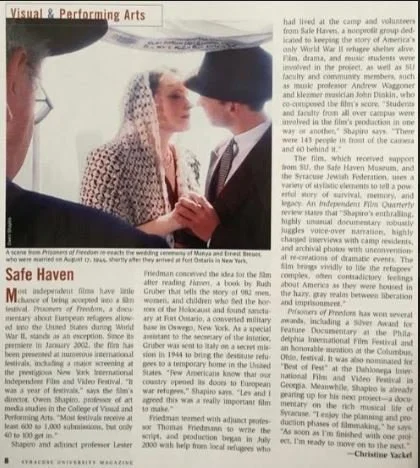
She has also worked in film, appearing in Owen Shapiro's Prisoners of Freedom, which tells the story of refugees brought to Fort Ontario in Oswego during World War II. Luba portrayed Manya Hartmayer Breuer, a Polish Jewish refugee, and later had the opportunity to meet the real woman whose experience she helped represent on screen.
Still, music remains the constant. Years ago, Luba began collaborating with guitarist and composer Jason. The two initially explored Renaissance music before turning toward jazz and bossa nova. Their musical partnership became something distinctive.
Luba learned to sing songs in Portuguese while Jason sometimes performed the same material in English. At times, they sang together in different languages, creating an unusual interplay between the rhythms and sounds of the words. Jason was more than a musical collaborator. He was a friend and creative partner. After they had been out of contact for some time, Luba went online to see what he had been doing and discovered that he had died. The loss closed an important chapter in her musical life.
For a while, that part of her creativity became quiet. Eventually, a conversation with Larry Luttinger of CNY Jazz Central helped bring her back. Luba connected with new musicians and began performing jazz and bossa nova again, including recent appearances at Persimmons in Syracuse.
There is something fitting about her return to the music. Luba's life has been filled with departures that eventually became returns. She left music and found it again. She rejected teaching and became an educator. She left one country expecting the move to be temporary and built a life in another. She moved through entertainment management, sales, finance, architecture, film, education, theater, and visual art, gathering something from each experience and carrying it forward.
Looking back, Luba does not see her life as a carefully designed plan. She sees a journey shaped by decisions. "Every sort of decision you make brings you to the next place in your life," she told me. "Those decisions are important, but not to dread over them, because they will bring you somewhere no matter what."
I began to understand that this may be the thread connecting everything Luba has done. Curiosity and the courage to try, to say yes, even in the face of uncertainty.
She is curious about music, people, languages, art, education, and experiences she has not yet encountered. One of her greatest concerns is the simple realization that no one can possibly learn everything there is to know. But that doesn't mean we shouldn't try.
Luba hasn't come full circle, she says, and perhaps she never will. But after all the unexpected turns, she recognizes the direction her life continues to take. It keeps leading her toward music. It keeps leading her toward teaching. And it keeps leading her toward the arts. The things she once resisted have become the things she now shares with others.
For Luba, the goal is not to hand young people a finished map of where they should go. It is to encourage them to remain curious enough to explore for themselves, to try something unfamiliar, and to discover what might be waiting behind a door they haven't opened yet.
Behind Luba's many creative pursuits is a family that has shared in the journey. Her husband of almost 26 years, Rick, has been a constant source of support, encouraging her to pursue the things she loves and to stay the course even when the direction wasn't always clear.
Their two sons, now 19 and 24, are beginning to navigate their own lives and career choices. In an interesting connection to Luba's family history, their oldest has followed some of the athletic inspiration of Luba's father. Their youngest has taken a path much closer to his mother's musical world, pursuing an undergraduate degree in vocal and clarinet performance.
For Luba, watching her sons make their own decisions seems to reflect something she has learned throughout her own life: parents can provide guidance, encouragement, and opportunities, but eventually each person has to discover his or her own direction. Her role is not to choose that direction for them, but to encourage the same curiosity and openness that have shaped her own journey.
It is a philosophy that has guided much of her own life. Say yes. Give it a try. Figure it out along the way and remain open to wherever the journey takes you next.
Luba Lesser’s remarkable journey from Moscow to Central New York reveals a multi-talented artist, musician, and educator whose life has been guided by curiosity, creativity, and a willingness to embrace the unexpected.
Sitting across from Luba Lesser, it became clear that her life has never been defined by a single profession or artistic discipline. Music led to theater, education led to performance, curiosity led to unexpected opportunities, and each new experience opened another door. Today, whether she is teaching young musicians, performing with LuBossa, taking the stage with Alegre Flamenco, or recalling sixteen memorable years with the Syracuse Opera, Luba continues to demonstrate that a creative life is not built by following a straight path. It is built by remaining curious, saying yes to new opportunities, and sharing what you've learned with others.
You can find Luba on Facebook link: https://www.facebook.com/share/14qog49QYFe/?mibextid=wwXIfr