
Alison Mullan-Stout: The Art of Creativity, Community and Songs for the Soul
On a bright and unusually warm Syracuse morning, I sat down with musician and songwriter, Alison Mullan-Stout. Originally from Dublin, Ireland, Alison moved to Central New York when she was five years old. Much of her life has been lived between those two cultural landscapes: the musical and storytelling traditions of Ireland and the creative communities of Syracuse. That duality still informs her work today.
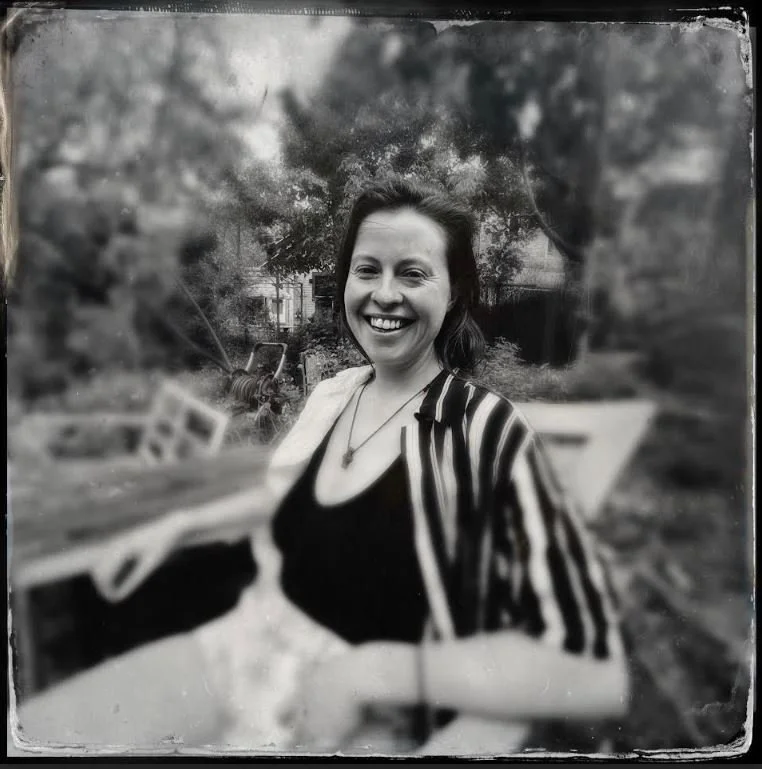
Photo Credit: HonGo David Robertson
Her path into songwriting is tied to her family. Alison’s father, who lives in Ireland, is a songwriter himself and hosts singing circles in Dublin pubs. These gatherings, often held in cozy back-room “snugs”, became an important influence on Alison and her sister Zoë while growing up.
As she described it, some nights they were fascinated, other nights slightly bored in the way young people often are around traditions they have yet to fully understand. But over time, those communal singing experiences stayed with her.
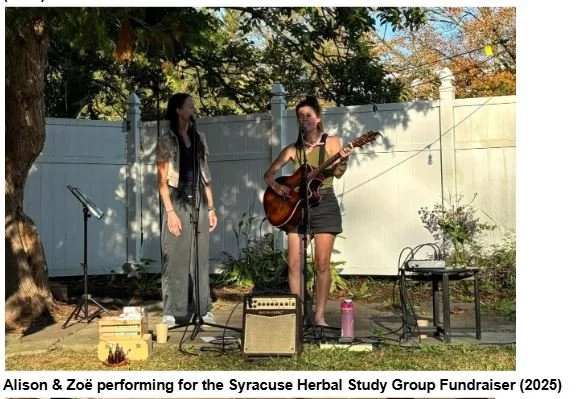
Photo Provided by Alison Mullan-Stout
There is something incredibly human about the image Alison painted…rooms full of older voices singing ballads, humorous songs, and stories handed down over decades. These weren’t polished performances. They were communal acts of memory and connection. As Alison got older, she found herself recording snippets on her phone, preserving melodies and moments that once drifted casually through pub conversations.
Her mother’s influence was equally important, though it arrived through language rather than melody. Alison described her mother as more poet than songwriter, someone deeply connected to storytelling and words. Recently, after retirement, her mother began performing stand-up comedy, embracing storytelling in an entirely new form. Creativity in Alison’s family seems less like a profession and more like a natural language spoken around the dinner table. That connection to language remains central to Alison’s songwriting today. She explained that songs rarely begin for her with a grand statement or political agenda. Instead, they often emerge from a single phrase, image, or emotional texture that catches her attention. A lyric might begin while walking in the woods, waking from a dream, or hearing a line that suddenly feels charged with meaning. From there, the song slowly reveals itself.
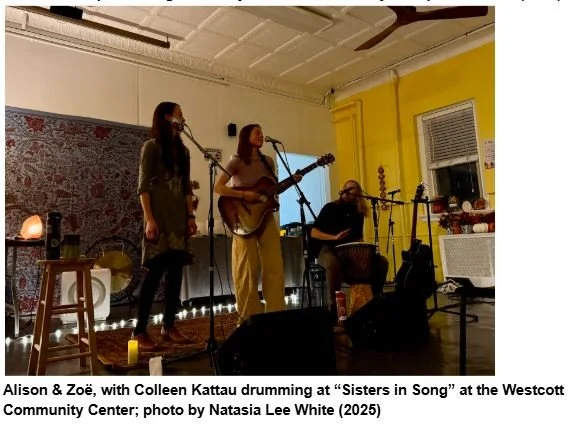
Photo Provided by Alison Mullan-Stout
Alison’s musical story is also intertwined with her sister, Zoë. Performing together as Alison & Zoë, the sisters have spent years developing a creative partnership rooted in curiosity, experimentation, and trust. Their creative process often involved sitting together for hours while Zoë played repeating guitar patterns and the two improvised sounds, melodies, fragments of words, and harmonies, following wherever the music led.
Their collaboration remains deeply emotional. She remembers listening to Zoë share a partially-finished song written about their late grandmother and being moved to tears before helping shape the song's final form. Today, the sisters continue to explore themes of herbalism, folklore, relationships, and the natural world.
Listening to Alison describe her process felt remarkably similar to hearing a writer discuss poetry or fiction. She spoke about allowing songs to grow organically rather than forcing them into predetermined messages. Even when her work addresses large themes such as queerness, identity, relationships, or critiques of capitalism or patriarchy…the songs begin from something small and tangible. One song, she explained with a laugh, began simply searching for a metaphor connected to a nail file.
During our conversation, we drifted briefly into discussions about prompts, metaphor, and the strange power everyday items possess when examined closely. Alison teaches creative writing workshops, where participants explore prose, poetry, short fiction, and songwriting through imaginative prompts and exercises.
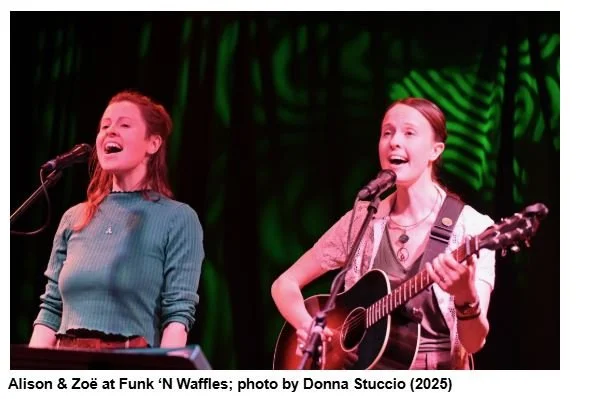
Photo Provided by Alison Mullan-Stout
In addition to performing music, Alison has worked extensively with arts nonprofits and community-centered organizations. She expressed her gratitude for working with the Syracuse Community Choir, a peace and justice choir that introduced her to generations of protest songs, civil rights music, and communal singing traditions.
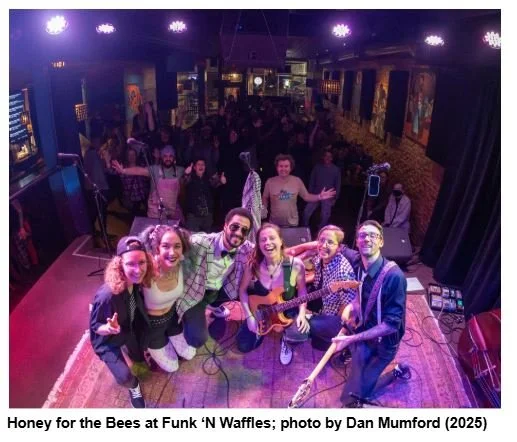
Photo Provided by Alison Mullan-Stout
Today, Alison works with an organization called Singing Soulutions, a group focused on the relationship between music, nervous system regulation, and emotional well-being. The organization was founded by Kath Fathers, a music therapist originally from Wales who shifted her work away from traditional one-on-one therapy models toward community-based group experiences.
One of the most fascinating parts of our conversation centered on the vagus nerve, sometimes referred to as the “soul nerve” and the growing body of research surrounding how sound, humming, singing, movement, and rhythm affect the nervous system. Alison spoke passionately about how these practices can help regulate stress responses and create feelings of safety and calm within the body. Singing together, she explained, is not simply artistic expression. It is biological, communal, and restorative.
These workshops and group experiences are not about perfection or technical ability. They are about participation, connection, and helping people access forms of emotional grounding that many have lost in modern life.
In recent years she has expanded her work into a collaborative band project called Honey for the Bees, a group that evolved naturally from friendships, songwriting exchanges, and informal performances. What began as a duo between Alison and another songwriter, Natasia Lee White, slowly transformed into a larger ensemble as additional musicians joined organically over time.
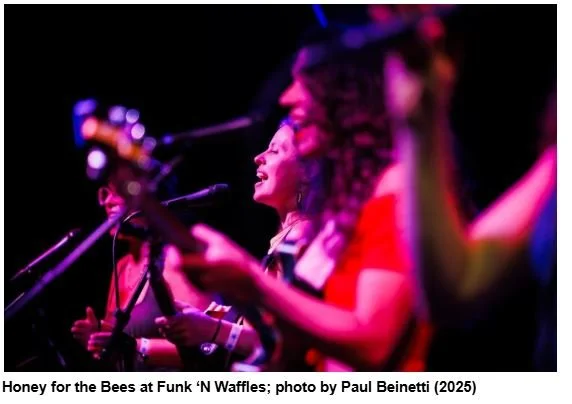
Photo Provided by Alison Mullan-Stout
The group now includes upright bass, drums, layered harmonies, acoustic instrumentation, and occasional electric arrangements that push the music toward indie rock territory while still maintaining strong folk roots. Alison described the joy of allowing each musician to create their own parts rather than rigidly dictating arrangements. That collaborative freedom seems central to the spirit of the band.
What stood out most was Alison’s emphasis on sustainability, not just environmentally, but artistically and emotionally. The band intentionally avoids overbooking itself, allowing performances to remain joyful rather than exhausting. Alison acknowledged how easy it is for music to shift from passion into obligation when artists push themselves too hard. Instead, the group is focused on slowly building toward recording an album while preserving the excitement that made them start playing together in the first place.
That same spirit carries into Syracuse's growing arts community, something Alison clearly feels energized by. She spoke enthusiastically about the relatively new BareRoots Festival in Thornden Park Amphitheater, an event created to bring more live arts programming into the historic outdoor amphitheater space. Her band performed there during the festival's inaugural year, an experience she described with obvious appreciation. Honey for the Bees also performed for the first time last year at the Westcott Street Cultural Fair, one of Syracuse's most beloved neighborhood arts celebrations.
This year, Alison and her sister Zoë will return to the Westcott Street Cultural Fair, performing together on the Acoustic Stage as Alison & Zoë, continuing the musical partnership that has become such an important part of both their creative lives. Their appearance is a fitting extension of the community-centered spirit that defines their work—sharing songs rooted in harmony, storytelling, and connection with audiences gathered in one of Syracuse's most cherished neighborhood traditions.
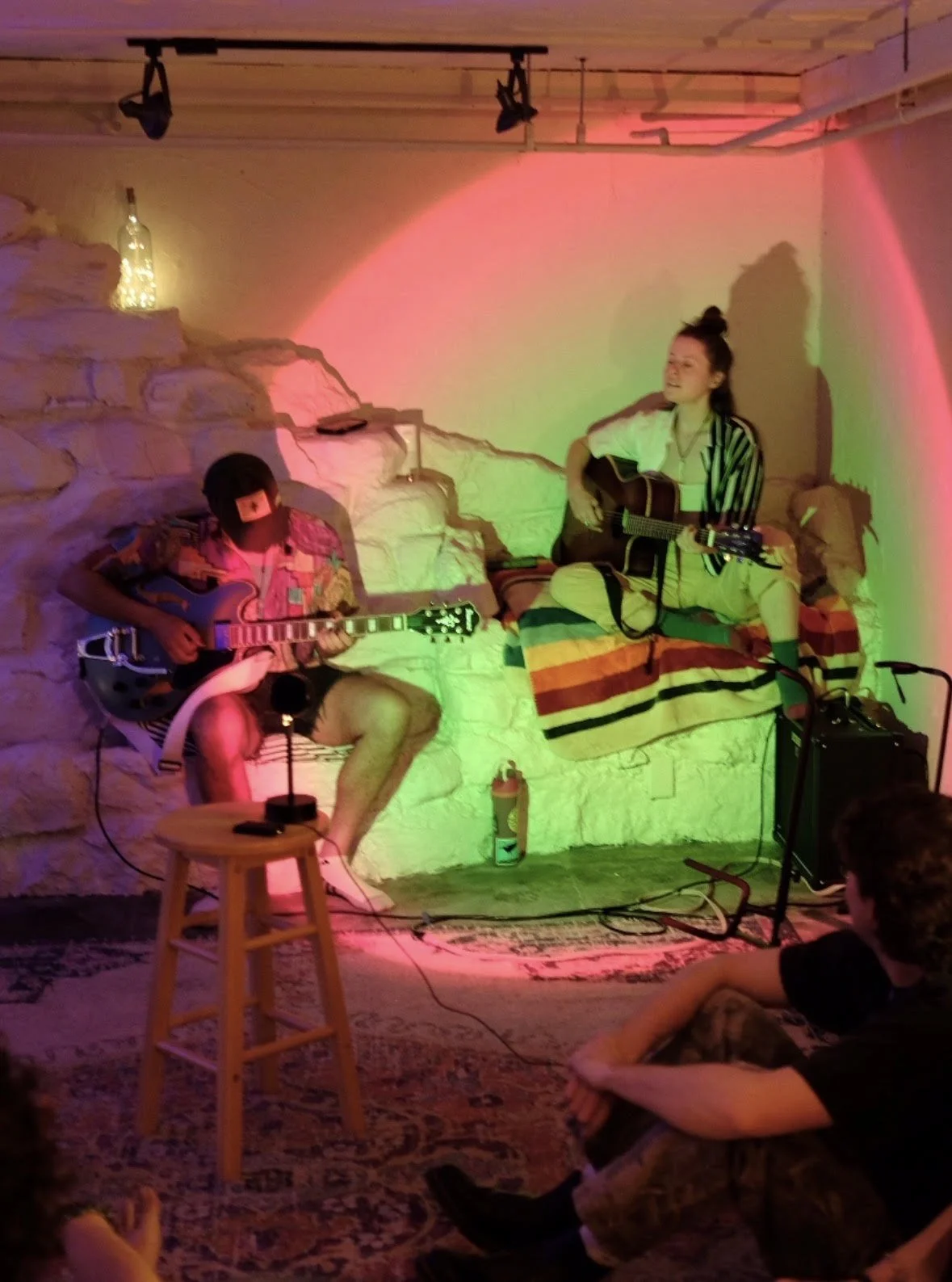
Photo Credit: HonGo David Robertson
At one point in our conversation, I shared my own memory of recovering from illness in the hospital and listening to a classical guitarist perform remotely through video calls during the isolation of the pandemic years. Alison immediately understood the healing power of those moments. Music, especially when shared personally, has a way of shifting the emotional atmosphere around suffering. It interrupts fear and loneliness with presence
She also spoke warmly about the intimacy of house concerts and community gatherings — performances where audiences are encouraged to bring blankets, sit together, sing along, and fully inhabit the music rather than simply consume it. Those smaller environments seem perfectly aligned with Alison’s broader philosophy about art and connection. Whether through songwriting workshops, protest choirs, healing-centered music groups, or collaborative indie folk performances, she consistently returns to the idea that creativity is fundamentally communal.
That commitment to creating intimate, meaningful experiences was especially evident in a project Alison and Zoë organized last year called Sisters in Song. Supported by a grant from the Westcott Area Cultural Coalition and held at the Westcott Community Center, the event brought together music, storytelling, and healing arts. The sisters collaborated with sound-healing practitioner Tiesha McNeal and multilingual activist songwriter Colleen Kattau to create an evening filled with lamps, tapestries, soup, cookies, and conversation. It reflected Alison’s belief that music can be more than entertainment — it can be a catalyst for connection. A similar spirit infused a recent Irish songs house concert where Alison and Zoë invited an Ithaca-based fiddle-and-flute duo to perform alongside them while sharing stories about the role Irish music has played in struggles for identity, culture, and sovereignty. These gatherings feel less like conventional concerts and more like temporary communities built around listening, learning, and belonging.
There is a groundedness to her work, a sense that art should remain connected to ordinary people, neighborhoods, gardens, kitchens, and gathering spaces rather than existing only within formal institutions.
Artists like Alison Mullan-Stout remind us that music does not exist solely on stages or streaming platforms. Sometimes it lives in pub circles in Dublin, in nonprofit community rooms, at farmers’ gatherings, in neighborhood festivals, in living room concerts, or in a sunny Syracuse garden where stories drift slowly between people learning how to listen to one another again.
For more information about Alison Mullan-Stout various projects:
Linktree: https://linktr.ee/alison_ms
You can also contact Alison via email: amullanstout@gmail.com