
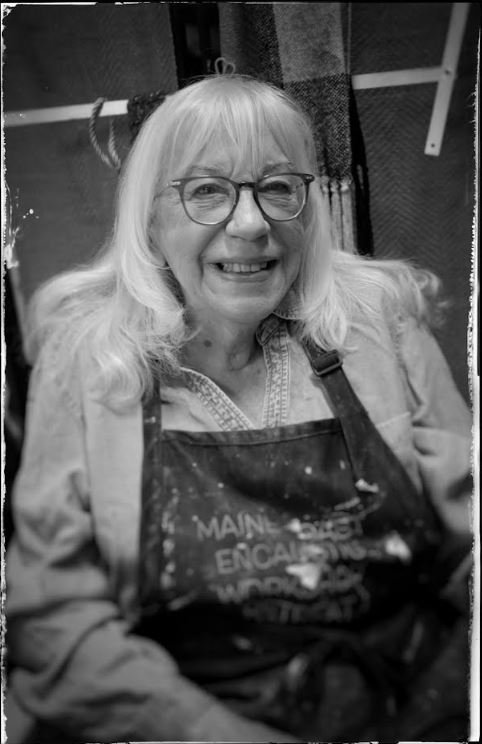
Photo Credit: HonGo David Robertson
Inside her studio at the Delavan Center in Syracuse, Linda Bigness is surrounded by the evidence of a long working life in art. The space is active rather than staged, filled with materials, works in progress, finished pieces and the tools of an artist who has spent more than five decades painting. Bigness describes the studio as a working mess, particularly now, as she prepares work for multiple exhibitions. It is an environment that reflects the way she has approached much of her life: keep working, keep experimenting and do not become too concerned with following somebody else's rules.
For many years, Bigness worked primarily in oil paint. Today, her focus is encaustic, a medium that has given her another way to explore abstraction, surface, texture and color. The transition is part of a career that has never followed a simple path. Her story moves through childhood poverty, early marriage, motherhood, factory-like technical work, medical illustration, college, teaching, gallery administration, curating and decades of maintaining a professional studio practice. "I've been a painter for over 50 years," she says.
Bigness was born in Detroit and spent part of her childhood near Lake Huron in Port Huron, Michigan. Her family had little money. Her father took whatever work he could find, including driving and delivering materials, and was also a talented mechanic. Her mother worked as a midwife. Bigness remembers fishing in Lake Huron with her older brother and growing up in circumstances where hard work was valued far more than the idea of becoming an artist.
The family eventually came to Syracuse when Bigness was around 10 or 11 years old. Their first surroundings were unconventional. They lived for a time in a boarding house occupied largely by women working as prostitutes, an experience Bigness remembers not simply for its poverty but for its visual intensity. There were bright clothes, makeup, satin, silk, boas and colorful shoes. As a child who was already constantly drawing, she absorbed what she saw. "That's how I learned about color," she says.
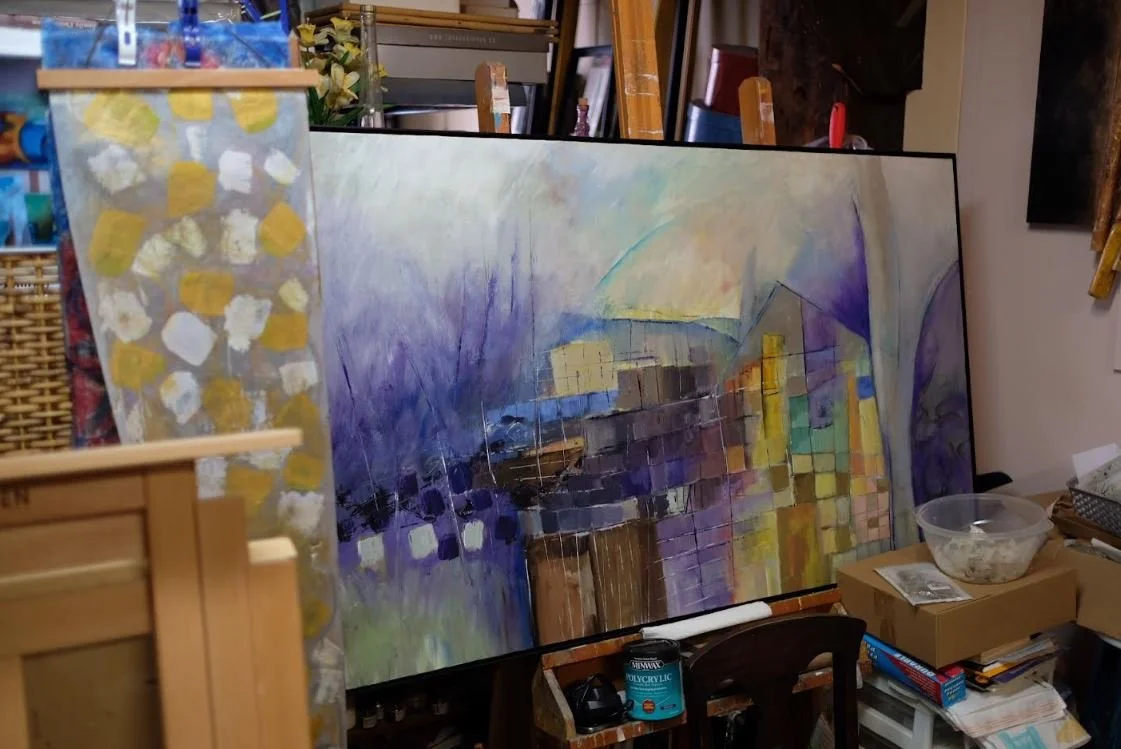
Photo Credit: HonGo David Robertson
She remembers some of the women by name and recalls visiting with them as a young girl. To Bigness, they were people she knew, women who welcomed her curiosity and allowed her into their colorful world. She roller-skated through the neighborhood and downtown Syracuse, observing the city and returning to the boarding house filled with impressions.
She had been drawing from the time she was about three years old, although she did not yet understand that making art could become a life. "I had no idea that I was an artist," she says. "I just liked to draw."
Her path into adulthood came quickly. Bigness never attended high school in the conventional sense. She married young and had her first son while still a teenager. She later described her education and career as taking "the long way," moving through life by following one unexpected turn after another. Those early years were difficult. Her first marriage became a source of emotional pain, and she raised two sons while working and trying to find a way forward. Art became one of the places where those experiences emerged.
Eventually, Bigness earned a GED and applied to Syracuse University. Her unconventional educational background initially raised questions, but her abilities and portfolio opened the door. She entered the College of Visual and Performing Arts and studied with artists including Jerome Witkin, Michael Sickler and Gary Trento.
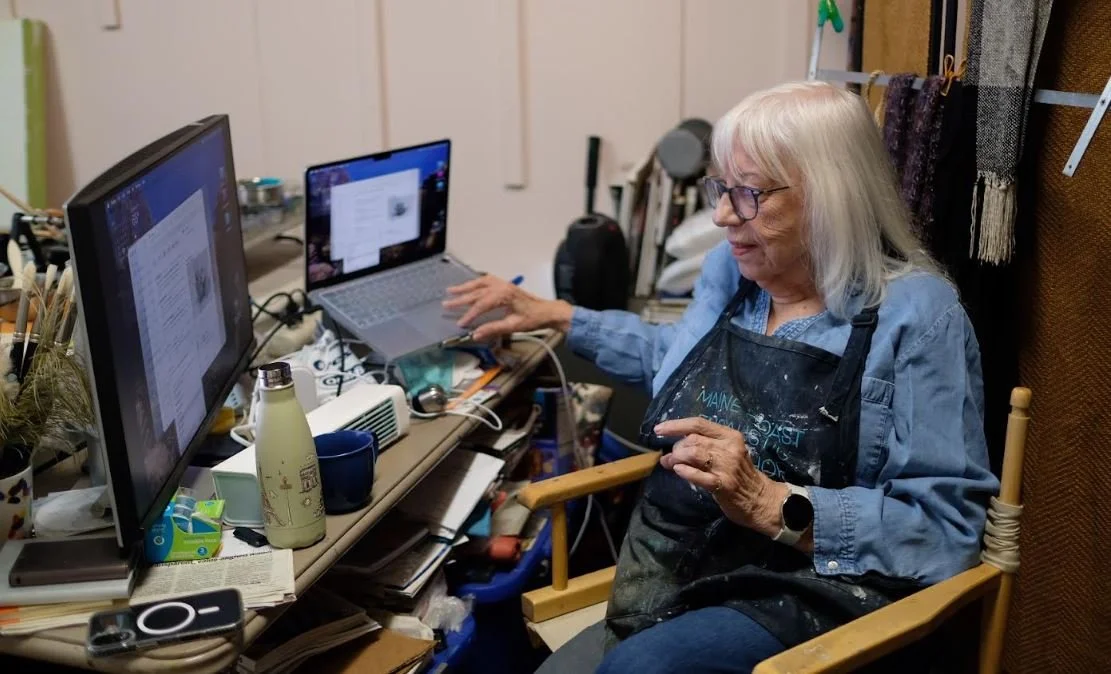
Photo Credit: HonGo David Robertson
Her early work during that period was often figurative and deeply personal. She made drawings and paintings of domestic interiors filled with scenes suggesting violence and conflict. Her professors responded strongly to the work, but they did not necessarily know that the imagery was connected to her own experiences. Bigness eventually reached a point where continuing to make those images became emotionally exhausting. "I can't keep doing this work," she remembers telling Witkin. "It makes me very sad."
She began moving toward abstraction. That decision became important to the artist she would become. Rather than repeatedly illustrating painful experiences, abstraction allowed Bigness to communicate through color, form, movement, material and atmosphere. The work could still carry emotion without being tied to a literal narrative.
While developing as an artist, Bigness was also building a professional life outside the studio. She worked for 21 years at Upstate Medical University as a graphic artist, doing highly technical work that included medical and scientific illustration. She created drawings for medical journals and research and worked on designs connected to medical technology.
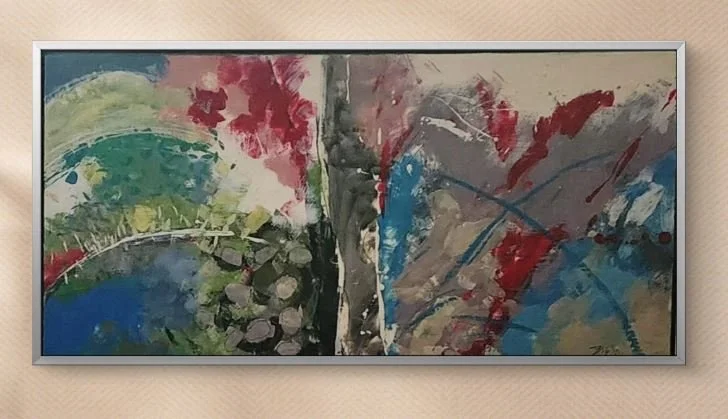
Photo Provided by Linda Bigness, “CITY'S EDGE II”, 30 X 60" hangs at the Nan Miller Gallery
Her work went beyond illustration. She created layouts for printed circuit boards on large light tables and contributed to projects involving sophisticated medical instruments. She recalls working with a scientist involved in the development of early heart-mapping technology and helping illustrate and construct components used in that research. Through it all, she continued painting.
"Always painting," she says. By her twenties, she was selling her artwork professionally. Her first solo exhibition was held at the Equal Opportunity Center in Syracuse, and the show sold out. Many of the early supporters were people she knew through her work at Upstate, but it was an important confirmation that her paintings could find an audience.
Bigness continued her education as well, eventually earning three degrees. Her appetite for learning became another constant in a life defined by reinvention. She also taught and became deeply involved in the administrative and curatorial side of the arts. For five years, she served as an art department head and ran Gallery 320 in downtown Syracuse, organizing approximately one exhibition every month. She brought in artists from Syracuse as well as New York City, Brooklyn, the Bronx and elsewhere. The experience gave her a perspective many working artists never acquire: an understanding of what happens on both sides of the gallery relationship. She learned that making the work was only one part of sustaining an artistic career.
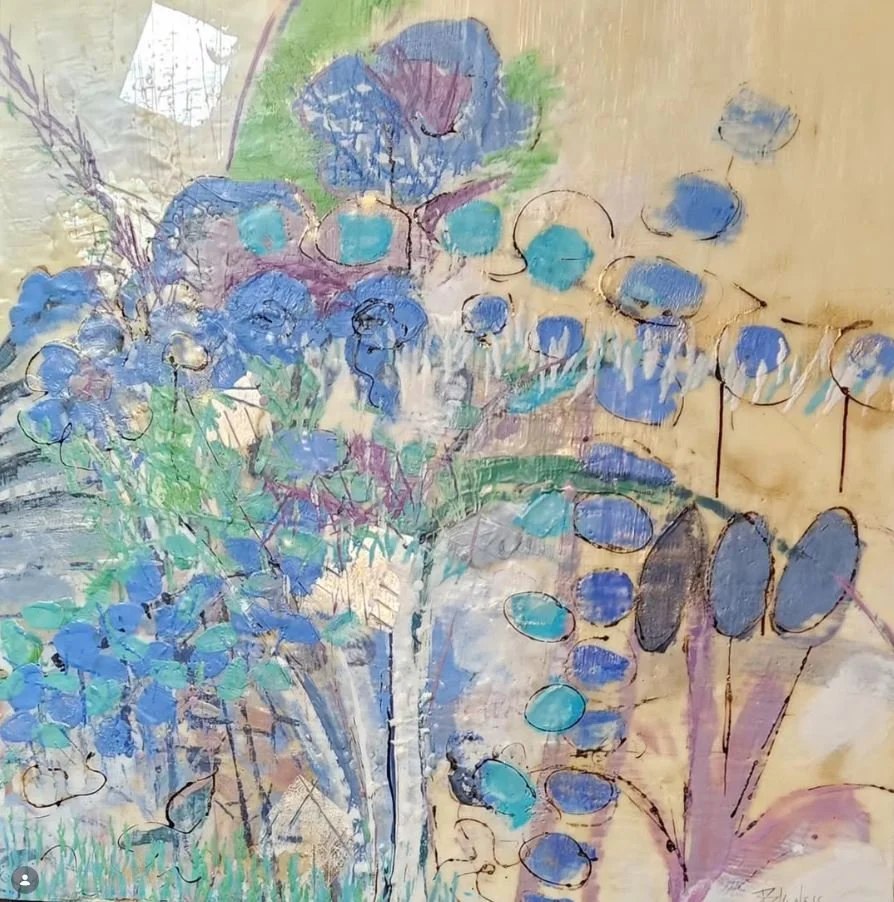
Photo Provided by Linda Bigness, “Garden Blues” 36 X 36" encaustic and mixed media on braced panel
When the local gallery landscape changed, Bigness made a conscious decision to expand beyond Syracuse. She loved the city and the people in it, but she believed she needed to place her work before a broader audience. Her strategy was straightforward. She traveled to affluent communities, visited galleries, studied what they represented and introduced herself. She would return home, wait and then contact galleries she believed were appropriate for her work. "I think my work would work well in your gallery," she would tell them. "Would you consider giving me an interview?" Some said yes. Others told her they were not accepting new artists and suggested she check back later. She kept going. The approach worked.
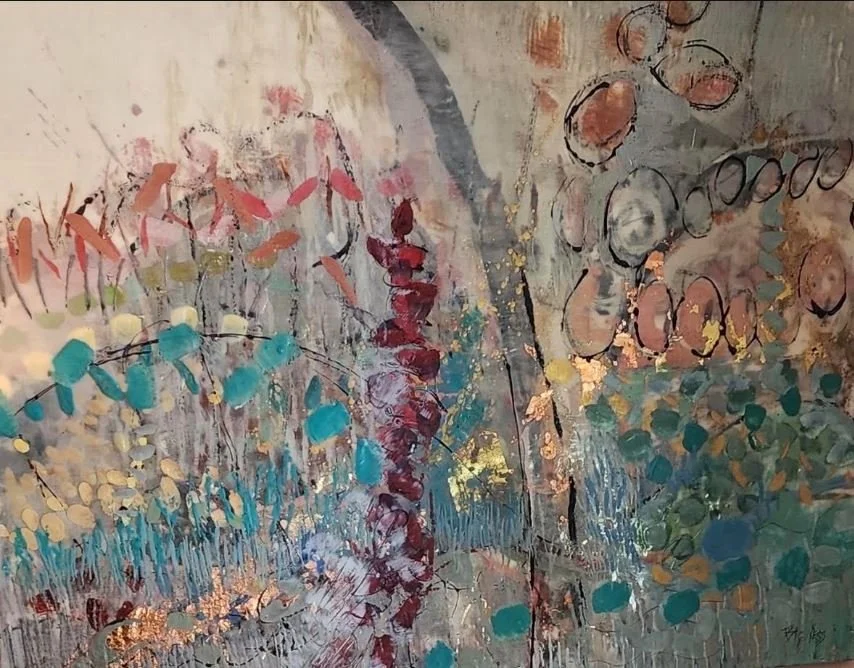
Photo Provided by Linda Bigness. “Awakening” encaustic and mixed media, 36 X 48" recently received an award from Enkaustikus, Rochester, NY.
Over the decades, Bigness has sold so much artwork that she no longer knows where all of it has gone. Some collectors have purchased multiple pieces; one, she says, owns 28 of her works. Paintings have entered private, professional and institutional spaces, including healthcare environments. Years after selling some early works, she has occasionally heard from collectors who still live with paintings she created decades ago. One message arrived from California with a photograph of a work Bigness had made perhaps 40 or 50 years earlier. The owners simply wanted her to know that they still had the painting and still loved it.
For an artist whose career stretches across more than half a century, such moments provide a different measurement of success. A painting leaves the studio, becomes part of another person's home and continues its life independently from the person who created it.
Bigness's work eventually shifted from oil painting toward encaustic. Her first encaustic work was commissioned for a collector's home, beginning a new period in her practice. The medium has since become central to what she does.
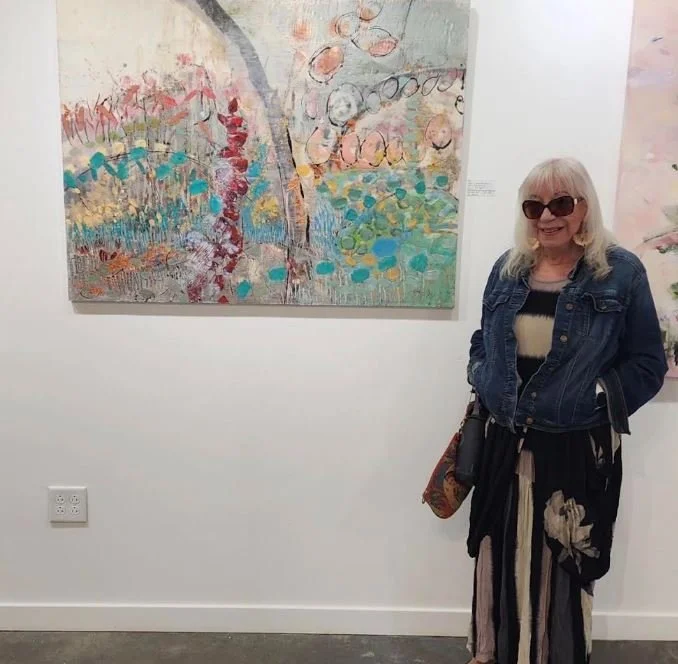
Photo Provided by Linda Bigness. “Awakening” encaustic and mixed media, 36 X 48" recently received an award from Enkaustikus, Rochester, NY.
Her career, however, has unfolded alongside significant personal challenges. In 1998, Bigness faced advanced head and neck cancer. She underwent radical surgery and eight weeks of radiation treatments. She survived the disease, but the long-term effects of the treatment remain part of her daily life. She now deals with progressive complications from radiation damage, including problems with her voice that eventually forced her to give up teaching. She may begin a conversation speaking clearly and later find that her voice weakens or disappears. The physical consequences are frustrating because they are largely invisible to others. Someone meeting her may have no idea what she has survived or what she continues to manage.
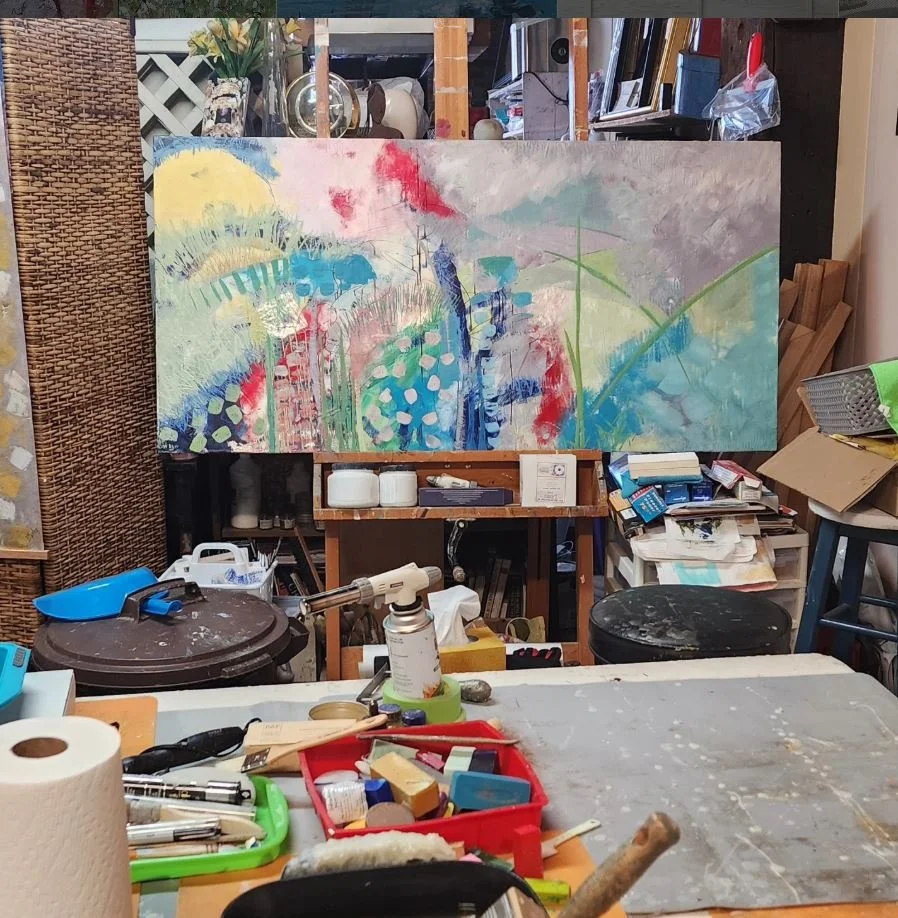
Photo Provided by Linda Bigness, "City's Edge”, Encaustic and Silverleaf on panel. 30 X 60
Still, Bigness works. Her studio practice continues, exhibitions continue and collectors continue to seek out her paintings. She admits that maintaining the pace is more difficult than it once was. She tires more easily and sometimes wishes she were 20 years younger, particularly at a moment when her career remains active.
At the same time, her attention is divided between her art and her husband, Bob, who has been her companion for nearly four decades and a consistent supporter of her work. Their story began through art. Bigness first met Bob when he wanted to purchase one of her paintings. Years earlier, while raising her young sons and struggling through her first marriage, she occasionally drove from Central New York to New York City, took the Staten Island Ferry and brought the boys to the campus of Wagner College for picnics. The trips offered her a temporary escape. Years later, she discovered that Bob had attended Wagner College during the same period when she had been bringing her children there. They had occupied the same place years before they knew one another.
When they eventually met, Bob became not only a collector of her work but her partner. He supported her career, traveled with her and encouraged her art. Bigness, who had spent years determined to support herself and her children, found herself with someone who respected the independence she had fought to build. That independence remains essential to understanding her work.
Bigness has spent a lifetime refusing to accept the idea that there is only one proper route toward becoming an artist. She did not follow the expected educational path. She became a young mother, worked full time, raised children and entered college through an unconventional door. She made technical illustrations and circuit-board designs while continuing to paint. She taught, curated exhibitions, managed galleries and learned how to place her own work before collectors. She survived cancer and adapted when its treatment changed what her body could do. And she continued making art.
Today, in her studio at the Delavan Center, that history is present without needing to be announced. It exists in the paintings, the materials, the accumulated tools and the controlled disorder of a working studio. It is there in the transition from oils to encaustic and in an artist who remains curious enough to change after more than 50 years of painting.
Bigness once said that artists have to be a little unusual, a little quirky. Perfection, in her view, is not particularly useful to the creative process. Her own life supports that philosophy. It was complicated, unconventional and filled with turns she could not have predicted. She took, as she puts it, the long way. For Linda Bigness, the long way became an artistic life.
Life for Bigness has been and continues to be rewarding. We are at a stage in our lives where we have nothing to prove. We do what we want, how we want, and when we want. She asked me if I remember the band “Talking Heads” and their hit song, “Once in a Lifetime”? When life gets complicated, sometimes you start to ask yourself, “How did I get here, what am I doing, why am I here? Same as it ever was.” We’ve reached a point in our lives where we no longer have anything to prove, nor do we want to.
Linda ends with this summation and very relaxed attitude, “I’m going to go to bed, I’ll see you later”. That's a great way to end our talk. “I’m going to go to bed, I’ll see you later”.
Postscript: Linda Bigness on Paris
“To me, I feel like I've been there before in another life. The place has so much intertwined with humanity in all its forms. The food, the traditions, WWII, the art, the resistance, the determination to survive; all of it draws me into it.
“And for some reason the architecture piques my curiosity. I can stare at the rooftops for hours, and I wonder about what happened in that building many years ago. And then there is the underground, that's a complete set of novels right there.
“I also love the champagne. Vive le Paris!”
Contact Linda:
Email: studio245@verizon.net
Instagram: artat245
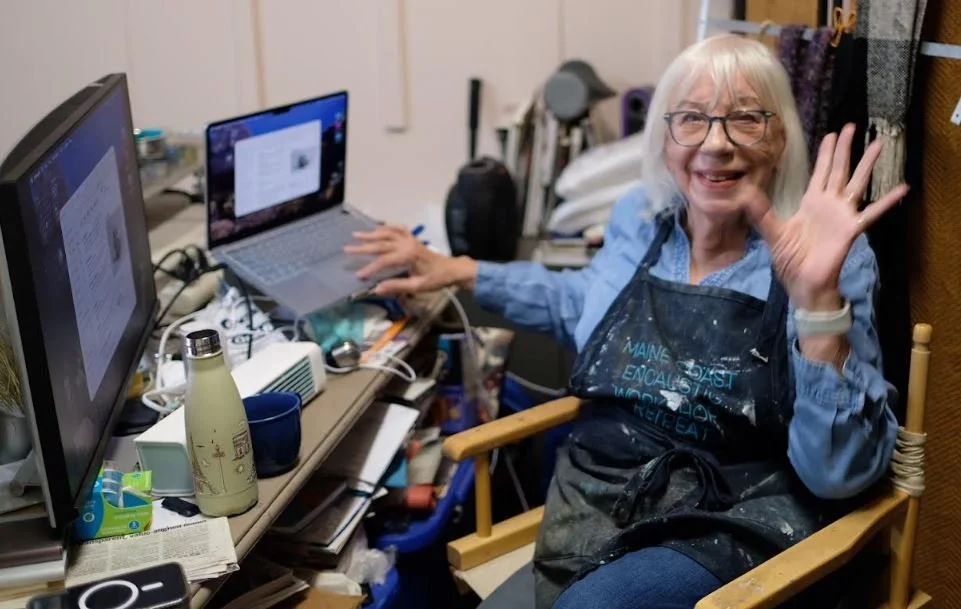
Photo Credit: HonGo David Robertson